 Slow Bio Hack

Introduction: Sleep as the Ultimate Entrepreneur Edge
In the fast-paced hybrid work era of 2026, entrepreneurs face irregular schedules that disrupt natural sleep cycles. Tools like the Oura Ring and Whoop strap have become essential for tracking recovery metrics, helping founders maintain sharp decision-making and sustained energy. This guide dives deep into actionable strategies for leveraging these wearables to turn sleep data into productivity wins. Entrepreneurs often overlook sleep until burnout strikes, yet research consistently shows that optimized rest directly correlates with improved cognitive performance and business outcomes. By understanding personal biomarkers, founders can make data-driven adjustments that compound over time.
Why Prioritizing Sleep Recovery Matters for Founders
Entrepreneurs often juggle late-night calls, early meetings, and constant travel. Poor sleep directly impacts cognitive function, creativity, and stress resilience. By monitoring key biomarkers such as heart rate variability (HRV) and resting heart rate, Oura and Whoop provide real-time insights that allow users to adjust daily routines proactively. Chronic sleep debt can lead to impaired judgment during critical negotiations or missed opportunities in fast-moving markets. According to experts at the Sleep Foundation, consistent high-quality sleep supports memory consolidation and emotional regulation, both vital for leadership roles. In hybrid environments where boundaries between work and rest blur, these trackers serve as objective coaches that prevent overcommitment.
Oura Ring: Deep Sleep Insights for Busy Schedules
The Oura Ring excels at passive, 24/7 tracking with its sleek design that fits seamlessly into professional life. It scores sleep stages, readiness, and activity, making it ideal for entrepreneurs who dislike wearing bulkier devices during the day. Users receive detailed breakdowns of light, deep, and REM sleep percentages along with temperature trends that can signal illness or overtraining early. For example, a founder preparing for a product launch might notice a dip in deep sleep and respond by extending wind-down routines or reducing evening screen time. The device also generates a readiness score that factors in previous nights' data, helping users decide whether to push through an intense workday or schedule lighter tasks.
Whoop: Real-Time Strain and Recovery Monitoring
Whoop focuses heavily on strain scores and recovery percentages, delivering personalized coaching based on your daily output. Its strength lies in alerting users to overtraining risks before they impact performance. The band calculates daily strain from heart rate data during activities and compares it against recovery capacity, which is heavily influenced by sleep quality. Entrepreneurs appreciate the journal feature where they can log variables like caffeine intake or meeting intensity to correlate with overnight metrics. This allows for precise experimentation, such as testing whether a 20-minute afternoon nap improves the next day's strain tolerance.
Real Founder Case Studies
Tech founder Sarah Kline credits Oura with identifying her low HRV during high-stress funding rounds, prompting her to block recovery days that led to better pitch outcomes. She adjusted her schedule to include 30-minute meditation sessions after seeing consistent temperature elevations. Meanwhile, startup CEO Marcus Lee uses Whoop to balance intense workout sessions with client travel, reporting a noticeable lift in focus after implementing custom alerts. Another example comes from e-commerce entrepreneur Priya Patel, who combined both devices to manage jet lag across three continents; her weekly reviews revealed that prioritizing consistent bedtime even during travel increased her average recovery score by 15 percent over two months. These stories illustrate how individualized data interpretation turns abstract metrics into concrete business advantages.
Setting Up Custom Alerts for Optimal Recovery
Step 1: Sync your device with its companion app and enable notifications for HRV drops below your baseline. Step 2: Set thresholds for sleep consistency scores so the app flags nights with fragmented rest. Step 3: Integrate alerts with your calendar app so low-recovery days automatically suggest lighter meeting loads or delegate tasks. Step 4: Review weekly trends to refine alert sensitivity, avoiding notification fatigue. Practical example: An entrepreneur might set an alert if resting heart rate rises above personal average for two consecutive nights, triggering an earlier bedtime reminder. This proactive system prevents small issues from escalating into full exhaustion.
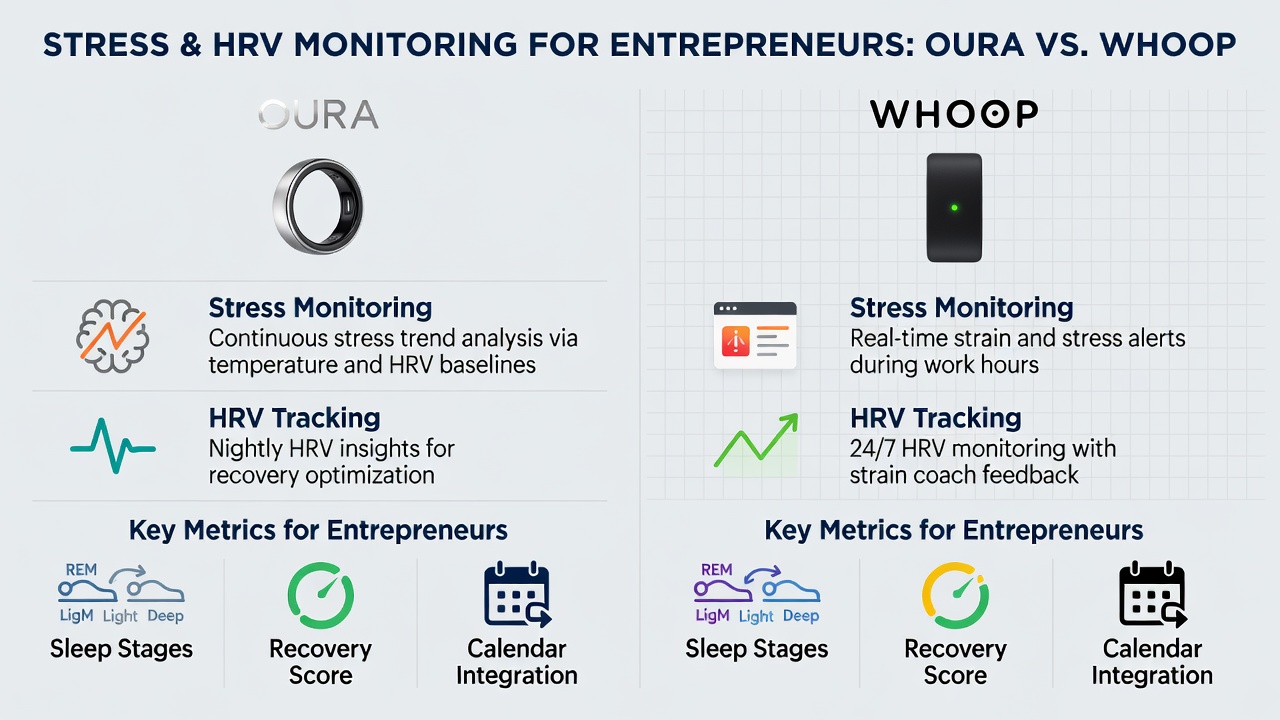
Oura vs Whoop: Stress Monitoring Feature Comparison
- Oura provides detailed nighttime stress via temperature and HRV trends, offering long-term pattern recognition useful for spotting seasonal burnout risks.
- Whoop offers daytime strain tracking with real-time feedback during high-pressure tasks, such as live investor calls or product demos.
- Both integrate with meditation apps, but Oura pairs better with long-term trend analysis while Whoop shines for immediate adjustments like suggesting breathing exercises mid-day.
- Oura emphasizes sleep architecture depth, whereas Whoop highlights how daytime behaviors influence overnight recovery percentages.
Interpreting HRV Trends for Better Decisions
A rising HRV trend signals improving recovery—use these windows for high-stakes negotiations or creative brainstorming sessions. Declining HRV often precedes burnout; entrepreneurs should then prioritize wind-down routines like blue-light blocking two hours before bed and reducing evening workouts. For instance, if HRV drops 10 points below baseline after a series of late meetings, consider rescheduling travel or adding buffer days. Trackers also display rolling averages, allowing users to correlate external factors such as alcohol consumption or family obligations with performance dips. Over several weeks, patterns emerge that inform smarter delegation and boundary-setting.
Integrating Trackers with Daily Planning Tools
Connect Oura or Whoop data to apps like Notion or Google Calendar. For example, auto-populate low-energy slots with focused work blocks or flag travel days for extra sleep buffers. Advanced users export CSV data into spreadsheets for custom visualizations, revealing correlations between sleep metrics and revenue-generating activities. This creates a closed-loop system where recovery data informs scheduling. Integration with project management tools can even trigger automated task prioritization based on readiness scores, ensuring high-cognitive-demand work aligns with peak recovery periods.
Handling Travel Disruptions and Jet Lag
Travel often wreaks havoc on sleep metrics. FAQs include: How do I maintain consistency across time zones? Adjust your baseline gradually and focus on light exposure upon arrival using morning sunlight walks. What if metrics tank after flights? Prioritize hydration and short naps guided by your device's readiness score while avoiding caffeine after midday. Another common question addresses red-eye flights; many founders report success by wearing the tracker during the flight to capture micro-sleep data and then scheduling a full rest day upon landing. The CDC emphasizes that consistent sleep hygiene practices mitigate many travel-related disruptions when combined with wearable feedback.
Common Mistakes to Avoid
One frequent error is ignoring long-term trends in favor of daily fluctuations, leading to unnecessary anxiety. Another is failing to calibrate personal baselines after lifestyle changes such as new exercise regimens. Entrepreneurs sometimes over-rely on device scores without cross-referencing subjective feelings, missing opportunities for holistic adjustments. Finally, neglecting to update software or firmware can result in inaccurate readings that undermine trust in the system.
Weekly Implementation Checklist
- Review HRV and sleep scores every Sunday evening, noting any deviations from the prior week.
- Adjust the upcoming week's schedule based on predicted recovery, including protected sleep blocks.
- Test one new habit, such as consistent bedtime, and log results in the app journal.
- Share insights with a coach or accountability partner for external perspective.
- Reassess device settings monthly for evolving needs like seasonal schedule shifts.
- Compare Oura and Whoop data if using both devices to validate trends.
Conclusion: Building a Sustainable Performance System
By combining Oura and Whoop insights with disciplined routines, entrepreneurs can transform irregular schedules into a competitive advantage. Start small, track consistently, and let data guide your path to better sleep and sharper business outcomes. Over time, these practices foster resilience that supports both personal health and professional longevity.
No comments yet. Be the first!