 Slow Bio Hack

Introduction: Sleep Tracking as a Corporate Advantage
In 2026, forward-thinking organizations are turning to advanced wearables like Oura and Whoop to transform employee wellness. By focusing on precise sleep tracking, these programs deliver measurable gains in workplace productivity and overall health outcomes. Better rest directly correlates with sharper focus, reduced absenteeism, and higher engagement levels across teams. Companies that prioritize sleep optimization through fitness trackers often see cascading benefits that extend beyond individual health to team dynamics and long-term organizational resilience.
Search intent around this topic centers on practical ways businesses can implement sleep-focused fitness trackers. This article explores implementation strategies, real-world examples, ROI data, feature comparisons, privacy safeguards, and integration hurdles to help decision-makers build effective programs. With rising awareness of burnout and mental health in the workplace, sleep tracking has emerged as a data-driven cornerstone of modern corporate wellness initiatives.
Why Sleep Tracking Drives Productivity Gains
Quality sleep underpins cognitive performance, emotional resilience, and physical recovery. Companies adopting Oura and Whoop report employees experiencing fewer errors and faster decision-making after consistent sleep optimization. Research from authoritative bodies like the World Health Organization underscores sleep's role in preventing chronic conditions that erode workforce capacity. When employees achieve better sleep hygiene, they demonstrate improved memory consolidation, emotional regulation, and sustained energy throughout demanding workdays.
Using group-level analytics from these devices, HR teams identify patterns such as widespread sleep debt during high-pressure periods. Interventions like adjusted meeting schedules or wellness challenges then yield rapid improvements in output metrics. For instance, employees with tracked sleep scores above optimal thresholds show enhanced creativity in problem-solving sessions and lower rates of presenteeism, where workers are physically present but mentally disengaged. Over time, these small daily gains compound into significant competitive advantages for the organization.
Implementation Steps for Corporate Wellness Programs
Successful deployment requires a phased approach that respects employee autonomy while delivering organizational value. Begin by forming a cross-functional wellness committee that includes representatives from HR, IT, and employee resource groups to ensure buy-in from the start. Next, conduct a thorough needs assessment using anonymous surveys that probe sleep habits, fatigue levels, and existing wellness participation rates.
- Assess organizational needs through anonymous surveys on sleep habits and fatigue levels, then benchmark against industry standards for similar company sizes.
- Select devices based on compatibility with existing HR platforms and data-sharing capabilities, evaluating factors like battery life, comfort for all-day wear, and mobile app intuitiveness.
- Launch voluntary pilot programs with clear opt-in consent and educational workshops that explain device setup, data privacy, and how insights translate to daily habits.
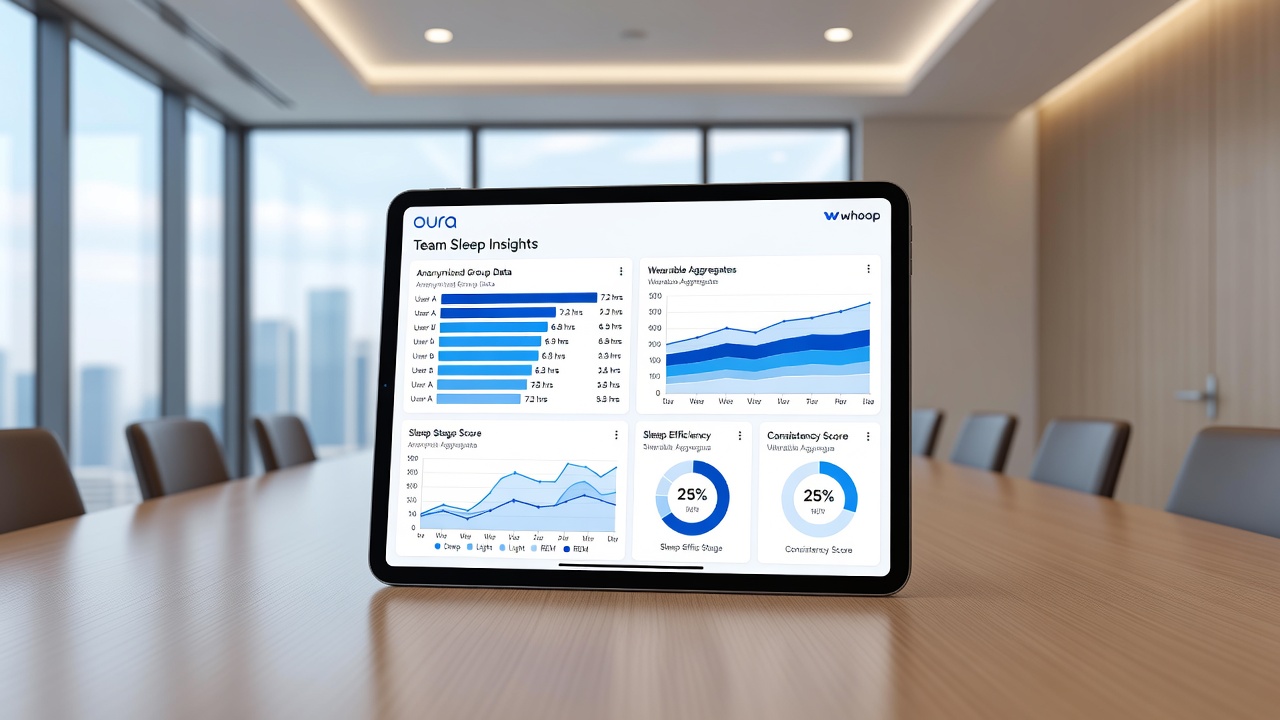
- Integrate dashboards that aggregate anonymized insights for leadership review, ensuring the system supports exportable reports for compliance audits.
- Measure progress with quarterly reviews tied to productivity KPIs and health markers, adjusting the program based on participant feedback and performance data.
Each step should include dedicated communication campaigns to maintain transparency and enthusiasm throughout the rollout.
Real Company Examples and Success Stories
Tech firms and consulting agencies have piloted Oura rings for executive teams, noting improved recovery scores that translated into sustained high-performance quarters. One mid-sized software company implemented Whoop for its engineering department and documented a noticeable drop in overtime hours as employees recovered more efficiently outside work. Manufacturing companies using Whoop bands observed reduced safety incidents after targeting shift workers' sleep cycles, with night-shift teams showing particular gains in alertness during critical operations.
Healthcare providers have also embraced these tools, equipping nurses with Oura rings to monitor recovery between long shifts. These cases highlight scalable models adaptable to various industries, from finance to logistics, where sleep disruption is common. Success often hinges on leadership modeling healthy behaviors, such as executives sharing their own anonymized sleep trends during company town halls to normalize the practice.
ROI Metrics and Business Impact
Organizations tracking outcomes see returns through lower healthcare claims and elevated retention rates. Sleep-optimized teams demonstrate consistent gains in task efficiency during monitored periods. Qualitative benefits include stronger team morale and cultural shifts toward prioritizing recovery. When programs incorporate regular feedback loops, participants report higher job satisfaction, which correlates with reduced turnover costs and stronger employer branding in competitive talent markets.
Comparing Oura and Whoop for Group Analytics
Oura excels in detailed sleep stage breakdowns and readiness scoring, ideal for personalized coaching within wellness portals. Whoop emphasizes strain and recovery balance with robust team-view features suited for athletic or field-based workforces. Both support bulk data exports for HR analytics while maintaining individual privacy controls. Oura's ring form factor offers discreet wearability for office environments, whereas Whoop's band provides continuous strain monitoring that appeals to active roles. Decision-makers should evaluate pilot data from both platforms to determine which aligns best with their workforce demographics and wellness goals.
Privacy Considerations and Data Governance
Successful rollouts prioritize GDPR- and CCPA-compliant data handling. Companies establish strict policies limiting access to aggregated, de-identified metrics only. Employee trust builds when programs emphasize voluntary participation and transparent data usage agreements. Regular audits and third-party security reviews further strengthen these frameworks, ensuring that sensitive biometric information never influences performance evaluations or promotions.
Common Integration Challenges and Solutions
- Device adoption resistance: Address through incentives such as wellness reimbursements and success storytelling from early adopters who share non-identifiable wins.
- Data interoperability issues: Partner with vendors offering API support for seamless HRIS connections, and test integrations thoroughly during the pilot phase.
- Interpretation gaps: Provide training sessions on reading recovery scores and sleep trends, supplemented by optional one-on-one coaching for participants who want deeper guidance.
- Cost scaling: Start small and expand based on proven pilot results, focusing first on high-impact departments where sleep issues are most prevalent.
Overcoming these hurdles often requires ongoing communication and flexibility, allowing the program to evolve with user needs.
Best Practices for Sustained Engagement
To maximize long-term success, integrate sleep tracking with broader wellness offerings such as nutrition workshops or mindfulness resources. Encourage team-based challenges that foster friendly competition around sleep consistency without creating pressure. Regular pulse surveys help identify when engagement dips, enabling timely adjustments like updated educational content or new device features.
Conclusion
Oura and Whoop sleep tracking represent powerful tools for 2026 corporate wellness strategies. By focusing on evidence-based implementation, companies unlock sustained productivity and health improvements while navigating privacy and integration realities effectively. The most successful programs treat sleep tracking not as a standalone initiative but as part of a holistic approach to employee well-being.
FAQ
How do teams set up Oura or Whoop for corporate use?
Begin with vendor enterprise portals for bulk provisioning, followed by employee onboarding sessions that cover device pairing and app configuration. IT teams typically handle initial account creation and data-sharing permissions, while wellness coordinators facilitate group training to ensure everyone understands how to interpret personal insights alongside team benchmarks.
What does data interpretation involve for non-experts?
Simple dashboards highlight key indicators like sleep efficiency and recovery trends, with optional coaching modules translating scores into actionable daily habits. Participants learn to recognize patterns such as how late-night screen time affects readiness scores, empowering them to make informed lifestyle adjustments without needing advanced technical knowledge.
Can measurable health improvements be tracked over time?
Yes, longitudinal reports compare baseline versus post-intervention metrics such as reduced fatigue incidents and improved biometric consistency across participants. Over six to twelve months, many organizations observe trends like lower reported stress levels and fewer sick days, reinforcing the value of continued investment in these programs.
No comments yet. Be the first!