 Slow Bio Hack

Embracing Journaling Within Slow Living for Lasting Mindfulness
In today's fast-paced world, integrating journaling into slow living routines offers a powerful path to daily mindfulness and effective stress reduction. Slow living emphasizes intentional pacing, presence, and simplicity, while journaling provides a structured way to reflect and process emotions. This approach helps busy individuals create sustainable daily routines that foster calm and clarity without adding overwhelm. By combining these practices, you can transform ordinary moments into opportunities for self-awareness. Research from authoritative health sources highlights how consistent reflection supports mental well-being and lowers stress levels over time. World Health Organization resources on mental health underscore the value of mindful habits in daily life.
Readers seeking practical mindfulness tools will find this method accessible and adaptable to varied schedules, whether you have five minutes or thirty. The key lies in making journaling a gentle anchor rather than another task on your list.
The Benefits of Reflective Journaling in Slow Living
Reflective journaling encourages slowing down to observe thoughts without judgment. When paired with slow living, it reduces mental clutter and promotes emotional balance. Key advantages include improved focus during daily routines, better sleep from evening wind-downs, and measurable drops in anxiety through pattern recognition. Over weeks, practitioners often report heightened gratitude and clearer decision-making. For example, someone juggling work and family might notice reduced reactivity after just two weeks of consistent entries. This method aligns perfectly with slow living by prioritizing quality over quantity in your personal rituals.
Morning Gratitude Prompts to Start Your Day Mindfully
Begin each morning with a simple journaling ritual to set a mindful tone. Choose a quiet spot, perhaps with herbal tea, and spend 10 minutes writing. Effective prompts include: "What three small things am I grateful for today?" or "How can I move through my tasks with intention?" Write freely without editing. This practice grounds you in appreciation and aligns with slow living by prioritizing presence over productivity.
Step-by-step example: 1. Wake naturally and avoid screens for the first 15 minutes. 2. Sit comfortably with your journal open to a fresh page. 3. List three to five gratitudes, being as specific as possible, such as the warmth of sunlight on your floor. 4. Note one mindful intention for the day, like savoring lunch without multitasking. 5. Close with three deep breaths and a positive affirmation. Repeat daily to build the habit seamlessly into your routine. Over time, these prompts train the brain to scan for positivity first, enhancing overall mindfulness and reducing morning stress.
Evening Reflection Techniques for Stress Release
End the day with reflective writing to process events and release tension. Techniques involve reviewing highlights, challenges, and lessons learned. Use prompts like "What brought me joy today?" and "What can I release before sleep?" Expand each answer with sensory details—what you saw, felt, or heard—to deepen the reflection. This ritual supports stress reduction by creating closure and prepares the mind for restful recovery within your slow living framework. A practical 15-minute sequence might start with free writing about the day's peak moment, followed by noting one lesson and ending with a body scan note on physical sensations of calm.
Tracking Emotional Patterns Over Time
Long-term journaling reveals recurring emotional themes, aiding deeper mindfulness. Dedicate a section of your journal to weekly reviews, noting mood shifts alongside triggers like work demands or social interactions. Over weeks, patterns emerge, allowing proactive adjustments to routines for sustained calm. For instance, you might discover that afternoon energy dips correlate with skipped meals, prompting a slow living adjustment like a mindful snack break. Use simple rating scales from 1-10 for mood and energy each evening, then review trends monthly. This tracking method turns journaling into a personal growth tool tailored to stress reduction goals, helping identify what truly nourishes your well-being.
Digital Versus Paper Journaling Methods Compared
Choosing between digital and paper options depends on personal preference and lifestyle. Paper journals offer tactile satisfaction and disconnection from screens, ideal for pure slow living immersion. Digital apps provide searchability, backups, and portability for on-the-go reflections. Many find hybrid approaches effective, starting on paper for mornings and using apps for evening notes.
- Paper pros: Enhances sensory focus, eliminates notifications, creates a beautiful physical record you can flip through years later.
- Paper cons: Harder to search past entries quickly, potential for physical loss or damage.
- Digital pros: Built-in reminders, easy tagging for emotional patterns, cloud backup for peace of mind.
- Digital cons: Risk of distractions from other device notifications if not managed carefully.
Experiment for a week with each to see which supports your mindfulness better. 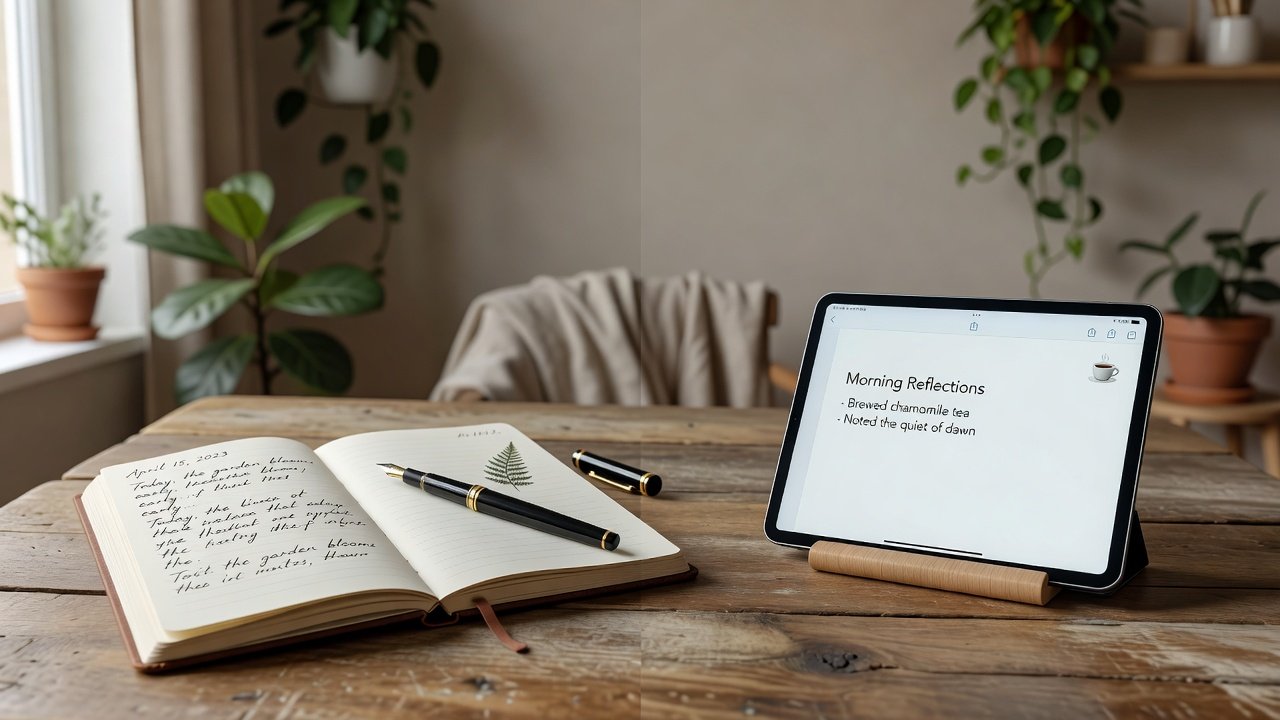
Overcoming Common Obstacles to Consistency
FAQ: Building a Sustainable Practice
How do I maintain journaling when life gets busy? Start with just five minutes and tie it to existing routines like coffee time. Consistency grows from small, non-negotiable slots rather than perfection. Many find success by keeping the journal visible on a bedside table as a visual cue.
What if I run out of things to write? Use structured prompts or revisit past entries for inspiration. The goal is presence, not lengthy prose. Try listing five things you noticed with your senses that day when words feel scarce.
Is there a best time for emotional tracking? Weekly reviews work well on Sundays to reflect without daily pressure, supporting ongoing mindfulness and allowing gentle course corrections.
How can I avoid self-judgment while writing? Remind yourself that entries are private and for your eyes only. Focus on honest observation rather than perfect grammar or positive spin.
What supplies do beginners need? A simple notebook and pen suffice to start; upgrade later if desired. Avoid overcomplicating the setup so the practice remains accessible within slow living principles.
Common Mistakes to Avoid
Many beginners treat journaling like a performance, writing what they think they should instead of what is true. Another pitfall is skipping days and then quitting entirely—treat missed sessions with compassion and resume immediately. Finally, resist the urge to analyze every entry in real time; save deeper insights for weekly reviews to keep the daily ritual light and restorative.
Conclusion: Cultivating Mindfulness Through Intentional Routines
Journaling within slow living routines transforms daily life into a mindful journey, delivering consistent stress reduction and emotional insight. By incorporating morning prompts, evening reflections, and pattern tracking, you create personalized practices that fit busy schedules while honoring the need to slow down. Experiment with paper or digital formats to discover what resonates, and address consistency challenges with flexible strategies. This holistic method empowers lasting well-being rooted in simple, repeatable actions that compound over months and years.


No comments yet. Be the first!