 Slow Bio Hack

Introduction to Stoic Cognitive Reframing
In today's fast-paced world, maintaining peak focus and mental resilience often feels elusive. Ancient Stoic philosophy offers timeless tools for cognitive reframing that align perfectly with modern brain optimization goals. By adapting techniques from thinkers like Marcus Aurelius and Epictetus, individuals can rewire negative thought patterns, enhance attention, and build lasting mental strength without relying on supplements or gadgets. This beginner-to-intermediate guide explores practical applications drawn directly from Stoic texts, emphasizing sustainable habits that improve daily performance in work, relationships, and personal challenges. Search intent around focus hacks often leads people toward fleeting solutions, yet Stoicism provides an internal framework that grows stronger with consistent use. Readers will discover how reframing transforms obstacles into opportunities, fostering clarity even amid distractions. The approach avoids external dependencies, relying instead on deliberate mental exercises practiced daily.
Understanding Cognitive Reframing in Stoicism
Cognitive reframing involves shifting perspective on events to reduce emotional reactivity and improve decision-making. Stoics viewed this as essential for living in accordance with nature and reason, a principle that remains highly relevant for contemporary mental health. Epictetus taught that "it's not what happens to you, but how you react to it that matters," a statement that underpins much of modern cognitive behavioral therapy. Neuroscience supports these ancient insights by demonstrating how reframing activates the prefrontal cortex, which in turn improves emotional regulation and sustained attention spans. Practitioners learn to separate facts from interpretations, preventing automatic negative spirals that erode focus. Key principles include distinguishing between what is within our control and what is not, a concept central to Stoic thought and repeatedly emphasized in the Enchiridion. This dichotomy reduces anxiety over uncontrollable elements like traffic, weather, or others' opinions while directing energy toward actionable responses. Stanford Encyclopedia of Philosophy provides deeper historical context on these foundational ideas and their evolution through Roman and Greek thinkers.
Core Techniques from Marcus Aurelius and Epictetus
Marcus Aurelius, in his personal writings known as Meditations, emphasized journaling as a primary reframing tool. He regularly questioned his assumptions about adversity, reminding himself that external events carry no inherent good or bad quality until interpreted by the mind. Epictetus focused heavily on voluntary discomfort practices to build resilience, training the mind to endure challenges willingly rather than resisting them. These methods foster attention training by encouraging present-moment awareness and reducing rumination on past regrets or future worries. Readers can begin by reading short passages from these authors and applying one insight per day, such as viewing interruptions as tests of patience instead of frustrations. Over time, this builds a robust internal dialogue that supports peak mental states during demanding tasks.
The Science Supporting Stoic Mental Training
Contemporary research in psychology validates many Stoic practices. Studies on cognitive reappraisal show measurable reductions in cortisol levels and improvements in working memory capacity after just eight weeks of consistent application. Attention training derived from Stoic mindfulness parallels mindfulness-based stress reduction programs, which have been shown to increase gray matter density in brain regions associated with focus. By combining these elements with voluntary discomfort, individuals strengthen the anterior cingulate cortex, enhancing conflict monitoring and impulse control. This evidence-based foundation makes Stoic reframing a reliable alternative to technology-dependent productivity systems that often lose effectiveness once novelty fades.
Voluntary Discomfort Practices for Resilience
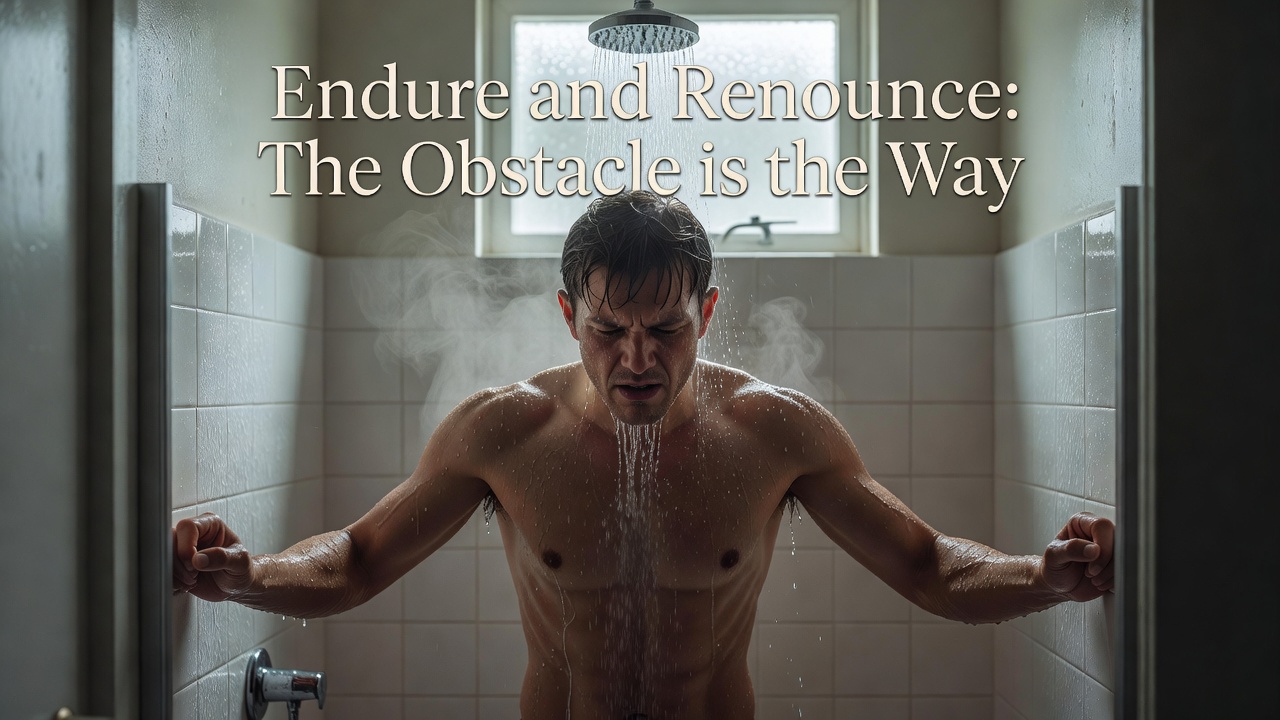
Voluntary discomfort serves as a cornerstone exercise for building mental toughness. Examples include taking cold showers, fasting for short periods, or deliberately choosing the harder route during daily commutes. These controlled exposures desensitize the nervous system to stress signals, allowing greater composure when unexpected difficulties arise at work or in personal life. Start small to avoid overwhelm, then progressively increase intensity while maintaining a reframed perspective that views discomfort as training rather than punishment. High-performers across fields report that such practices create a competitive edge by expanding their tolerance threshold far beyond average levels.
Attention Training Exercises Drawn from Stoic Principles
Attention training begins with simple labeling of thoughts during routine activities. When the mind wanders, gently note whether the thought is a judgment or an observation, then return focus to the present task. Another exercise involves the premeditatio malorum technique, where one mentally rehearses potential setbacks in advance and plans calm responses. This preemptive reframing reduces surprise reactions and preserves cognitive resources for important work. Over weeks of practice, users notice longer periods of deep concentration without the usual urge to check devices or seek distractions.
Five Practical Daily Steps for Implementation
- Morning reflection: Spend ten minutes journaling three things outside your control and deliberately reframing your response to each one, focusing on personal agency rather than external outcomes. This sets a proactive tone for the day and primes the mind for challenges ahead.
- Voluntary discomfort: Choose one minor challenge daily, such as a cold shower, skipping a preferred snack, or standing during a meeting. Maintain awareness of your internal narrative and reframe the sensation as beneficial training for resilience.
- Attention anchoring: Pause hourly to label current thoughts as "judgment" or "fact," then redirect focus to the immediate task. This micro-habit interrupts autopilot thinking and strengthens sustained concentration over time.
- Evening review: Assess your reactions to the day's events using Epictetus' dichotomy of control. Note instances where reframing improved your emotional state and identify areas for further refinement.
- Weekly integration: Apply reframing to one real high-stakes situation, such as a difficult conversation or deadline pressure, and document measurable improvements in focus and recovery speed afterward.
Comparison Table: Stoic Methods vs. Typical Productivity Hacks
| Aspect | Stoic Methods | Typical Productivity Hacks |
|---|---|---|
| Focus Mechanism | Cognitive reframing and acceptance of reality | Timers, apps, and external motivators |
| Resilience Building | Voluntary discomfort practices that expand tolerance | Avoidance of stress through optimization tools |
| Sustainability | Internal mindset shifts that compound over years | Dependent on ongoing tech or changing routines |
| Evidence Base | Ancient philosophy validated by modern psychological research | Short-term studies often lacking long-term follow-up data |
| Accessibility | Requires only consistent personal effort, no cost | Often involves subscriptions or device purchases |
Real-World Examples from High-Performers
Executives like Tim Ferriss have publicly adopted Stoic practices for decision-making under pressure, crediting reframing exercises for sustained mental clarity during high-stakes business negotiations. Athletes such as tennis champion Novak Djokovic use similar mindset shifts to maintain composure and strategic focus during lengthy matches. Historical figures including Theodore Roosevelt incorporated voluntary discomfort and journaling to navigate political crises with remarkable equanimity. Modern entrepreneurs frequently cite these techniques as key to recovering quickly from setbacks without losing momentum. These examples illustrate how Stoic tools translate across domains to support elite performance without external aids or financial investment.
Addressing Common Misconceptions in the FAQ
Is Stoicism just about suppressing emotions?
No, it teaches understanding and redirecting emotions through reason, leading to healthier expression and reduced internal conflict over time.
Does this require extensive philosophical study?
Beginners can start with simple daily exercises drawn from primary sources; deeper understanding develops naturally through consistent practice rather than academic reading alone.
Can these techniques replace professional mental health support?
They complement therapy effectively but are not substitutes for clinical care when symptoms indicate deeper issues. World Health Organization resources emphasize integrated approaches to mental well-being that may combine self-practices with professional guidance.
How long until results appear?
Many practitioners notice improved emotional stability within two to four weeks, with focus gains becoming more pronounced after consistent application for two months or longer.
Conclusion
Stoic cognitive reframing equips modern minds with robust, sustainable tools for focus and resilience. By integrating these ancient practices into daily routines, practitioners achieve genuine mental optimization grounded in self-mastery. The combination of reframing, voluntary discomfort, and attention training delivers compounding benefits that outlast any temporary productivity trend, fostering a calmer and more effective approach to life's demands.


No comments yet. Be the first!