 Slow Bio Hack

Personalized Brain Training Routine: Step-by-Step for Beginners
Building a personalized brain training routine is an effective way for beginners to enhance mental clarity, reduce everyday stress, and sharpen key cognitive skills without relying on advanced tools or prior experience. This method emphasizes sustainable daily practices that integrate seamlessly into busy schedules, particularly for office workers and professionals looking to boost productivity and emotional resilience. By focusing on self-awareness and gradual habit formation, individuals can achieve noticeable improvements in focus and overall brain performance over time.
Understanding the Benefits of Brain Training for Beginners
Brain training routines specifically target areas such as sustained attention, working memory, and emotional regulation. Studies from leading health organizations demonstrate that regular mental exercises promote neuroplasticity, allowing the brain to adapt and strengthen neural pathways. Beginners often report reduced mental fatigue, better mood stability, and increased efficiency in daily tasks within just a few weeks of consistent practice. These benefits extend beyond the workplace, supporting better sleep quality and stress management in personal life as well.
Self-Assessment Methods to Identify Focus Weaknesses
Before starting any routine, conduct a thorough self-assessment to pinpoint specific areas needing improvement. Begin by maintaining a simple three-day journal where you record instances of distraction, energy fluctuations, and emotional triggers throughout the day. Rate your concentration levels on a scale of one to ten during key activities like meetings or report writing. Supplement this with free online cognitive quizzes available from trusted sources to establish a baseline. Interpreting results involves looking for patterns, such as consistent afternoon dips or difficulty with multitasking. This personalized insight ensures your training targets real challenges rather than generic assumptions, leading to more effective outcomes.
Selecting Beginner-Friendly Techniques
Choose straightforward techniques that require minimal setup and no previous expertise. Effective options include structured focus intervals, controlled breathing practices, brief mindfulness exercises, and light physical movements to enhance circulation. Limit initial selection to two or three methods to prevent overwhelm. Each technique should align with your daily rhythm, such as incorporating breathing during commutes or focus blocks between meetings. Over time, these can be layered for compounded benefits.
Focus Hacks: Timed Breaks and Breathing Exercises
The Pomodoro Technique involves 25-minute periods of dedicated work followed by five-minute restorative breaks. During breaks, engage in diaphragmatic breathing: inhale slowly for four seconds, hold for seven seconds, and exhale for eight seconds. This pattern calms the nervous system and restores mental energy. Additional hacks include the 20-20-20 rule for eye strain relief and quick posture resets to maintain alertness. These simple interventions build resilience against common distractions like email notifications or background noise.
Sample 7-Day Schedule with Progress Tracking
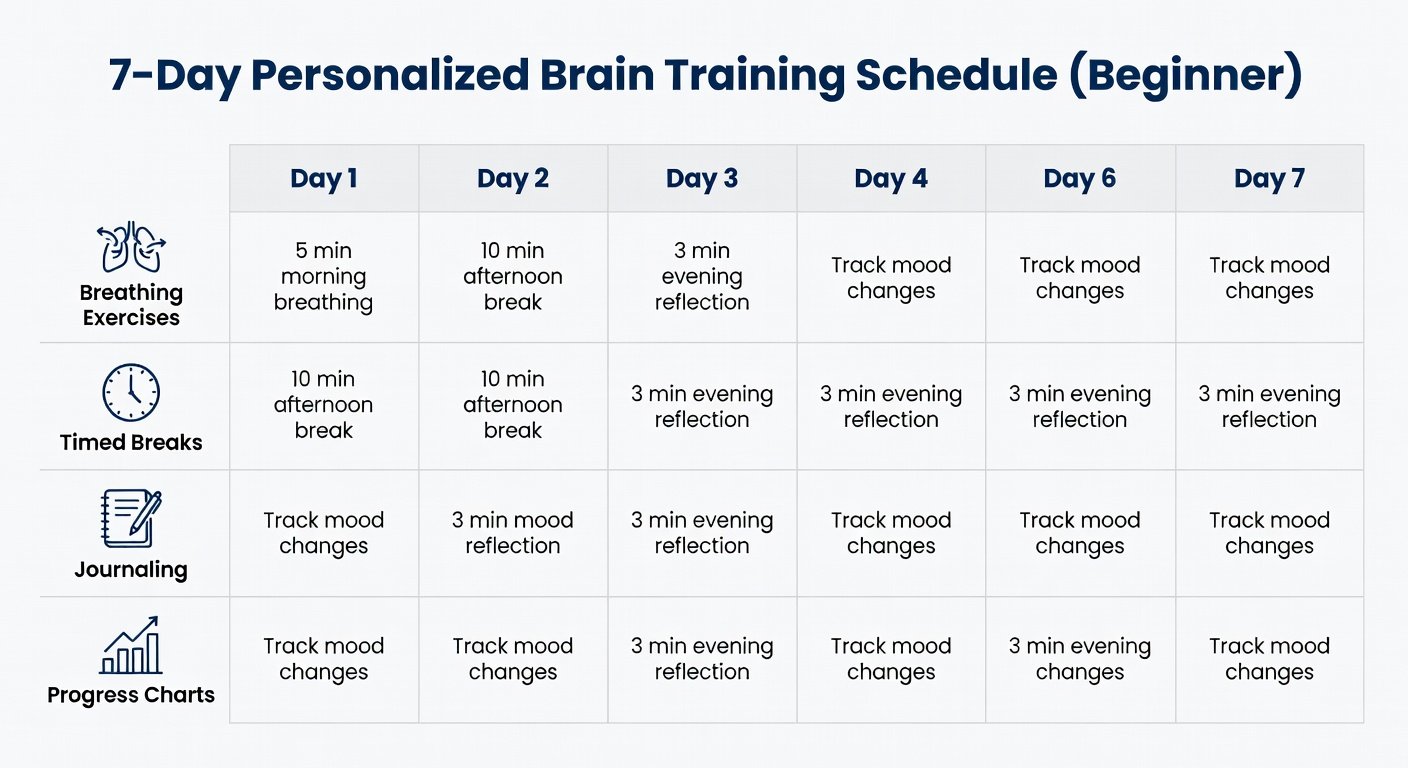
Implement this flexible weekly framework, customizing timings to fit personal commitments. Track progress using a basic log noting daily focus scores, completed tasks, and any adjustments made.
- Day 1: Start with a five-minute morning breathing session and one 25-minute focus block in the morning.
- Day 2: Repeat Day 1 and add an afternoon stretching break to address physical tension.
- Day 3: Introduce a second focus block after lunch while reviewing journal entries for patterns.
- Day 4: Incorporate a short mindfulness pause during high-stress periods.
- Day 5: Extend one focus block to 30 minutes and evaluate energy levels midweek.
- Day 6: Combine techniques into a full morning routine and reflect on weekly improvements.
- Day 7: Conduct a full review, adjust future weeks based on what worked, and plan lighter activities for recovery.
Progress tracking can involve simple spreadsheets or apps, measuring metrics like task completion rates and self-rated clarity to visualize growth.
Habit-Based vs Supplement Approaches: A Detailed Comparison
Habit-based strategies rely on consistent behavioral changes and lifestyle integration, delivering sustainable cognitive enhancements at no financial cost. In contrast, supplement-based methods may offer temporary support through nutrients but often require medical consultation and can vary in effectiveness. Pros of habits include long-term skill development and adaptability, while supplements might appeal for quick support during demanding periods. Many professionals find that prioritizing habits first creates a stronger foundation, reducing dependency on external aids. This comparison highlights why personalized routines centered on daily actions tend to yield more reliable results for beginners.
Real-World Examples from Office Workers
Consider Sarah, a marketing coordinator who struggled with afternoon focus lapses. By introducing timed breaks and breathing exercises into her schedule, she experienced sharper concentration and completed projects faster within two weeks. Another example is John, an accountant handling complex spreadsheets, who used daily journaling for self-assessment and gradually built a seven-day routine that minimized errors and improved work-life balance. Emily, a remote team lead, adapted the schedule around her meetings and reported enhanced creativity in problem-solving after consistent practice. These cases illustrate how tailoring the approach to individual workflows leads to practical, measurable gains in mental performance.
Sustainable Integration to Avoid Burnout
To maintain momentum without exhaustion, introduce changes incrementally by starting with short sessions of ten to fifteen minutes. Monitor for signs of fatigue and scale back as needed, incorporating rest days or lighter activities. Pair the routine with supportive habits like adequate hydration and quality sleep. Common pitfalls to avoid include overloading the schedule or ignoring body signals. This balanced method promotes ongoing brain optimization while preserving energy and motivation for the long term.
Frequently Asked Questions
How do I measure results from my brain training routine?
Evaluate progress through both subjective notes on focus and mood as well as objective indicators such as productivity logs or reduced error rates. Revisit initial self-assessments every two weeks to quantify changes and refine the approach.
How should I adjust the routine for individual needs?
Customize session lengths and placement according to your chronotype and responsibilities. For instance, shift breathing exercises to evenings if mornings are rushed, or shorten blocks during high-pressure weeks.
Is this suitable if I have no prior experience?
Yes, the framework is built specifically for novices, providing clear steps and low time commitments that build confidence gradually through repetition.
What if I miss a day in the schedule?
Simply resume the next day without self-criticism. Flexibility prevents discouragement and supports long-term adherence.
Can I combine this with other wellness practices?
Absolutely. Integrate elements like light exercise or nutrition tracking to amplify benefits, but introduce additions slowly to maintain simplicity.
How long until I see noticeable improvements?
Most beginners observe subtle shifts in focus within one to two weeks, with more significant cognitive enhancements emerging after four to six weeks of steady practice.
Consistency remains the cornerstone of success. Begin with a focused self-assessment today and evolve your routine thoughtfully to unlock sustained mental advantages and greater overall well-being.


No comments yet. Be the first!