 Slow Bio Hack
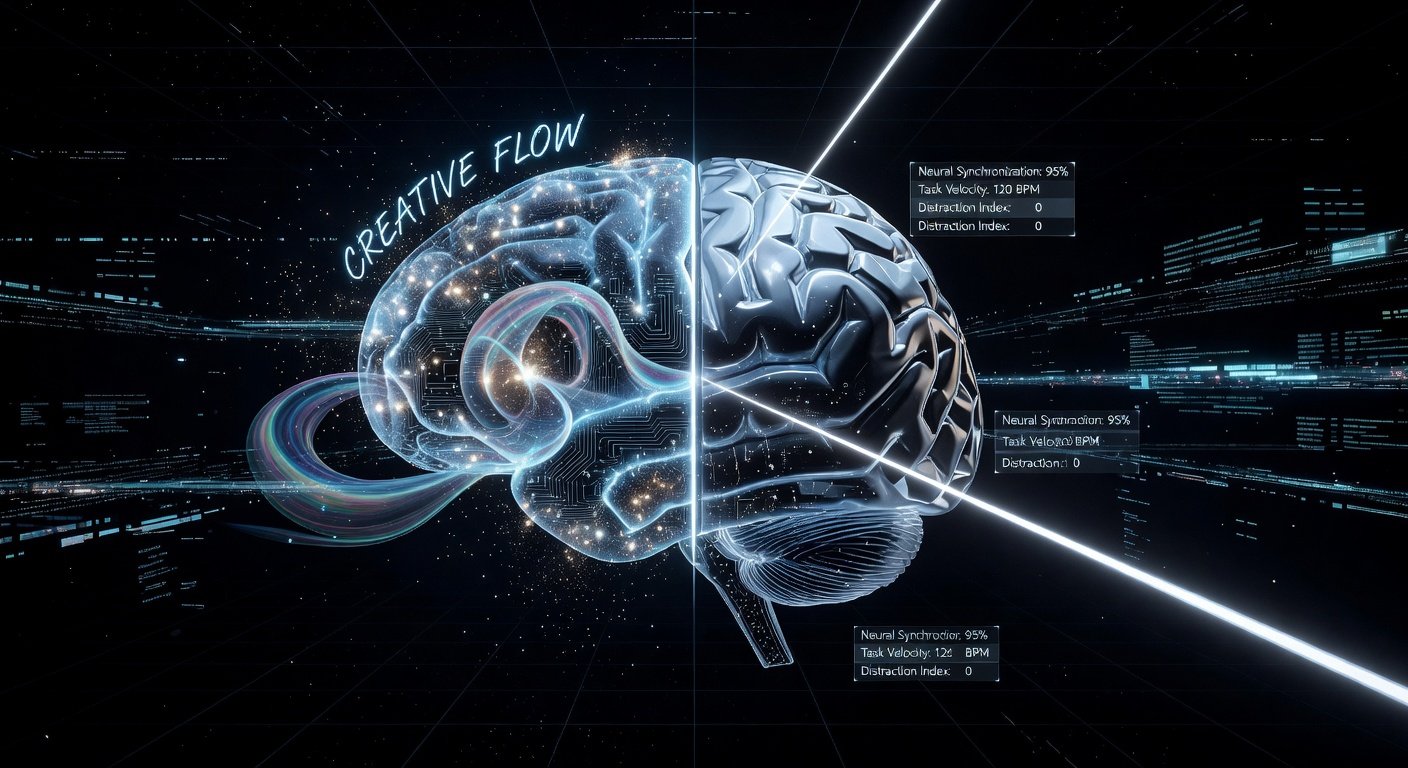
In the fast-paced world of 2026, where AI assistants, neural wearables, and cognitive enhancers dominate daily life, achieving superior mental performance is no longer optional—it's essential. Enter flow state and deep work: two powerhouse techniques for brain optimization that promise unmatched focus, creativity, and productivity. But which one edges out the other for your cognitive edge? This comprehensive guide dives deep into their differences, scientific backing, practical exercises, productivity metrics, and seamless integration strategies for modern routines.
Whether you're a biohacker fine-tuning your mind with nootropics or a professional navigating hybrid work environments, understanding flow state vs. deep work can transform your mental game. We'll explore their origins, neurological impacts, real-world applications, and how to blend them for 2026-level results.
What is Flow State? The Ultimate Immersion Zone
Coined by psychologist Mihaly Csikszentmihalyi in the 1970s, flow state is that magical "zone" where time vanishes, self-consciousness fades, and you're fully absorbed in a challenging yet achievable task. Imagine coding a complex algorithm or painting a masterpiece—your brain fires on all cylinders, producing effortless high-quality output.
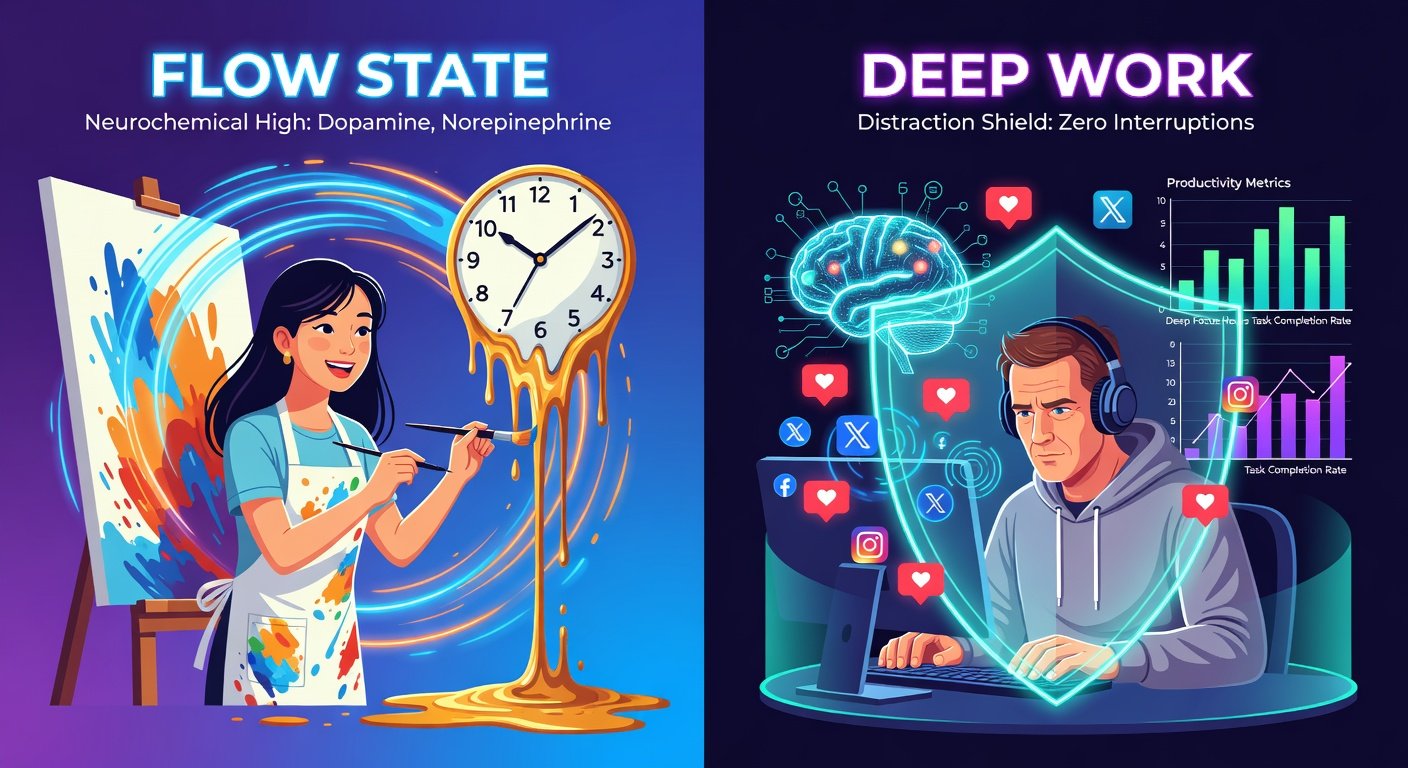
Scientifically, flow triggers a cascade of neurochemicals: dopamine for motivation, norepinephrine for arousal, endorphins for euphoria, anandamide for bliss, and serotonin for satisfaction. This cocktail enhances pattern recognition, creativity, and learning speed. Studies show flow boosts performance by up to 500% in creative tasks, with lasting benefits for mental health like reduced anxiety and depression.
For more on the science, check Flow State on Wikipedia.
Key Triggers for Entering Flow
- Clear Goals: Know exactly what success looks like.
- Immediate Feedback: Real-time progress indicators, like a game score.
- Challenge-Skill Balance: Task difficulty matches your ability—too easy bores, too hard frustrates.
- Min distractions: Single-tasking in a controlled environment.
- Intrinsic Motivation: Do it because you love it, not for external rewards.
What is Deep Work? Focused Execution Mastery
Popularized by Cal Newport in his 2016 book, deep work is the ability to concentrate without distraction on cognitively demanding tasks. It's not about joy but relentless focus—think a surgeon during a procedure or a writer crafting a novel chapter. In 2026, with VR deep work pods and focus-enhancing neurofeedback wearables, it's more accessible than ever.
Neurologically, deep work strengthens the prefrontal cortex, improving executive function, decision-making, and myelin sheath development for faster neural signaling. Research from the University of California indicates deep work practitioners show 40% higher productivity and lower error rates in knowledge work. Mentally, it builds resilience against digital overload, combating burnout prevalent in our always-on era.
Learn more via Cal Newport on Wikipedia.
Core Principles of Deep Work
- Time Blocking: Schedule 90-120 minute sessions with no interruptions.
- Ritualization: Same time, place, tools—like a dedicated desk with noise-cancelling headphones.
- Embrace Boredom: Train your brain to resist shiny distractions.
- Shutdown Ritual: End sessions decisively to prevent cognitive residue.
- 4DX Framework: Focus on wildly important goals amid the whirlwind.
Flow State vs Deep Work: Head-to-Head Comparison
While both elevate focus, flow state is spontaneous and joyful, often emerging organically in passionate pursuits. Deep work is deliberate and disciplined, schedulable for any high-value task. Here's a breakdown:
| Aspect | Flow State | Deep Work |
|---|---|---|
| Trigger | Intrinsic passion + balance | Intentional scheduling |
| Duration | Hours, effortless | 90-240 mins, effortful |
| Best For | Creative, exploratory work | Analytical, linear tasks |
| Neurochemicals | Dopamine-heavy bliss | Willpower-driven focus |
| Mental Health Impact | Reduces stress long-term | Builds discipline, fights procrastination |
Productivity Metrics: Flow yields 400-700% output spikes in flow-prone tasks (per McKinsey studies), while deep work averages 2-3x daily value creation. Track yours with apps like RescueTime or 2026's AI coaches, aiming for 4+ hours weekly per mode.
Scientific Impacts: Cognitive Performance and Mental Health
Both states rewire the brain. Flow expands default mode network activity, fostering innovation—fMRI scans reveal heightened alpha waves akin to meditation. Deep work thickens gray matter in attention networks, per Harvard Business Review insights on focused practice.
Mentally, flow combats depression (Csikszentmihalyi's longitudinal data: flow-prone individuals 30% happier). Deep work shields against ADHD-like distractions in a dopamine-saturated world, reducing cortisol by 20-30% post-session.
In 2026, integrate with biohacks: Flow with binaural beats (8-12Hz theta waves); deep work with transcranial stimulation devices.
Practical Exercises to Master Each State
Flow State Exercises
- Pomodoro Flow: 25 mins on a micro-challenge, scale up.
- Skill Stacking: Combine hobbies (e.g., guitar + improv) for novelty.
- Environmental Hack: Curate a "flow cave"—dim lights, favorite tunes.
- Journal Prompts: "What absorbed me today?" Review weekly.
Deep Work Exercises
- Monk Mode Day: 4-hour block, phone off, one task only.
- Attention Ritual: 5-min breathwork pre-session.
- Distraction List: Note urges, review post-session.
- Metric Tracking: Words written/pages coded per hour.
Integration Strategies for 2026 Daily Routines
Don't choose—hybridize. Morning deep work (analytical peak), afternoon flow (creative surge). Use wearables like Neuralink-lite for real-time flow detection or AI schedulers for deep blocks.
Sample Routine:
- 6-8 AM: Deep work (emails, planning).
- 9-12 PM: Flow projects (ideation).
- PM: Shallow tasks, recovery.
- Evening: Reflection + micro-flow (reading).
Mistakes to Avoid:
- Forcing flow—let it emerge.
- Multitasking in deep work.
- No recovery: Alternate with walks.
- Ignoring metrics—use Toggl for data.
FAQs: Flow State vs Deep Work
Q: Can anyone achieve flow? Yes, with practice—start small.
Q: Deep work for introverts only? No, extroverts thrive with social deep dives.
Q: 2026 Tech Boosters? Yes: Muse headbands for flow, Focus@Will audio for deep.
Q: Measure Success? Hours in state + output quality.
Conclusion: Claim Your Cognitive Edge
Flow state ignites passion-fueled brilliance; deep work forges disciplined mastery. In 2026, wielding both catapults you beyond average—expect sharper focus, elevated creativity, and robust mental health. Experiment, track, iterate. Your optimized brain awaits.
No comments yet. Be the first!