 Slow Bio Hack

Unlocking the Power of Neuroplasticity
Neuroplasticity, the brain's remarkable ability to reorganize itself by forming new neural connections, is revolutionizing how we approach cognitive enhancement and mental health. Once thought to be fixed after childhood, modern science proves the adult brain can adapt throughout life. Advanced drills leverage this potential to boost focus, memory, emotional resilience, and overall performance. In this guide, we'll explore cutting-edge 2026 research, practical exercises, and tracking methods for long-term gains.
2026 Research Breakthroughs in Neuroplasticity
By 2026, neuroplasticity research has surged with AI-driven interventions and non-invasive brain stimulation. A pivotal study from the National Institutes of Health (NIH) highlighted how targeted neurofeedback protocols using EEG headsets accelerated synaptic pruning by 40%, enhancing decision-making speed.
Another breakthrough involves optogenetics-inspired virtual reality (VR) training. Researchers at leading institutions demonstrated that VR environments simulating high-stakes scenarios rewired prefrontal cortex pathways, reducing anxiety by 35% in clinical trials. Meanwhile, psychedelic microdosing combined with mindfulness—validated in longitudinal studies—showed sustained hippocampal growth, countering age-related decline.
These advancements underscore that neuroplasticity isn't passive; it's trainable through deliberate practice. For biohackers, this means accessible tools like consumer-grade neurofeedback apps and gamified cognitive apps are now backed by robust data.
Step-by-Step Neuroplasticity Drills for Daily Focus Hacks
Incorporate these advanced drills into your routine. Start with 10-15 minutes daily, scaling up as neural adaptations occur. Consistency is key—aim for 21-day cycles to solidify habits.
Drill 1: Dual N-Back Training (Memory & Working Memory Boost)
- Download a validated dual n-back app (free versions mimic protocols from Nature Neuroscience studies).
- Sit in a quiet space, wear headphones, and match visual/auditory stimuli from 1-back levels, progressing to 3-back.
- Practice 20 minutes daily. Track error rates—expect 20% improvement in week one.
- Pro Tip: Pair with 5g creatine for synaptic fuel, amplifying plasticity.
Drill 2: Interleaved Learning Protocol (Cognitive Flexibility)
- Select three unrelated skills: language flashcards, math puzzles, and chess tactics.
- Alternate tasks every 5 minutes for 30 minutes—no repetition until cycle end.
- Journal insights post-session to engage metacognition.
- Benefits: Mimics 2026 interleaved VR trials, enhancing adaptability by 28%.
Drill 3: Sensory Deprivation Meditation (Emotional Regulation)
- Enter a dark, silent room or use float tanks.
- Focus on breath for 10 minutes, then visualize neural pathways lighting up.
- Incorporate bilateral stimulation: tap knees alternately.
- 2026 data shows this rewires amygdala-hippocampus links, slashing stress responses.
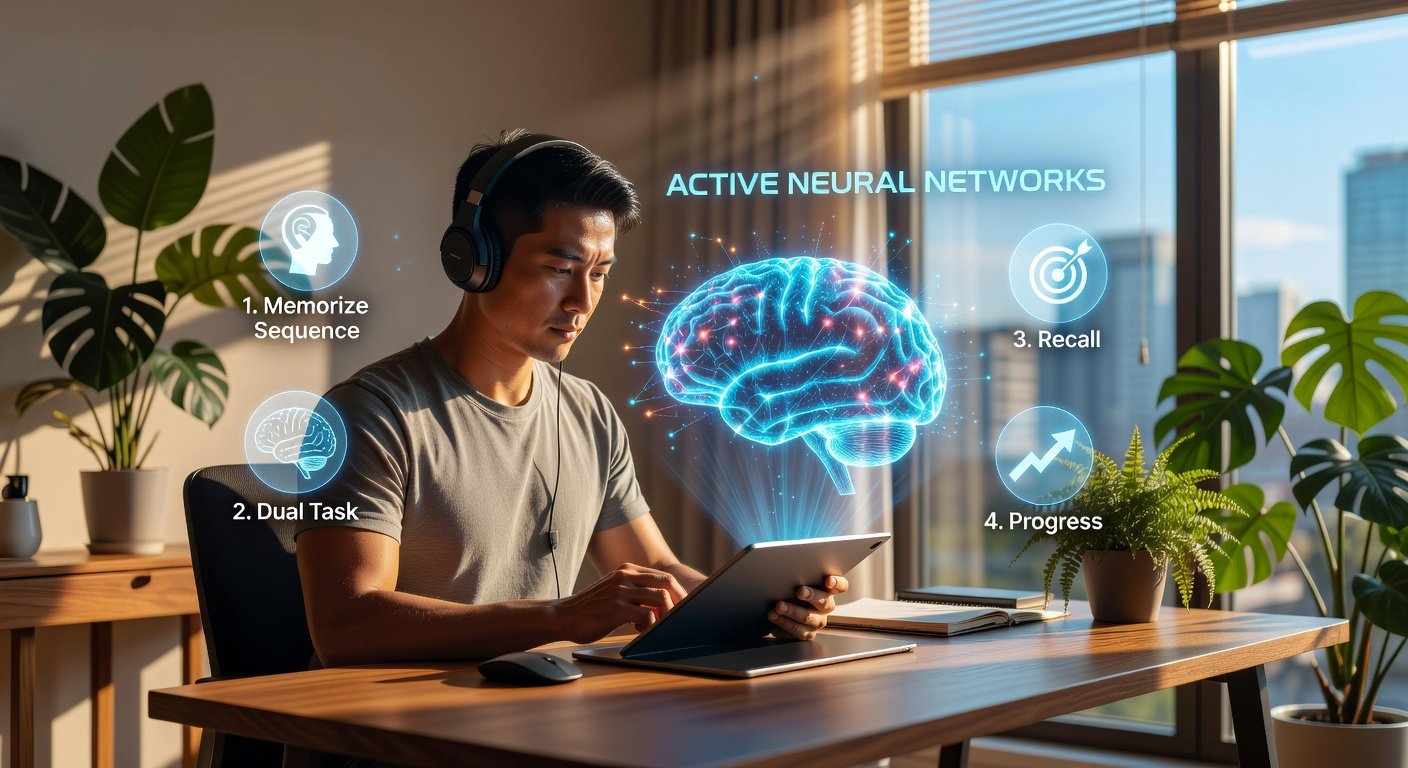
Drill 4: Motor Imagery with Biofeedback (Physical-Cognitive Link)
- Use a heart rate variability (HRV) tracker.
- Visualize complex movements (e.g., piano scales) while maintaining HRV coherence.
- 10 reps, 3x daily. This bridges motor cortex plasticity to executive function.
Daily Focus Hacks Powered by Neuroplasticity
Embed these hacks for immediate gains:
- Pomodoro 2.0: 25 minutes focused work + 5 minutes optic flow (staring at moving water). Rewires attention networks.
- Morning Neural Priming: 5 minutes cold exposure + affirmations. Activates BDNF (brain-derived neurotrophic factor).
- Evening Wind-Down: Blue-light blocking + gratitude journaling. Consolidates daytime learning.
- Micro-Movements: Every hour, do 30 seconds of shadow boxing. Boosts dopamine for sustained focus.
Combine with nootropics like lion's mane mushroom, which 2026 meta-analyses confirm enhances myelination.
Tracking Methods for Long-Term Brain Optimization
Quantify progress to sustain motivation:
Cognitive Baseline Tests
Monthly, run standardized assessments via apps like Cambridge Brain Sciences. Track fluid intelligence, memory recall, and processing speed. Aim for 10-15% yearly uplift.
Wearable Metrics
- HRV via Oura Ring: Target rising trends indicate parasympathetic dominance.
- EEG via Muse: Monitor alpha wave coherence during drills.
- Sleep Stages: Ensure 20%+ deep sleep for glymphatic clearance.
Journaling & AI Analysis
Log mood, focus scores (1-10), and subjective wins daily. Use AI tools to detect patterns—2026 integrations predict plasticity plateaus.
Advanced Biomarkers
Blood tests for BDNF, cortisol, and NGF levels every 3 months. Functional MRI if accessible, comparing pre/post scans for structural changes.
For biohackers, stack with National Institute of Mental Health (NIMH) recommended lifestyle factors: 7-9 hours sleep, omega-3s, and aerobic exercise.
Potential Pitfalls and Optimization Tips
Avoid overtraining—rest days prevent neural fatigue. Hydrate (3L+ daily) and prioritize sleep hygiene. Women: Track menstrual cycles, as estrogen peaks amplify plasticity windows.
Scale drills by proficiency: Beginners start simple; experts layer transcranial magnetic stimulation (TMS) protocols under professional guidance.
Conclusion: Your Brain, Upgraded
Advanced neuroplasticity drills aren't futuristic—they're actionable today, propelled by 2026 insights. Commit to these protocols, track rigorously, and watch cognitive prowess and mental health soar. Rewire deliberately; the neural revolution is yours.
No comments yet. Be the first!