 Slow Bio Hack

Introduction to Breathing for Cognitive Enhancement
In 2026, professionals and students alike seek reliable ways to sharpen focus and support long-term brain health. Breathing techniques stand out as accessible, science-backed tools that regulate the nervous system, improve oxygenation, and promote neuroplasticity. These methods help lower anxiety while sharpening attention without requiring expensive equipment or apps. The growing interest in breathwork reflects a broader shift toward non-pharmacological approaches that deliver sustainable mental performance gains. By dedicating just minutes each day, individuals can experience enhanced memory retention, quicker decision-making, and greater emotional stability under pressure.
Research consistently links controlled breathwork to measurable gains in mental clarity and emotional resilience. By consciously altering breathing patterns, individuals activate the parasympathetic nervous system, reducing cortisol and increasing oxygen delivery to the prefrontal cortex—the brain region responsible for decision-making and sustained attention. This article provides a complete guide including the underlying science, detailed instructions for proven techniques, integration strategies, comparisons to other focus methods, real-world applications, and answers to common questions.
The Science Connecting Breathwork to Brain Performance
Breathing directly influences blood oxygen levels and carbon dioxide balance, which in turn affects neurotransmitter activity. Slow, deliberate breathing increases alpha brain waves associated with relaxed alertness. Studies from institutions like the National Institutes of Health demonstrate that regular practice can enhance connectivity in brain networks tied to focus and memory consolidation. The vagus nerve plays a central role here; stimulation through extended exhalations signals the brain to shift from fight-or-flight mode into rest-and-digest, lowering inflammatory markers that impair cognition over time.
Physiological mechanisms include vagus nerve stimulation, which lowers heart rate variability markers of stress. Over time, this supports neuroplasticity by encouraging new neural pathways. Unlike caffeine or digital focus apps, breathwork offers cumulative benefits with zero side effects when practiced correctly. Functional MRI research shows increased gray matter density in areas responsible for attention after eight weeks of consistent use. These changes compound, making breathwork particularly valuable for long-term brain optimization in high-demand environments.
Core Breathing Techniques Explained
Three primary methods deliver the strongest results for cognitive optimization. Each includes clear step-by-step instructions suitable for beginners and advanced practitioners alike.
4-7-8 Breathing for Rapid Calm and Focus
This technique, popularized by Dr. Andrew Weil, excels at interrupting anxiety spirals before important tasks. Inhale quietly through the nose for 4 seconds, hold the breath for 7 seconds, then exhale completely through the mouth for 8 seconds making a whooshing sound. Repeat for four cycles. Use it before meetings or exams to reset attention within two minutes. The extended exhale activates the parasympathetic response more powerfully than equal-ratio breathing, making it ideal for acute stress moments. Many users report feeling grounded within 60 seconds of starting the first cycle.
Box Breathing for Sustained Concentration
Popular among high-performance professionals, box breathing builds mental endurance. Inhale for 4 seconds, hold for 4 seconds, exhale for 4 seconds, and hold again for 4 seconds. Perform 4–6 rounds during study sessions or deep work blocks. Many executives report improved decision quality after incorporating it into daily routines. Navy SEALs have used variations of this method for decades to maintain composure in chaotic situations, and the equal timing creates a rhythmic pattern that stabilizes heart rate and sharpens mental clarity.
Physiological Sighs for Quick Reset
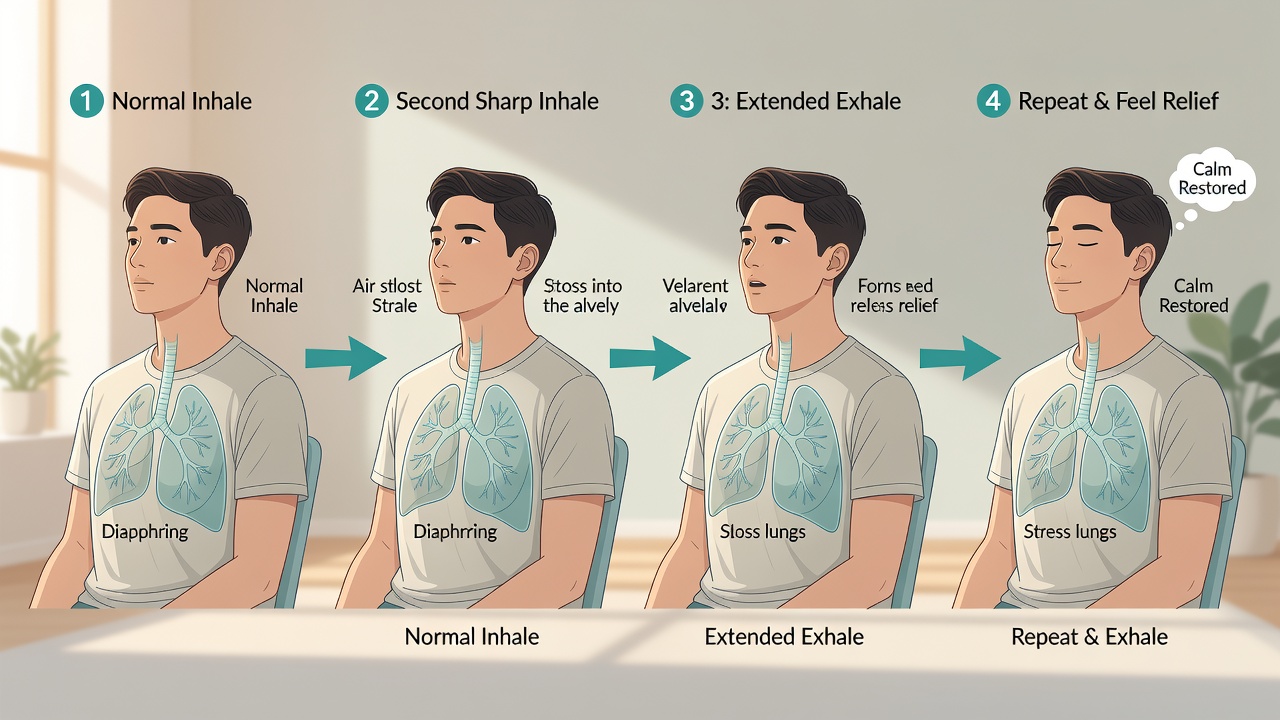
Developed through Stanford research, this two-breath method rapidly lowers arousal. Take a deep inhale through the nose, followed by a quick second inhale to top off lung capacity, then a long, slow exhale through the mouth. One or two sighs provide immediate relief during high-pressure moments. The double inhale fully reinflates alveoli that may have partially collapsed during shallow breathing, maximizing oxygen uptake in seconds.
Daily Integration Routines for Lasting Results
Consistency matters more than duration. Begin mornings with 5 minutes of box breathing while planning the day. Schedule 4-7-8 breathing before lunch to manage midday stress. End evenings with physiological sighs during wind-down to improve sleep quality, which further supports next-day cognition. A sample schedule might include 3 minutes upon waking, 2 minutes before key tasks, and 4 minutes before bed. Professionals in finance and tech often combine these with existing habits such as commuting or pre-meeting preparation. Students benefit from brief sessions between classes to maintain focus across long study days. Tracking adherence with a simple journal helps identify which times yield the greatest cognitive returns.
How Breathwork Compares to Other Focus Strategies
Breathwork outperforms many common hacks in accessibility and sustainability. Unlike nootropics or meditation apps that may require subscriptions, breathing needs only practice. It also avoids the crash associated with stimulants. When compared to exercise alone, breathwork provides faster on-demand regulation of the nervous system during acute stress. Pomodoro timers and digital detoxes offer structure but lack the direct physiological impact on the autonomic nervous system that breathwork delivers. Combining breathwork with short walks or hydration yields synergistic effects, creating a robust daily protocol for brain optimization. For those exploring further resources, the Mayo Clinic provides additional guidance on mind-body practices that complement these techniques.
Real-World Examples and Measurable Progress
A software engineer at a major tech firm reduced afternoon brain fog by 60% after six weeks of twice-daily box breathing. A university student improved exam scores by practicing physiological sighs before tests, reporting lower test anxiety and better recall. Corporate trainers have introduced group box breathing sessions, noting higher engagement and fewer errors during afternoon meetings. Progress can be tracked through simple before-and-after self-assessments of focus duration or through wearable devices measuring heart-rate variability. Consistent practitioners often observe improvements within 14–21 days, with compounding benefits continuing for months.
Tracking Progress and Avoiding Plateaus
Effective tracking involves both subjective and objective measures. Keep a daily log noting energy levels, focus span, and mood on a 1–10 scale. Objective tools include free smartphone apps that measure breathing rate or consumer wearables that report nightly recovery scores. To avoid plateaus, vary techniques every two weeks or extend session lengths gradually. Reassess goals monthly to ensure the routine continues supporting evolving cognitive demands.
Common Beginner Mistakes to Avoid
- Over-breathing or forcing air too aggressively, which can cause lightheadedness.
- Ignoring posture—slouching restricts diaphragmatic movement.
- Skipping the hold phases in box and 4-7-8 methods, reducing effectiveness.
- Expecting instant mastery; allow 1–2 weeks of daily practice for noticeable shifts.
- Practicing in distracting environments instead of quiet, consistent spaces.
Frequently Asked Questions
How long until results appear?
Many users notice calmer focus within the first week. Deeper neuroplasticity changes emerge after 30 days of consistent practice.
Can these techniques help with clinical anxiety?
They complement professional treatment but do not replace therapy. Consult a healthcare provider for personalized advice.
Is there an ideal time of day?
Morning and pre-task sessions deliver the strongest cognitive benefits, though evening practice aids recovery and sleep.
Are there any contraindications?
Individuals with respiratory conditions should consult a physician before beginning intensive breathwork protocols.
Conclusion
Breathing techniques represent one of the most powerful, evidence-based tools for 2026 brain optimization. By mastering 4-7-8 breathing, box breathing, and physiological sighs, individuals gain reliable control over focus, anxiety, and mental resilience. Integrate these methods into daily life for sustainable cognitive gains that compound over time.


No comments yet. Be the first!