 Slow Bio Hack

Introduction: Movement as a Cognitive Tool in 2026
In 2026, professionals and high-performers increasingly turn to targeted physical activity instead of relying solely on sleep optimization or supplements. Exercise directly influences brain-derived neurotrophic factor (BDNF), a protein that supports neuron growth and synaptic plasticity. This article outlines practical protocols backed by current research to enhance focus, mood, and resilience. Readers seeking non-pharmaceutical strategies will find detailed comparisons, timing recommendations, sample schedules, and measurable tracking methods that go far beyond generic fitness advice.
The Role of BDNF in Brain Health
BDNF acts as fertilizer for the brain, promoting new connections in the hippocampus and prefrontal cortex. Aerobic activity elevates BDNF levels within 30 minutes, while resistance training sustains these gains over longer periods. Studies from institutions such as the National Institutes of Health confirm that consistent movement can improve memory retention by up to 20% in adults. Beyond memory, BDNF supports mood regulation by modulating serotonin pathways and reducing inflammation markers associated with anxiety and depression. Research also links higher BDNF to faster learning speeds and better stress resilience, making it a central target for anyone optimizing mental performance in demanding careers.
Aerobic vs Resistance Training: Which Delivers Better Cognitive Gains?
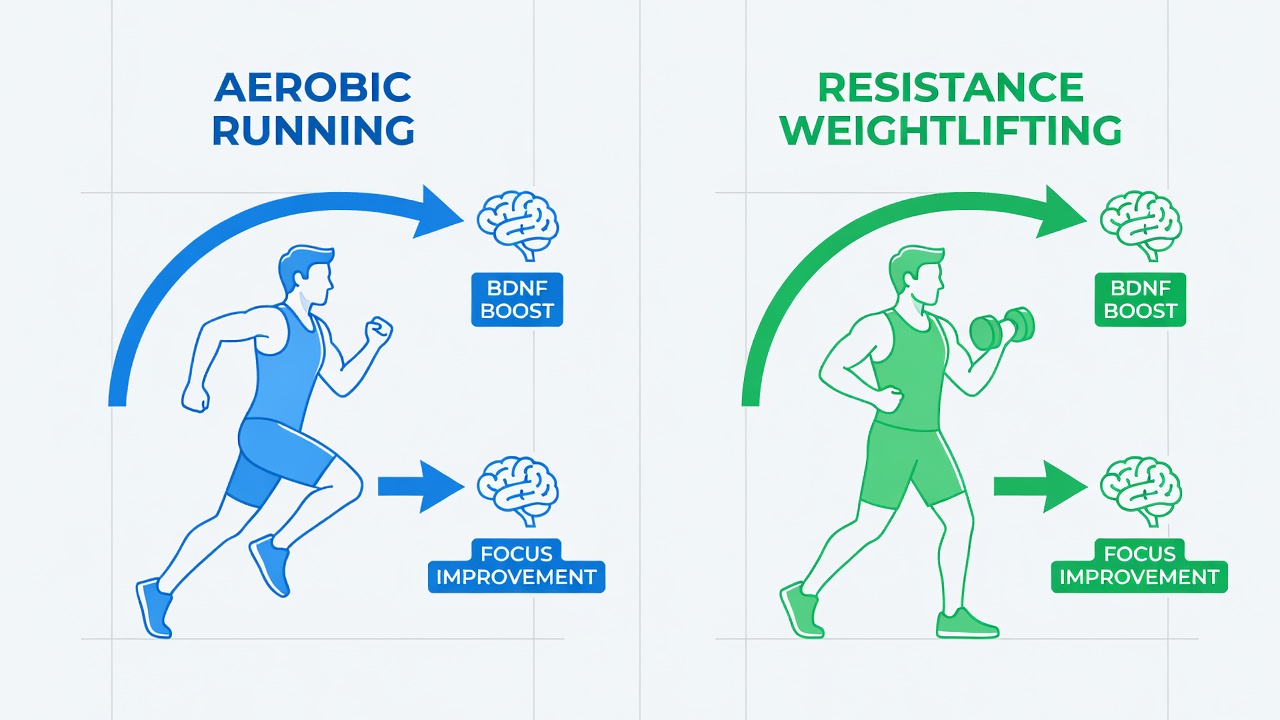
Aerobic exercise like running or cycling excels at immediate focus improvements through increased blood flow and rapid BDNF spikes. Resistance training, including squats and deadlifts, builds long-term structural brain benefits by supporting hormone balance and reducing inflammation. A balanced approach outperforms either method alone. For instance, combining 150 minutes of moderate cardio with two strength sessions weekly yields measurable improvements in executive function within four weeks. Aerobic sessions primarily enhance oxygen delivery and acute alertness, while resistance work improves insulin sensitivity and testosterone levels that indirectly support cognition. Individuals who alternate both modalities report fewer mental fatigue episodes and stronger emotional regulation compared with single-modality trainees.
Optimal Timing and Intensity for Focus Gains
Morning sessions between 7 and 9 a.m. align with natural cortisol peaks to sharpen attention for the workday. Afternoon workouts at moderate intensity (60-70% max heart rate) combat the post-lunch slump. High-intensity interval training (HIIT) three times weekly maximizes BDNF without overtaxing recovery systems. Track intensity using perceived exertion or wearable heart-rate data to stay in the effective zone. Evening sessions should remain light to avoid disrupting sleep architecture. Professionals who experiment with timing often discover that a 45-minute morning aerobic block followed by a 20-minute resistance circuit at 5 p.m. creates a dual peak in concentration and mood stability throughout the day.
Sample Weekly Routine with Progress Tracking
- Monday: 45-minute brisk walk or jog (aerobic focus) – log distance, average heart rate, and a one-to-ten mood score immediately after finishing
- Tuesday: Full-body resistance circuit (3 sets of 8-12 reps on major movements) – record weights, reps, and any post-workout mental clarity notes
- Wednesday: Active recovery yoga or mobility work for 30 minutes – track perceived stress levels before and after
- Thursday: HIIT session (20 minutes total) – note energy levels pre- and post-workout plus focus duration during the following two hours
- Friday: 30-minute steady-state cardio at conversational pace – monitor sleep quality the night before and after
- Saturday: Strength emphasis with progressive overload on compound lifts – compare weekly lifting totals to previous week
- Sunday: Rest or light walk with reflection on weekly cognitive wins and any adjustments needed
Use a simple spreadsheet or app to track metrics such as focus duration, sleep quality, and weekly BDNF-related mood indicators. Increase volume by 10% only when previous loads feel sustainable. Many users add a short weekly review every Sunday evening to correlate training data with self-reported productivity scores.
Real-World Examples from Professionals
Tech executives often schedule 30-minute midday walks to reset attention during long coding sessions. Therapists report that clients who add two resistance days experience fewer anxiety spikes and improved emotional regulation during high-stakes conversations. Athletes transitioning to desk jobs maintain morning runs to preserve mental sharpness, demonstrating that consistent movement protocols transfer across careers. One software architect in 2026 replaced his 7 a.m. coffee ritual with a 40-minute outdoor run and noted a 35% increase in deep-work blocks before lunch. A university professor incorporated two 25-minute HIIT sessions and documented faster reading comprehension on dense academic papers within three weeks.
Common Pitfalls to Avoid
Many people train at excessive intensity daily, leading to elevated cortisol and diminished returns. Others skip progression tracking, resulting in stalled results. Neglecting recovery days or pairing workouts with poor nutrition also undermines BDNF production. Start conservatively and prioritize consistency over volume. Additional pitfalls include ignoring individual chronotypes—night owls often perform better with later sessions—and failing to adjust intensity during high-stress periods at work. Monitoring resting heart rate and subjective energy each morning helps catch overtraining early.
Measuring Cognitive Improvements Objectively
Simple cognitive tests such as the Stroop test or digit-span recall can be performed weekly on free mobile apps. Users also track metrics like words written per hour, error rates in spreadsheets, or the number of uninterrupted focus blocks. When these numbers trend upward alongside training consistency, the exercise protocol is likely contributing to brain optimization. Wearable devices that estimate recovery scores provide additional context when correlated with cognitive performance logs.
Integrating Protocols with Demanding Daily Schedules
Time-blocking remains the most reliable method. Treat exercise as a recurring calendar appointment and prepare workout clothes the night before. For hybrid workers, short 20-minute bodyweight circuits during lunch breaks or between meetings maintain momentum without requiring gym access. Parents often combine exercise with family time by cycling or walking with children, turning routine movement into dual-purpose cognitive and bonding activities.
FAQ: Integrating These Protocols into Daily Schedules
How can I fit exercise into a packed calendar?
Break sessions into 20-minute blocks and treat them as non-negotiable meetings. Early morning or lunch-hour slots work best for most professionals. Many also use commute time creatively by walking or cycling part of the journey.
Is it safe to exercise with existing mental health conditions?
Consult a physician before starting. Moderate activity is generally supportive, but intensity should be adjusted based on individual tolerance. The World Health Organization recommends at least 150 minutes of moderate activity weekly for adults, including those managing mental health.
How long until I notice cognitive improvements?
Many report better focus within two weeks; structural brain changes typically appear after six to eight weeks of consistent practice. Keeping a simple journal accelerates recognition of subtle gains.
Can I combine these protocols with other optimization tools?
Yes. Pairing movement with brief meditation or strategic caffeine timing often amplifies results, provided recovery remains prioritized.
Conclusion
Targeted exercise offers a powerful, supplement-free path to optimized cognition and mental well-being. By understanding BDNF mechanisms, balancing training types, and following structured routines, readers can achieve sustainable gains. Begin with the sample schedule, track progress diligently, and adjust based on personal feedback for lasting results. Consistent application of these evidence-based hacks positions individuals for sharper focus and stronger mental health throughout 2026 and beyond.


No comments yet. Be the first!