 Slow Bio Hack

Introduction to Binaural Beats for Focus
Binaural beats have gained significant attention as a non-invasive tool for optimizing brain function and improving mental performance. By leveraging the brain's natural response to auditory stimuli, these audio tracks can help users achieve desired mental states such as heightened focus, relaxation, or creativity. In 2026, with increasing demands on cognitive resources in professional and academic settings, binaural beats represent a practical focus hack backed by ongoing research into brainwave entrainment. This method involves listening to specially crafted audio that presents two slightly different frequencies to each ear, resulting in the perception of a rhythmic beat that guides brain activity. Users seeking alternatives to caffeine or medication often turn to this approach for its simplicity and accessibility via headphones and common streaming platforms.
This article delves into the mechanisms behind binaural beats, their specific applications for cognitive performance, and actionable steps for incorporation into daily routines. Whether you're a student preparing for exams or a professional managing high-stakes projects, understanding these tools can provide a competitive edge. We'll explore evidence-based protocols, real-world applications, and tips to avoid common pitfalls, ensuring you can implement these strategies effectively for sustained mental clarity.
The Science of Brainwave Entrainment
Brainwave entrainment occurs when the brain synchronizes its electrical activity to external rhythmic stimuli, such as sound frequencies. Binaural beats are created by playing two slightly different tones in each ear, prompting the brain to perceive a third tone equal to the difference between them. This perceived beat influences brainwave patterns, shifting them toward states associated with improved cognition. The process relies on the superior olivary complex in the brainstem, which processes the phase difference and encourages neural oscillations to match the beat frequency. Over time, this can lead to measurable changes in EEG readings, reflecting shifts from scattered beta activity to more organized patterns conducive to focus.
Research from institutions like the National Institutes of Health supports the potential of auditory stimulation to modulate attention and memory. For instance, entrainment can promote alpha waves (8-12 Hz) linked to relaxed alertness or beta waves (13-30 Hz) tied to active concentration. Additional studies highlight how consistent exposure may enhance neuroplasticity, allowing the brain to adapt more readily to demanding tasks. Learn more about brain research at NIH. While results vary based on individual factors like age and baseline cognitive health, the underlying principle remains consistent across controlled trials.
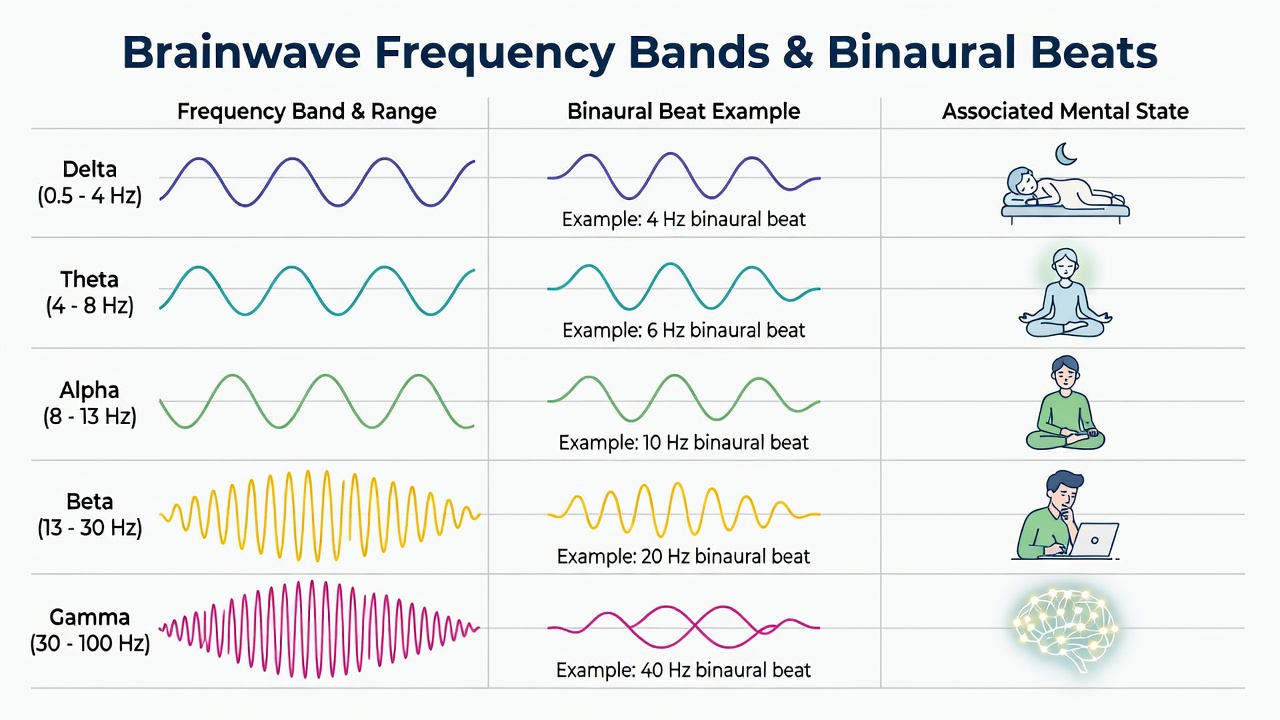
Frequency Types for Different Mental States
Different binaural beat frequencies target specific brainwave bands, each corresponding to distinct mental experiences. Understanding these allows precise selection for desired outcomes:
- Delta (0.5-4 Hz): Deep sleep and restoration, useful for recovery before demanding cognitive tasks. Ideal for evening wind-downs that prepare the mind for next-day performance.
- Theta (4-8 Hz): Enhanced creativity and meditation-like states, ideal for problem-solving sessions. Many artists and innovators use these to spark innovative thinking during brainstorming.
- Alpha (8-12 Hz): Calm focus and reduced anxiety, perfect for sustained work periods. This range helps maintain steady attention without overstimulation.
- Beta (13-30 Hz): High alertness and logical thinking, suited for analytical work. Professionals often select beta for data analysis or report writing.
- Gamma (30-100 Hz): Peak cognitive processing and insight, often used for complex learning. Advanced users report gamma tracks aiding in rapid information synthesis.
Selecting the right frequency depends on the desired outcome, with many apps offering presets for focus enhancement. Experimentation is key, as personal responses can differ based on time of day and current stress levels.
Step-by-Step Listening Protocols
To maximize benefits, follow these protocols. Begin by establishing a baseline: note your current focus level on a scale of 1-10 before starting. Then proceed as follows:
- Choose high-quality stereo headphones to ensure proper sound separation and avoid distortion that could reduce effectiveness.
- Select a track matching your target frequency for 15-30 minutes initially, starting with shorter sessions to assess tolerance.
- Listen in a distraction-free environment, ideally at the start of your workday or during dedicated focus blocks.
- Combine with breathwork: Inhale for four counts, hold for four, exhale for four to amplify entrainment effects.
- Track progress in a journal, noting focus levels before and after sessions along with any mood shifts.
- Gradually increase duration to 45-60 minutes as tolerance builds, incorporating breaks to prevent auditory fatigue.
- Layer with environmental adjustments like dim lighting or ergonomic seating for compounded benefits.
- Review weekly trends to refine frequency choices and timing based on observed performance gains.
Consistency over several weeks often yields the best results for cognitive improvements. Avoid listening while driving or operating machinery until you understand personal reactions.
Comparisons to Meditation Practices
While meditation requires dedicated practice and mental discipline, binaural beats offer a more accessible entry point for beginners. They can accelerate the achievement of meditative states by guiding brainwaves directly. However, they are not a complete replacement; combining both approaches often produces synergistic effects on focus and emotional regulation. Studies indicate that binaural beats may shorten the time needed to reach deep focus compared to unassisted meditation. Meditation builds long-term resilience through mindfulness, whereas binaural beats provide immediate state shifts. Hybrid routines—such as 10 minutes of beats followed by silent reflection—frequently deliver superior outcomes for users balancing busy schedules.
Real-User Examples and Integration Tips
Many professionals report using alpha-frequency beats during morning routines to prepare for meetings, leading to improved clarity and reduced procrastination. Students have integrated beta tracks into study sessions, noting better retention during long reading periods. One software engineer described pairing gamma beats with coding sprints, achieving deeper flow states that boosted output by noticeable margins. To integrate into daily life, pair sessions with existing habits like commuting or pre-meeting prep. Start with short 10-minute tracks during breaks to avoid overwhelming the schedule. For remote workers, schedule afternoon theta sessions to combat post-lunch dips without relying on additional stimulants.
Potential Benefits, Limitations, and Safety Considerations
Beyond focus, users often experience secondary benefits including lower stress hormones and improved sleep quality when protocols are followed consistently. Limitations include variable individual responses and the need for quality audio equipment. Those with neurological conditions should proceed cautiously. Check Mayo Clinic resources on complementary therapies. Always prioritize overall lifestyle factors like nutrition and exercise alongside audio tools.
How to Choose Quality Tracks and Tools
Opt for tracks from reputable creators verified through user reviews and scientific backing. Free options exist on major platforms, but premium versions often include customizable frequencies and progress tracking. Test multiple sources to find what resonates personally, and consider open-source research references for validation. Explore evidence-based wellness insights at Sleep Foundation.
FAQ on Safety and Effectiveness
Is it safe? Binaural beats are generally considered safe for most adults when used moderately. Those with epilepsy or sound sensitivities should consult a healthcare provider first.
How effective are they? Effectiveness varies by individual; results often improve with regular use and proper frequency selection.
Can they replace other focus methods? They work best as supplements to sleep, nutrition, and exercise rather than standalone solutions.
What if I feel no difference? Extend trial periods to at least three weeks and adjust volume or environment for optimal results.
Conclusion
Binaural beats offer a promising, science-informed approach to enhancing cognitive performance in 2026. By understanding frequencies, following structured protocols, and integrating them thoughtfully, users can unlock greater focus and mental clarity. Experiment safely and monitor personal responses to tailor this tool effectively within a balanced routine.


No comments yet. Be the first!