 Slow Bio Hack

Introduction: Why VO2 Max Matters for Longevity
VO2 max, the maximum rate at which your body can utilize oxygen during intense exercise, stands as one of the strongest predictors of lifespan and healthspan. Research consistently shows that higher VO2 max levels correlate with significantly lower risks of cardiovascular disease, cancer, and all-cause mortality. In 2026, optimizing this metric through targeted protocols offers a proactive way to enhance longevity, especially for those seeking evidence-based exercise strategies beyond generic cardio routines. Understanding and improving your VO2 max can lead to better daily energy, reduced chronic disease risk, and improved quality of life well into later decades. This guide goes beyond basics to deliver actionable, science-backed steps for all fitness levels.
The Science Linking VO2 Max to Reduced Mortality
Multiple large-scale studies demonstrate that each 1 MET (metabolic equivalent) increase in VO2 max is associated with a 10-15% reduction in mortality risk. This holds true across age groups and fitness levels. Higher aerobic capacity supports better mitochondrial function, improved insulin sensitivity, and reduced inflammation, all key factors in healthy aging. Cardiorespiratory fitness measured by VO2 max often outperforms traditional markers like cholesterol when predicting long-term outcomes. For deeper context on physical activity benefits, explore CDC physical activity guidelines. Individuals in the top quartile of VO2 max show dramatically lower rates of heart failure and metabolic syndrome compared to those in lower categories.
Measuring VO2 Max: Lab Tests vs. At-Home Methods
Accurate assessment forms the foundation of effective training. Laboratory cardiopulmonary exercise testing (CPET) remains the gold standard, delivering precise data through gas exchange analysis on a treadmill or bike. Many clinics offer this service with results interpreted by exercise physiologists, including ventilatory thresholds for precise zone setting. For at-home options, field tests like the Cooper 12-minute run or beep test provide reliable estimates when performed consistently. Wearable devices estimate VO2 max using heart rate and GPS data during runs, though accuracy improves with consistent use and calibration. Retest every 4-6 weeks to track progress. Beginners may start with a simple 1.5-mile timed walk or run, while advanced users benefit from lab confirmation every six months. Always warm up properly before testing to avoid inaccurate readings or injury.
Optimal Training Methods: Zone-Based Workouts and Intervals
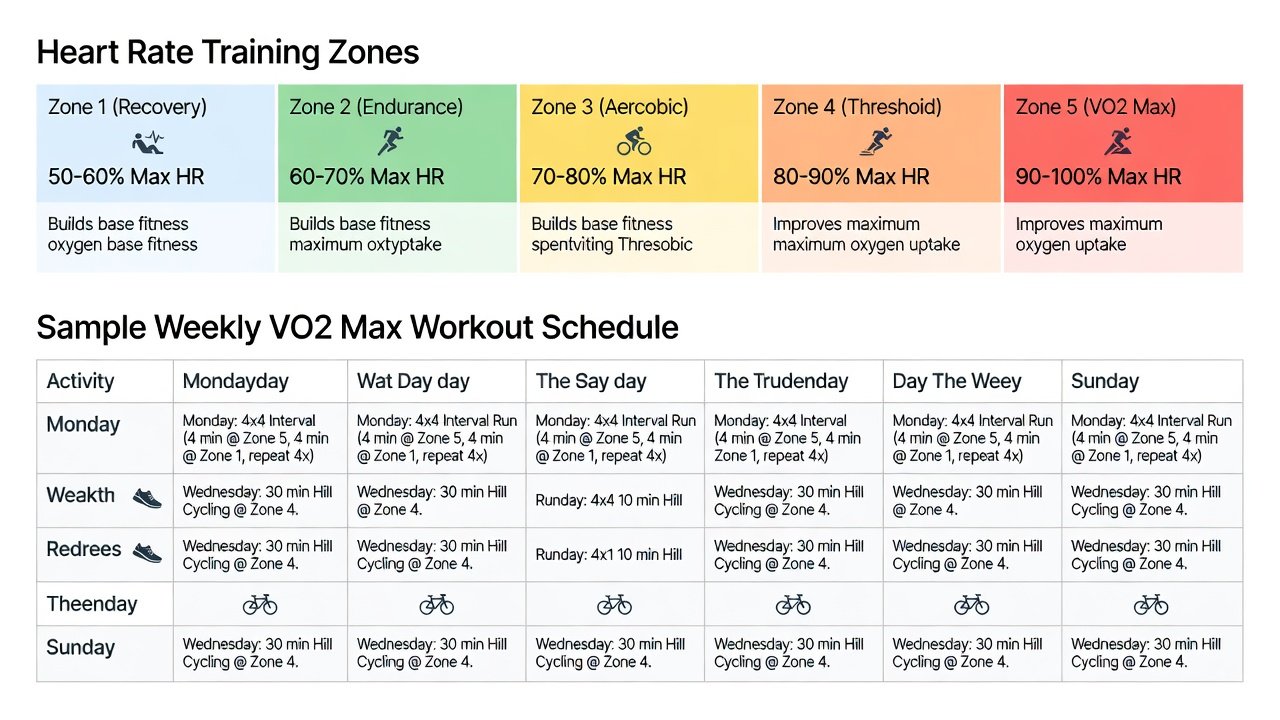
Zone-based training divides effort into five heart rate zones, with Zone 2 (60-70% of max HR) building aerobic base and Zone 5 (90-100%) targeting VO2 max improvements. Interval protocols, such as 4x4-minute efforts at 90-95% max HR with equal recovery, have proven highly effective in research. These sessions stimulate mitochondrial biogenesis and capillary density more efficiently than steady-state work alone. Progressive overload is essential: start with shorter intervals and gradually increase duration or intensity. Combine these with steady-state sessions for balanced development. Warm-up with 10-15 minutes of easy movement and cool down properly to support recovery between hard efforts.
Progressive Protocols for Different Fitness Levels
Beginners should focus on building consistency with 2-3 weekly sessions mixing Zone 2 and short intervals. Start with 20-30 minute sessions and build duration before intensity. Intermediate athletes can add 4x4 or pyramid intervals while monitoring fatigue. Advanced trainees incorporate high-intensity sessions twice weekly alongside strength work and active recovery. Sample progressions include increasing interval length by 30 seconds every two weeks or adding an extra repetition. Always include a deload week every 4-6 weeks to prevent overtraining.
Sample Weekly Training Plans
A balanced 7-day plan for intermediates might include: Monday - 45-minute Zone 2 endurance run; Tuesday - 4x4-minute VO2 intervals; Wednesday - 30-minute recovery walk; Thursday - 40-minute tempo run in Zone 3; Friday - full-body strength session; Saturday - 60-minute long Zone 2 effort; Sunday - complete rest or light mobility. Beginners can shorten all sessions by 15 minutes and reduce interval volume. Advanced plans add hill repeats or mixed-modal workouts like rowing intervals. Track sessions in a log to ensure progression and adjust based on energy levels.
Common Mistakes to Avoid
Many athletes rush into high-intensity work without adequate base fitness, leading to injury or stalled progress. Skipping warm-ups, neglecting strength training, and ignoring sleep are frequent errors that blunt VO2 max gains. Another pitfall is inconsistent testing, which makes it hard to measure true improvements. Always prioritize form during intervals and listen to your body rather than forcing every session to maximum effort.
Comparisons to Other Cardio Approaches
While steady-state cardio builds base fitness, interval training elicits faster VO2 max gains in less time. HIIT outperforms moderate continuous training in time efficiency for most populations. However, blending both prevents overtraining and supports sustainability. Low-intensity Zone 2 work remains irreplaceable for mitochondrial health and fat metabolism, making a hybrid approach ideal for long-term adherence and results.
Integration with Recovery Techniques and Nutrition
Recovery is critical for adaptation. Prioritize 7-9 hours of quality sleep nightly, protein-rich nutrition, and active recovery days with light movement. Techniques like foam rolling, contrast baths, and mobility work complement hard sessions. Monitor resting heart rate and subjective fatigue to avoid burnout. Support training with anti-inflammatory foods such as berries, fatty fish, and leafy greens. Hydration and electrolyte balance become especially important during interval sessions in warmer conditions.
Real-World Case Studies
One 52-year-old executive improved his VO2 max from 32 to 48 mL/kg/min over 12 months using 4x4 intervals three times weekly combined with daily Zone 2 walks, correlating with better energy, lower blood pressure, and improved sleep. A 35-year-old runner added structured Zone 2 base building and saw a 15% VO2 increase within six months, qualifying for a major marathon. A 68-year-old participant in a community program raised her VO2 max by 20% through progressive intervals and strength work, reporting greater independence in daily activities.
Tracking Progress and Long-Term Adjustments
Use a combination of wearable data, field tests, and perceived exertion to monitor gains. Reassess goals every quarter and adjust volume or intensity accordingly. As fitness improves, incorporate variety such as cycling or swimming intervals to reduce impact stress. For those over 50, include more emphasis on mobility and joint health alongside aerobic work.
FAQs on Safety and Results
- Is VO2 max training safe for beginners? Yes, when started gradually after physician clearance and with proper progression.
- How long until results appear? Noticeable improvements often occur within 4-8 weeks with consistency, though full adaptations take 3-6 months.
- Can I train VO2 max without a lab? Absolutely, using field tests and wearables for reliable estimates and progress tracking.
- What if I have joint issues? Opt for low-impact options like cycling or swimming intervals while maintaining heart rate targets.
- Should I combine VO2 training with strength work? Yes, two to three strength sessions weekly enhance overall resilience and support better running economy.
Conclusion
Implementing structured VO2 max training protocols in 2026 positions you to extend both lifespan and healthspan. Combine accurate measurement, progressive intervals, smart recovery, and consistency for optimal outcomes. Consult professionals for personalized plans and enjoy the longevity benefits of enhanced aerobic capacity. For further guidance, review resources from WHO on physical activity and American Heart Association recommendations.


No comments yet. Be the first!