 Slow Bio Hack

Introduction to Stem Cell Banking for Longevity
In 2026, stem cell banking has emerged as a forward-thinking approach within longevity science. By preserving your own stem cells today, you position yourself for potential future therapies that may combat age-related decline. This guide examines the science, practical steps, and decision factors behind banking mesenchymal stem cells (MSCs) and hematopoietic stem cells (HSCs) for autologous use. The strategy appeals to individuals seeking proactive measures against cellular aging, offering a bridge to emerging regenerative treatments that could extend healthy lifespan.
Autologous banking means storing your own cells, avoiding immune rejection risks common in allogeneic treatments. As research advances, these preserved cells could support cellular rejuvenation strategies aimed at extending healthspan. Many people now view this as an insurance policy for future medical needs, especially as therapies evolve to address conditions like chronic inflammation and tissue degeneration.
The Science of Mesenchymal and Hematopoietic Stem Cells
Mesenchymal stem cells, sourced from adipose tissue or umbilical cord, exhibit strong immunomodulatory and regenerative properties. They can differentiate into bone, cartilage, and fat cells while secreting factors that reduce inflammation. Hematopoietic stem cells, primarily from bone marrow or cord blood, replenish blood and immune cells, offering foundational support for systemic health. Together, these cell types form the core of many regenerative approaches because of their versatility and ability to home to sites of injury.
Understanding their origins helps clarify why banking both types maximizes options. MSCs are abundant in fat tissue and easy to harvest from adults, whereas HSCs require more targeted collection from marrow or blood. Research highlights how these cells interact with the body’s repair systems, making them central to anti-aging protocols.
Mechanisms for Cellular Rejuvenation
Cellular rejuvenation mechanisms include paracrine signaling, where MSCs release exosomes and growth factors to stimulate tissue repair. In aging contexts, this may help mitigate sarcopenia, neurodegeneration, and metabolic slowdown. Exosomes act as messengers that deliver proteins and RNA to damaged cells, potentially reversing aspects of senescence. Mitochondrial support is another key pathway, as stem cells can enhance energy production in recipient tissues.
These processes are supported by ongoing studies at institutions like the National Institutes of Health. The goal is not merely to treat disease but to maintain youthful cellular function over decades. Banking cells at younger ages captures them before epigenetic changes accumulate, preserving higher potency for later therapeutic use.
Autologous Banking: How It Works
Autologous banking prioritizes personal cell ownership. Unlike public donation, your cells remain reserved exclusively for you or your family. This approach aligns with personalized medicine trends in 2026, where future therapies may tailor interventions based on your unique cellular profile. Ownership also simplifies legal and ethical considerations when reinfusion becomes necessary.
Key benefits include guaranteed compatibility and reduced regulatory hurdles for reinfusion. However, success depends on cell viability post-thaw, which modern cryopreservation techniques have significantly improved. Families often choose this route to create a private biological reserve that can be accessed without competing for public resources.
Step-by-Step Collection and Storage Protocols
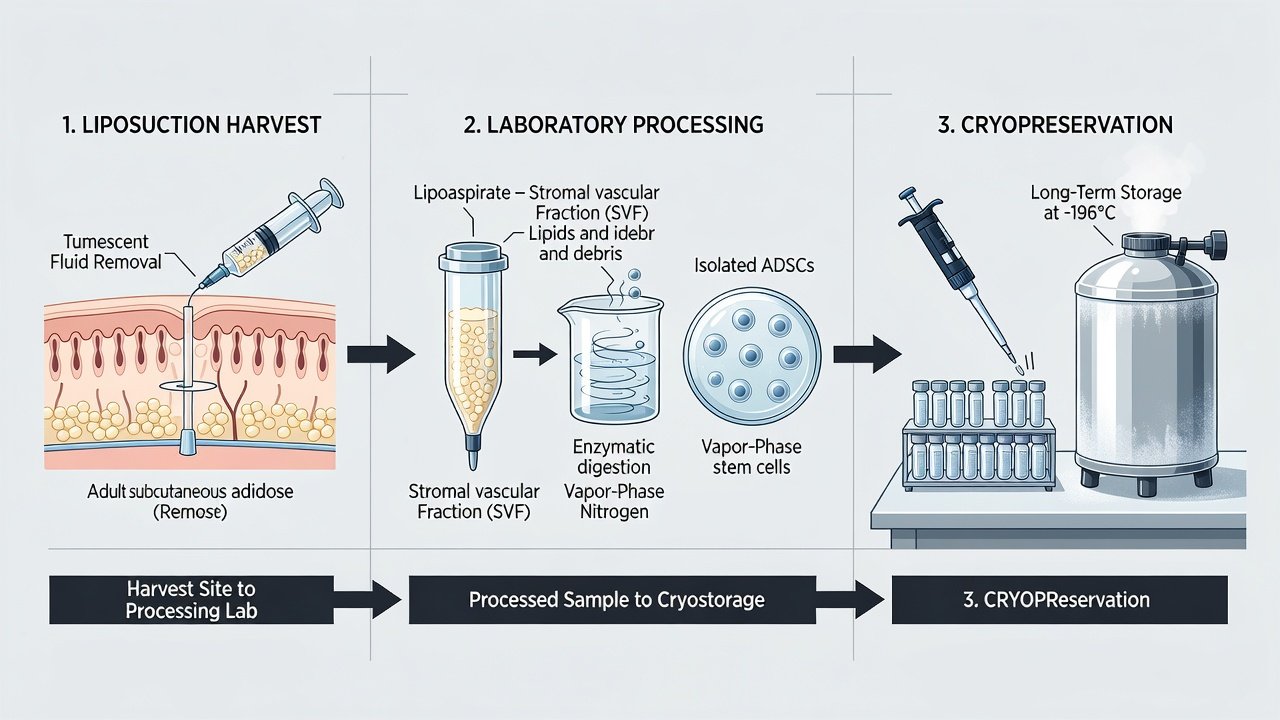
Collection processes vary by cell type. For umbilical cord banking (ideal at birth), parents coordinate with certified banks during delivery. For adults, adipose-derived MSCs are harvested via minimally invasive liposuction under local anesthesia. Bone marrow aspiration provides HSCs through a brief outpatient procedure. Each method includes pre-procedure screening for health conditions that could affect cell quality.
Storage begins with processing: cells are isolated, counted, and tested for viability and contaminants. Cryopreservation uses controlled-rate freezing with dimethyl sulfoxide (DMSO) as a cryoprotectant, followed by storage in liquid nitrogen vapor phase at -196°C. Regular viability testing ensures long-term integrity. Real-world examples show that cells collected in the 2010s remain functional today, demonstrating the durability of current protocols when handled by experienced labs.
Private vs Public Stem Cell Banks
Private banks focus on autologous and family storage, offering personalized access but requiring upfront commitment. Public banks accept donations for communal use, expanding the donor pool for unrelated transplants but offering no guarantee of personal retrieval. Hybrid models are emerging that allow limited public sharing while retaining personal reserves.
When choosing, evaluate accreditation (AABB or FACT), storage technology, and financial stability of the facility. Private options provide direct control and faster access, while public banks contribute to broader medical research. Decision factors often include family medical history and willingness to support community health initiatives alongside personal needs.
Current Clinical Evidence on Healthspan Extension
Evidence from early-phase trials indicates MSCs may improve outcomes in osteoarthritis and graft-versus-host disease. Longitudinal data suggest potential roles in delaying frailty, though large-scale longevity-specific studies remain in progress. Researchers emphasize that banking today captures cells at peak biological age, before cumulative damage occurs. Case studies from orthopedic clinics show patients using their own banked MSCs experiencing improved joint function years after initial storage.
Real-world examples include families banking cord blood who later accessed autologous cells for pediatric conditions, and adults using adipose MSCs in orthopedic regenerative procedures. These cases illustrate the value of proactive preservation and highlight how early collection correlates with better therapeutic outcomes in follow-up observations.
Cost-Benefit Analyses and Accessibility
Qualitative cost-benefit considerations weigh the long-term potential of future therapies against current investment in collection and storage. Accessibility varies by age group, with younger individuals enjoying higher cell yields and viability. For seniors, specialized protocols still allow meaningful banking if overall health supports the procedure.
Safety Considerations and Regulatory Landscape
Safety profiles for stem cell banking are strong when performed at accredited facilities. Risks are mainly procedural (e.g., minor bruising from collection) rather than long-term. Regulatory oversight by bodies such as the FDA ensures processing standards, while NIH resources provide updated research summaries. Additional guidance from WHO helps contextualize global standards for cell-based therapies.
Always verify that a bank complies with current good manufacturing practices (cGMP) to minimize contamination risks. Informed consent processes and transparent reporting of success rates further protect consumers.
Practical Examples and Mistakes to Avoid
Practical examples include expectant parents scheduling cord tissue collection weeks before delivery and middle-aged adults coordinating adipose harvests during routine wellness visits. Common mistakes involve selecting unaccredited facilities or delaying banking until cell quality has declined. Reviewing contracts for long-term storage guarantees and understanding retrieval procedures prevents future complications.
FAQs on Stem Cell Banking
- Is stem cell banking accessible for seniors? Yes, though viability decreases with age; consultation with a specialist is recommended.
- How long can cells remain viable? Properly stored cells have demonstrated functionality after decades in cryopreservation.
- Can I use banked cells for experimental therapies? Access depends on evolving regulations and clinical trial eligibility.
- What preparation is needed before collection? Medical screening, hydration, and avoiding certain medications help optimize cell quality.
Conclusion
Stem cell banking in 2026 represents a strategic investment in future health. By understanding collection methods, comparing bank options, and aligning with emerging evidence, individuals can make informed choices that support potential longevity interventions. Consult qualified medical professionals to determine the best path for your circumstances and review all options thoroughly before proceeding.


No comments yet. Be the first!