 Slow Bio Hack
Introduction to Stem Cell Therapy for Healthspan in 2026
Stem cell therapies continue to gain attention as potential interventions for extending healthspan by addressing cellular senescence, chronic inflammation, and tissue regeneration. As of 2026, individuals interested in longevity are closely comparing three primary sources: autologous cells harvested from the patient, allogeneic cells from matched donors, and umbilical cord-derived mesenchymal stem cells. This comprehensive comparison explores mechanisms of action, emerging clinical evidence, safety considerations, qualitative cost factors, and actionable decision frameworks. Readers will find practical examples, risk mitigation strategies, and guidance on selecting providers to support personalized, evidence-informed choices without unrealistic expectations.
Understanding the Main Stem Cell Sources
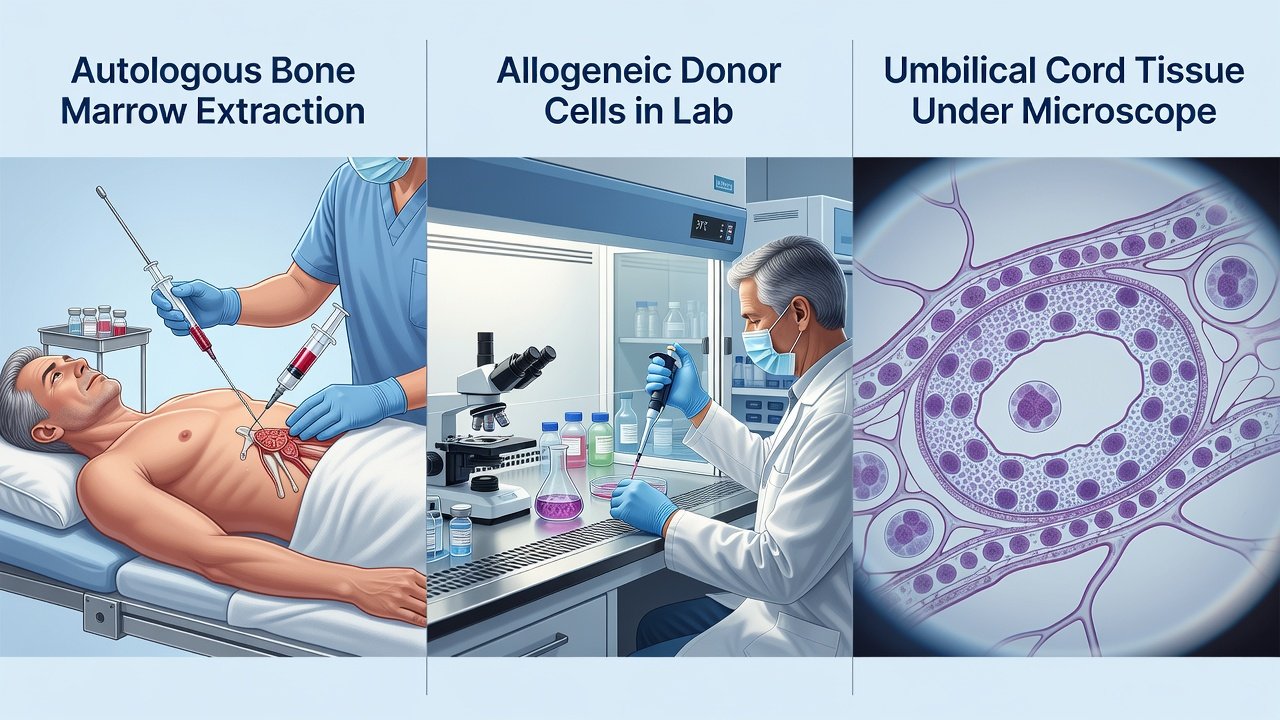
Autologous stem cells originate directly from the individual, most commonly extracted from bone marrow or adipose tissue through minimally invasive procedures. This approach eliminates compatibility concerns but may reflect the patient’s current biological age in cell quality. Allogeneic stem cells come from screened, healthy donors and are often culture-expanded for consistency and potency. Umbilical cord stem cells, collected after birth from Wharton’s jelly or cord blood, provide a youthful source with low immunogenicity and strong regenerative signaling. Each option presents distinct advantages in scalability, regulatory pathways, and biological characteristics that influence outcomes in anti-aging applications.
Autologous Stem Cell Characteristics
These cells are processed immediately or shortly after harvest, preserving viability while avoiding immune rejection. They are frequently used in orthopedic and metabolic protocols where localized delivery is preferred. Limitations include variability in cell yield and potency tied to the donor’s health status, particularly in older adults.
Allogeneic Stem Cell Characteristics
Donor-derived cells undergo rigorous testing and expansion, allowing for off-the-shelf availability. They can deliver standardized doses and may exert broader systemic effects through enhanced immunomodulation. Regulatory approval pathways are more complex due to donor variability and manufacturing controls.
Umbilical Cord Stem Cell Characteristics
These perinatal cells exhibit robust proliferation and secrete high levels of anti-inflammatory factors. They are typically banked and available for allogeneic use, offering advantages in consistency and reduced ethical sourcing concerns compared to embryonic alternatives.
Mechanisms of Action
Autologous cells primarily function via paracrine signaling, releasing growth factors and extracellular vesicles that modulate the local microenvironment and reduce oxidative stress. Allogeneic and umbilical sources often demonstrate superior exosome production and cytokine profiles, potentially influencing systemic pathways involved in inflammaging. Studies referenced by the National Institutes of Health indicate that umbilical cord mesenchymal cells display enhanced migratory capacity and differentiation potential relative to adult-derived counterparts, supporting applications in multi-organ healthspan support.
Latest Clinical Evidence on Healthspan Extension
Recent 2025 and early 2026 investigations provide incremental insights. Autologous adipose-derived stromal cells have been associated with improved insulin sensitivity and reduced inflammatory markers in cohorts over age 65 after 12-month follow-up. Allogeneic bone marrow mesenchymal cells showed modest gains in physical function scores among frail elderly participants in multicenter phase II trials. Umbilical cord-derived preparations demonstrated benefits in cognitive processing speed and joint mobility within six to nine months in targeted studies, though sample sizes remain modest. Larger, longer-term randomized controlled trials are still required to confirm durability of effects. Evidence from the FDA’s regenerative medicine framework emphasizes the need for standardized potency assays and outcome tracking across sources.
U.S. Food and Drug Administration

Safety Profiles and Regulatory Landscape
Autologous therapies generally carry the lowest immunologic risk, though procedural complications such as localized bruising or infection at harvest sites can occur. Allogeneic products require extensive donor screening and viral testing to prevent pathogen transmission. Umbilical cord cells benefit from immune-privileged properties but must meet strict current good manufacturing practice standards. Across all sources, reported adverse events are typically mild and transient, including fatigue or low-grade fever. The World Health Organization continues to advocate for international harmonization of safety monitoring protocols to support responsible clinical translation.
Cost Considerations
Expenses differ based on cell source, processing complexity, clinic infrastructure, and geographic location. Autologous treatments often involve additional fees for harvesting and point-of-care processing. Allogeneic and umbilical options may present more predictable overall investment due to centralized manufacturing, yet still require investment in quality control and administration. Patients are encouraged to request itemized estimates covering cell characterization, delivery method, and post-treatment monitoring. Insurance reimbursement remains rare, making out-of-pocket planning essential. Qualitative differences in value arise from treatment frequency and potential need for adjunctive therapies.
Practical Decision Framework
Selecting an appropriate stem cell source involves systematic evaluation of individual factors. Begin by clarifying primary objectives, whether focused on musculoskeletal support, metabolic optimization, or broader rejuvenation. Review personal medical history for conditions that might contraindicate certain approaches, such as hematologic disorders or active malignancy. Compare published cell viability and characterization data from prospective providers. Assess regulatory compliance, including participation in registered trials. Consider logistical elements including required travel, recovery duration, and likelihood of repeat dosing. Document baseline biomarkers to enable objective tracking of changes over time. Engage in shared decision-making with clinicians experienced in regenerative applications.
Patient Case Examples
A 67-year-old executive with progressive fatigue underwent autologous adipose-derived cell therapy combined with structured exercise. At nine months, he reported enhanced daily energy and improved recovery from resistance training sessions. A 74-year-old retired teacher selected allogeneic mesenchymal cells for age-related joint discomfort and noted measurable improvements in mobility scores by month six. A 69-year-old with mild cognitive concerns received umbilical cord-derived cells and experienced stabilized processing speed on follow-up assessments at twelve months. These examples highlight variable response patterns influenced by baseline health, source selection, and supportive lifestyle measures rather than universal outcomes.
How to Select Reputable Providers
Prioritize clinics that publish peer-reviewed outcome data or participate in approved clinical studies. Verify third-party laboratory accreditation for cell identity, purity, and sterility testing. Request detailed informed consent documents outlining realistic timelines and potential limitations. Confirm that medical oversight includes board-certified specialists in relevant fields. Evaluate transparency around sourcing, storage conditions, and post-administration follow-up protocols. Avoid entities advertising guaranteed results or operating outside established regulatory boundaries. Cross-reference provider claims against public databases maintained by health authorities.
Addressing Common Questions
What are typical efficacy timelines?
Subjective improvements in energy or inflammation may appear within three to six months, while objective biomarker or functional changes often require nine to twelve months of observation, varying by source and individual biology.
Can stem cell therapy combine with other interventions?
Integration with resistance training, nutritional optimization, or select senolytic compounds is common in clinical practice, but requires coordinated medical supervision to monitor interactions and cumulative effects.
How do sources compare for repeat treatments?
Autologous cells may be limited by donor site recovery, whereas allogeneic and umbilical preparations allow more flexible scheduling for maintenance protocols when clinically indicated.
Potential Risks and Mitigation Strategies
General risks include infection, ineffective response, or unexpected inflammatory reactions. Mitigation involves thorough pre-treatment screening, use of accredited facilities, and adherence to post-procedure care instructions. Long-term follow-up registries help identify rare delayed effects across different cell sources.
Future Outlook for 2026 and Beyond
Advancements in cell engineering, exosome isolation, and personalized dosing algorithms are expected to refine source selection further. Ongoing trials will clarify comparative efficacy for specific healthspan endpoints, supporting more tailored recommendations by late 2026.
Conclusion
Evaluating autologous, allogeneic, and umbilical cord stem cell sources for healthspan requires careful consideration of biological mechanisms, available evidence, safety data, and personal circumstances. Thoughtful provider selection and realistic expectations remain central to maximizing potential benefits while minimizing risks. Continued research will provide clearer guidance as the field matures.


No comments yet. Be the first!