 Slow Bio Hack

Introduction to NEAT and Its Role in Longevity
Non-exercise activity thermogenesis, commonly known as NEAT, refers to the energy expended during everyday activities that are not structured exercise. In 2026, researchers continue to highlight NEAT as a powerful, accessible tool for extending healthspan—the period of life spent in good health—by reducing inflammation and enhancing metabolic function. Unlike intense workouts, NEAT integrates seamlessly into daily routines, making it ideal for beginners seeking sustainable anti-aging strategies without supplements or gym memberships. This beginner-friendly approach targets individuals who want to improve longevity markers through consistent, low-effort movement patterns rather than high-intensity training sessions that often lead to burnout.
Health organizations emphasize consistent movement throughout the day. For instance, guidelines from the CDC stress the benefits of accumulating activity in small bouts. This approach aligns perfectly with NEAT principles, offering a low-barrier entry to improved longevity outcomes. Many people overlook NEAT because it lacks the glamour of structured fitness programs, yet its cumulative impact on daily energy expenditure can surpass that of a single workout when maintained over months and years.
The Science Linking NEAT to Reduced Inflammation and Metabolic Health
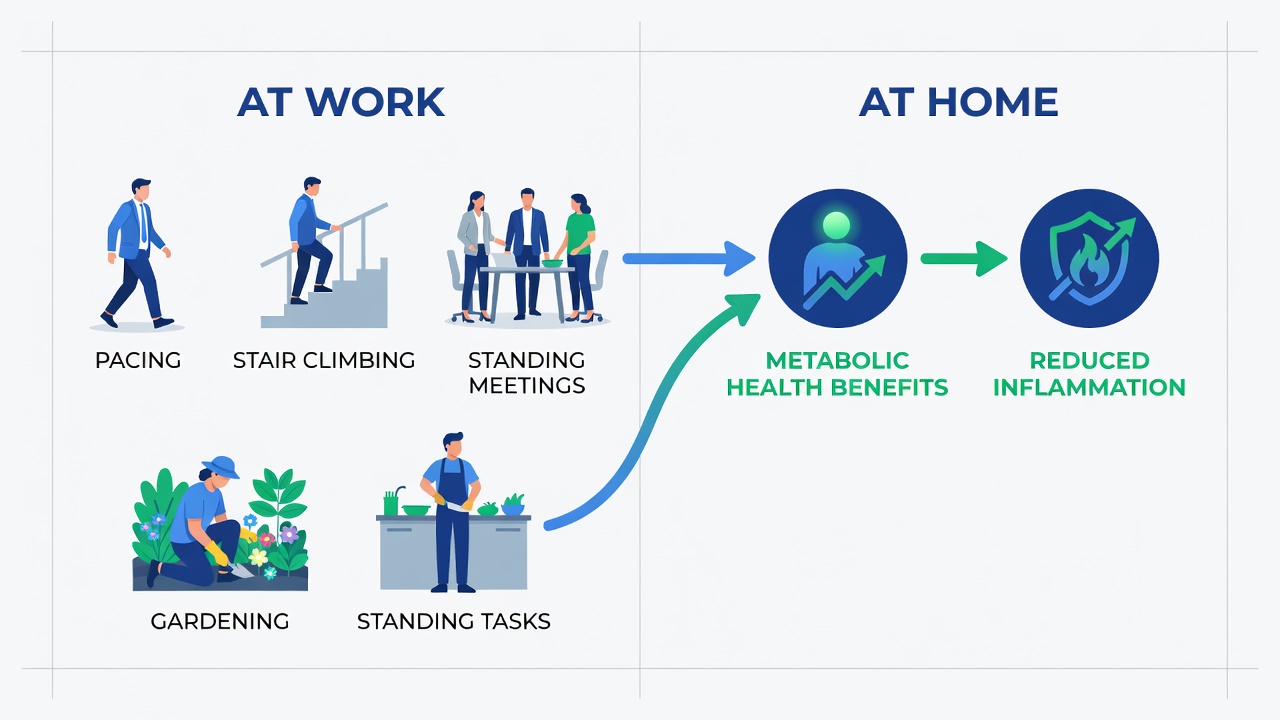
Daily movement patterns through NEAT influence key biological processes. Studies show that higher NEAT levels correlate with lower chronic inflammation markers, such as C-reactive protein, and better insulin sensitivity. These effects stem from frequent muscle contractions that promote glucose uptake and reduce fat accumulation around organs. Over time, this reduces the risk of age-related diseases including type 2 diabetes and cardiovascular issues that shorten healthspan.
Metabolic health improves as NEAT elevates overall energy expenditure without the stress of high-intensity training. This gentle elevation supports mitochondrial function and hormonal balance, both critical for longevity. Emerging 2026 research reinforces that individuals with elevated NEAT experience slower cellular aging compared to sedentary counterparts. Additional mechanisms include improved circulation that delivers nutrients more efficiently and enhanced lymphatic drainage that aids in waste removal at the cellular level. The World Health Organization also notes the broad benefits of regular physical activity in its public health resources at WHO, underscoring how even non-structured movement contributes to these outcomes.
Practical Ways to Increase NEAT at Work
Work environments often encourage prolonged sitting, but simple adjustments can transform your day. Start by using a standing desk for portions of your tasks. Alternate between sitting and standing every 30 minutes to keep blood flow active. Incorporate movement during routine tasks such as printing documents or refilling water bottles by taking longer routes around the office.
- Take phone calls while walking around the office or pacing at home.
- Park farther from the entrance to add steps during commutes.
- Schedule walking meetings instead of conference room sessions.
- Use stairs instead of elevators for short trips between floors.
- Stand or pace during virtual meetings when the camera is off.
- Organize your workspace so frequently used items require short walks to reach.
These changes accumulate significant energy burn over weeks and months, often adding hundreds of extra calories expended daily without dedicated workout time.
Boosting NEAT at Home for Everyday Longevity Gains
Home offers even more flexibility for NEAT integration. Household chores like vacuuming, gardening, or cooking from scratch all count. Consider pacing while watching television or folding laundry while standing. Families who adopted “movement breaks” during streaming sessions report noticeable improvements in energy levels and sleep quality after just a few weeks. Another approach involves rearranging living spaces to encourage more walking, such as placing frequently used items farther apart or creating a dedicated walking path indoors during bad weather.
Real-world examples demonstrate the power of these habits. One office worker increased daily steps by 4,000 simply by walking during lunch breaks and pacing during calls, leading to measurable improvements in blood sugar control within two months. Retirees have found success by turning gardening into a daily ritual that combines NEAT with sunlight exposure for additional vitamin D benefits.
Tracking NEAT Effectively Without Expensive Tools
Monitoring progress helps maintain motivation. Basic pedometers or smartphone apps provide step counts as a proxy for NEAT. Aim for incremental increases rather than perfection—adding 2,000 steps daily can yield meaningful metabolic shifts. More advanced users might explore wearable devices that differentiate activity types, though simple consistency matters most. Journaling daily movement patterns also reveals opportunities for improvement over time. Consider weekly reviews where you note how NEAT activities affected mood, energy, or sleep, creating a feedback loop that reinforces the habit.
NEAT Versus Structured Workouts: A Clear Comparison
Structured exercise delivers targeted fitness benefits, yet NEAT excels in accessibility and sustainability. While gym sessions might burn calories intensely for an hour, NEAT distributes activity across 12–16 waking hours, often resulting in comparable or greater total expenditure with less fatigue. A comparison list highlights key differences:
- Intensity: Workouts are high but brief; NEAT is moderate and continuous.
- Time commitment: Exercise requires dedicated blocks; NEAT fits into existing routines.
- Injury risk: High-intensity training carries higher risk; NEAT is gentle on joints.
- Long-term adherence: Many quit structured programs; NEAT becomes a lifestyle.
Combining both approaches maximizes results, but NEAT serves as the foundation for those avoiding intense training. It avoids common barriers like time constraints or injury risk. Resources from institutions like Mayo Clinic support balanced activity strategies that include both elements.
Common Mistakes to Avoid When Building NEAT Habits
Many beginners make errors that derail progress. Overdoing it on the first day leads to soreness and dropout. Another mistake is ignoring posture during standing or walking activities, which can cause back strain. Failing to track progress means missing the motivational boost from visible improvements. Avoid comparing your NEAT levels to others; focus on personal baselines instead. Finally, neglecting recovery days can lead to subtle fatigue that reduces overall movement quality.
Addressing Common Barriers Through an FAQ
How do I stay consistent with NEAT on busy days?
Focus on micro-habits, such as standing during one meeting or walking during a single phone call. Small wins compound quickly and build momentum even on hectic schedules.
Is NEAT suitable for all ages and fitness levels?
Yes, NEAT scales easily. Beginners start with minimal changes, while older adults benefit from chair-based movements or gentle pacing. Those with mobility limitations can adapt by focusing on upper body movements during seated tasks.
Can NEAT replace exercise entirely?
It complements rather than fully replaces exercise for optimal health, but provides substantial longevity support on its own through consistent metabolic stimulation.
What if I have a sedentary job with strict rules?
Advocate for standing options or use break times strategically. Many workplaces now support wellness initiatives that accommodate short movement periods.
Conclusion: Embracing NEAT for a Longer Healthspan
Integrating NEAT strategies represents one of the most practical paths to better metabolic health and reduced inflammation in 2026. By focusing on daily movement at work and home, tracking progress simply, and understanding its advantages over intense routines alone, anyone can build sustainable habits that promote longevity. Start small today to experience cumulative benefits over time, and remember that consistency trumps intensity for long-term healthspan gains.

No comments yet. Be the first!