 Slow Bio Hack

Introduction: Why Magnesium Matters for Gut Health in 2026
Advanced biohackers and health enthusiasts are increasingly turning to magnesium as a foundational nutrient for optimizing digestion and microbiome diversity. Far from a simple mineral, magnesium plays a critical role in muscle relaxation, nerve signaling, and inflammation control—all essential for smooth gastrointestinal function. As research evolves, 2026 brings fresh insights into using targeted magnesium strategies to address common deficiencies that disrupt gut motility and beneficial bacteria growth. Many individuals experience subtle symptoms like occasional bloating or irregular bowel movements without realizing magnesium status could be a contributing factor.
Magnesium influences peristalsis, the wave-like muscle contractions that move food through the digestive tract. Low levels can lead to sluggish digestion, bloating, and irregular bowel movements. This article dives deep into practical hacks, including form comparisons, dietary sources, and a step-by-step plan tailored for superior gut outcomes. Readers will also find real-world examples of symptom relief and guidance on avoiding common pitfalls that undermine results.
How Magnesium Influences Peristalsis, Inflammation, and Microbiome Balance
Magnesium acts as a natural relaxant for the smooth muscles lining the intestines, promoting efficient peristalsis. It also modulates inflammatory pathways that, when overactive, can damage the gut lining and reduce microbial diversity. Studies link adequate magnesium status to higher populations of beneficial bacteria such as Bifidobacterium and Lactobacillus species. When magnesium is low, the gut environment becomes more prone to oxidative stress and reduced short-chain fatty acid production, which further impairs digestion and nutrient absorption.
Deficiency symptoms often include constipation, cramps, and heightened gut sensitivity. Addressing this through strategic intake helps restore balance without relying solely on probiotics or fiber supplements. Chronic stress, processed food diets, and certain medications accelerate magnesium depletion, creating a cycle that worsens gut issues over time. Understanding these mechanisms allows for more precise interventions that target both symptoms and root causes.
Comparing Magnesium Forms: Glycinate, Citrate, and Oxide
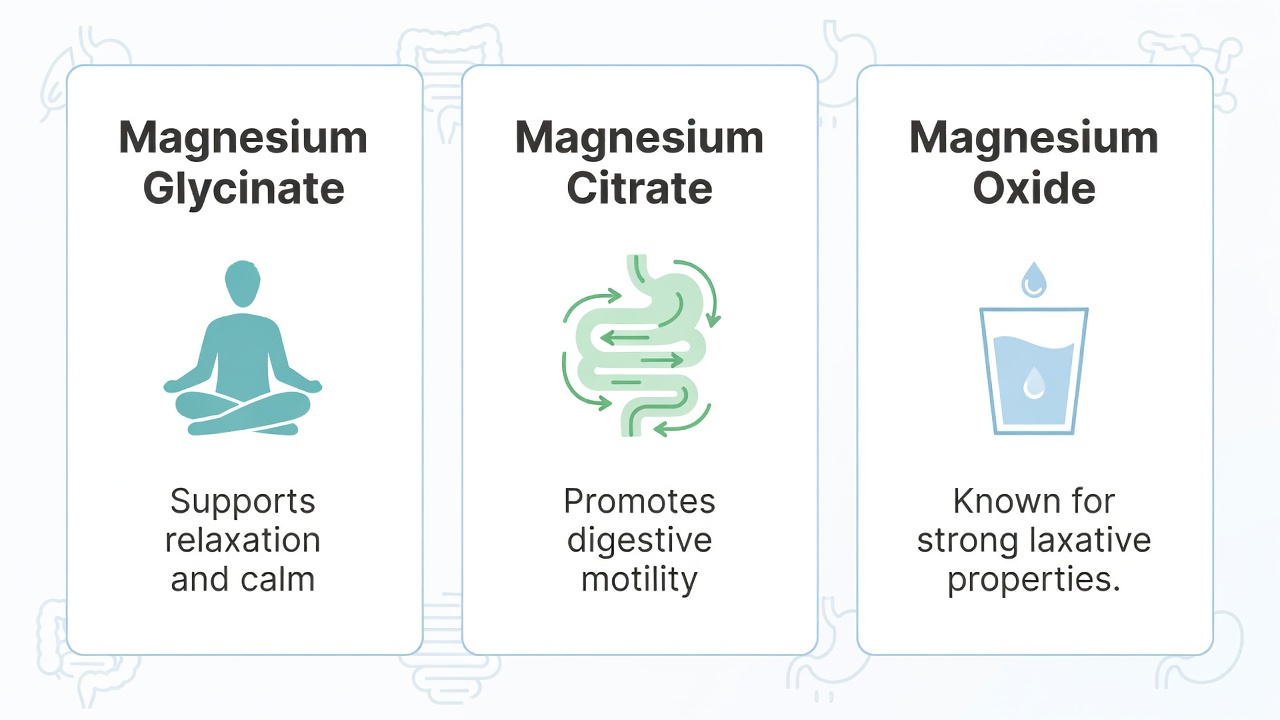
Not all magnesium supplements deliver equal benefits for digestion. Here's a breakdown of the top three forms relevant to gut health. Magnesium glycinate offers high bioavailability with minimal digestive upset, making it suitable for daily use focused on relaxation and steady motility support. Magnesium citrate provides strong osmotic effects that pull water into the colon, helping relieve occasional constipation quickly. Magnesium oxide, while inexpensive, has lower absorption and is best reserved for short-term laxative needs rather than long-term microbiome support.
When choosing a form, consider your primary symptom: glycinate for stress-related gut tension, citrate for regularity issues, and oxide only if stronger laxative action is required temporarily. Many users combine glycinate in the morning with a small dose of citrate in the evening for balanced results. A detailed comparison shows glycinate leading in tolerability, citrate in speed of relief, and oxide in cost-effectiveness but trailing in overall efficiency.
Top Food Sources of Magnesium for Daily Gut Support
Whole foods provide synergistic nutrients that enhance magnesium's gut benefits. Prioritize these options in your meals: spinach and leafy greens deliver magnesium alongside fiber that feeds beneficial bacteria; almonds and pumpkin seeds offer concentrated doses plus healthy fats that reduce inflammation; avocados supply potassium and magnesium together for electrolyte balance; black beans and lentils add plant-based protein that supports sustained energy and gut lining repair; and fatty fish like salmon contribute magnesium plus omega-3s that further calm intestinal inflammation.
Incorporating a handful of seeds daily or adding spinach to smoothies offers consistent intake without supplements alone. Rotating between these foods prevents dietary monotony while maximizing nutrient variety. For example, a breakfast of overnight oats with chia seeds and avocado provides over 150 mg of magnesium before noon.
Daily Dosing Strategies Tailored to Gut Needs
General recommendations suggest 300–420 mg elemental magnesium per day for adults, split across meals to improve tolerance. For gut-specific goals, start lower (150–200 mg) and titrate upward while monitoring bowel movements. Citrate forms work well in the evening for overnight motility support, while glycinate suits daytime use for steady relaxation without drowsiness. Always separate doses by at least four hours if using multiple forms to avoid overwhelming the digestive system.
Real-world examples include a 42-year-old professional who added 250 mg glycinate daily and noticed reduced evening bloating within two weeks. Another case involved a runner who switched from oxide to citrate and reported more consistent morning bowel movements without cramping. Track progress with a simple journal noting energy, stool consistency, and any discomfort.
Step-by-Step Integration Plan for Superior Results
Follow this 4-week plan to integrate magnesium effectively. Week 1 focuses on assessment: log current food intake and note baseline symptoms like bloating frequency or energy dips after meals. Week 2 introduces one magnesium-rich meal daily plus a low-dose glycinate supplement at dinner. Week 3 adds citrate if regularity remains an issue and begins spacing doses strategically around workouts or stress peaks. Week 4 combines findings with probiotic timing and evaluates overall improvements through symptom tracking and optional stool testing.
This gradual approach minimizes side effects and allows the body to adapt. Users following similar plans often report smoother digestion by week three and better microbiome diversity indicators by week six when combined with fiber increases.
Common Mistakes to Avoid When Using Magnesium for Gut Health
Many people undermine their efforts by taking the entire daily dose at once, leading to loose stools or discomfort. Another frequent error is ignoring hydration—magnesium works best when paired with adequate water intake throughout the day. Some also overlook timing with other supplements, such as calcium or iron, which can compete for absorption. Finally, expecting overnight miracles without consistent use for at least two weeks often leads to premature discontinuation.
FAQs on Side Effects, Timing, and Probiotic Interactions
What side effects should I watch for? Mild diarrhea with citrate or oxide at high doses; reduce intake if this occurs and switch to glycinate for gentler effects.
When should I take magnesium relative to meals? With food to minimize stomach upset, though some prefer citrate on an empty stomach for stronger laxative action in the evening.
Can magnesium be taken with probiotics? Yes—space them by two hours if using citrate to avoid interference with bacterial colonization.
How long before noticing gut improvements? Most users report changes in bowel regularity within 7–14 days and reduced inflammation markers within 30 days of consistent use.
For authoritative guidance on mineral intake, consult resources from Mayo Clinic, NIH Office of Dietary Supplements, and World Health Organization.
Conclusion
Magnesium hacks represent an accessible, evidence-backed pathway to superior gut health and digestion. By selecting the right forms, prioritizing food sources, following a structured integration plan, and avoiding common mistakes, readers can achieve lasting microbiome balance and smoother digestion in 2026 and beyond. Consistent application yields compounding benefits that extend far beyond occasional relief.


No comments yet. Be the first!