 Slow Bio Hack

Introduction to Walking as a Biohacking Tool
Walking stands out as one of the most accessible biohacks available in 2026. It requires no expensive equipment, apps, or wearables, making it ideal for beginners seeking to enhance energy levels, sharpen mental focus, and support overall wellness through consistent movement. This guide focuses on practical protocols that integrate seamlessly into daily life, emphasizing low-cost strategies grounded in basic physiology and natural movement patterns. Biohacking often conjures images of advanced gadgets, yet simple movement remains foundational for sustainable health improvements. Research from sources like the World Health Organization underscores walking's role in reducing sedentary risks without barriers to entry, highlighting its effectiveness for cardiovascular health, mood regulation, and cognitive performance.
Unlike high-intensity workouts that demand recovery periods or specialized knowledge, walking offers immediate accessibility. Beginners can start today by stepping outside, using existing environments like neighborhoods, parks, or even indoor hallways during inclement weather. The key lies in intentional protocols rather than random activity, turning ordinary walks into targeted biohacks that align with the body's natural rhythms.
Setting Realistic Starting Step Goals
Beginners should start conservatively to build consistency rather than chase ambitious targets. A practical entry point is 4,000 to 6,000 steps daily, gradually increasing by 500 steps weekly as stamina improves. This approach prevents burnout and allows the body to adapt naturally while minimizing injury risk. Overambitious goals often lead to early dropout, whereas incremental progress fosters long-term adherence.
Real-world example: A desk worker might break walks into two 15-minute sessions around lunch and evening, logging progress in a simple notebook. Over four weeks, this builds toward 8,000 steps without overwhelm. Another example involves a parent incorporating walks during children's playtime at the park, combining family time with personal wellness goals. These examples demonstrate how walking fits diverse lifestyles without requiring schedule overhauls.
Tracking Without Technology
Use time-based estimates or landmarks instead of devices. Count steps during known routes or note duration. This method keeps the practice sustainable and free. For instance, map out a standard neighborhood loop that takes approximately 10 minutes and multiply by the number of loops completed. Many beginners find that focusing on time spent moving rather than exact counts reduces performance anxiety and encourages enjoyment of the process.
Understanding Zone 2 Walking Benefits
Zone 2 walking occurs at a conversational pace where you can speak in full sentences but feel slightly elevated breathing. This intensity optimizes fat metabolism, improves cardiovascular efficiency, and supports recovery without high stress. Benefits include enhanced mitochondrial function and steady energy throughout the day. Beginners can identify this zone by aiming for a pace that feels brisk yet maintainable for 20 to 40 minutes.
Additional advantages encompass better blood sugar regulation, reduced inflammation markers, and improved mental clarity due to increased cerebral blood flow. Unlike vigorous exercise that may elevate cortisol excessively for novices, zone 2 maintains a balanced hormonal response. The National Institutes of Health resources highlight how consistent moderate activity like zone 2 walking contributes to long-term metabolic health, making it a cornerstone for beginners exploring biohacking without complexity.
Timing Walks for Circadian Alignment
Aligning walks with natural light cycles amplifies benefits. Morning walks within 30 minutes of waking help regulate cortisol and melatonin, improving sleep quality later. Midday exposure supports alertness during energy dips, while evening strolls at lower intensity aid wind-down without overstimulation. Light exposure serves as a powerful zeitgeber, or time-giver, for the body's internal clock, influencing everything from hormone release to digestion.
Practical considerations include choosing routes with ample natural light and avoiding bright artificial lights immediately after evening walks. Individuals in urban environments can seek out green spaces or face eastward during morning sessions to maximize light intake. This timing leverages daylight for circadian support, promoting better focus and rest cycles across seasons.
Sample Daily Schedule
- 7:00 AM: 20-minute morning walk in sunlight to kickstart metabolism and alertness
- 1:00 PM: 15-minute post-lunch walk to aid digestion and combat afternoon sluggishness
- 6:00 PM: 25-minute zone 2 walk before dinner to enhance evening relaxation and recovery
This schedule can be adjusted based on work or family commitments while maintaining the core principle of light-timed movement.
Combining Walking with Basic Posture Tips
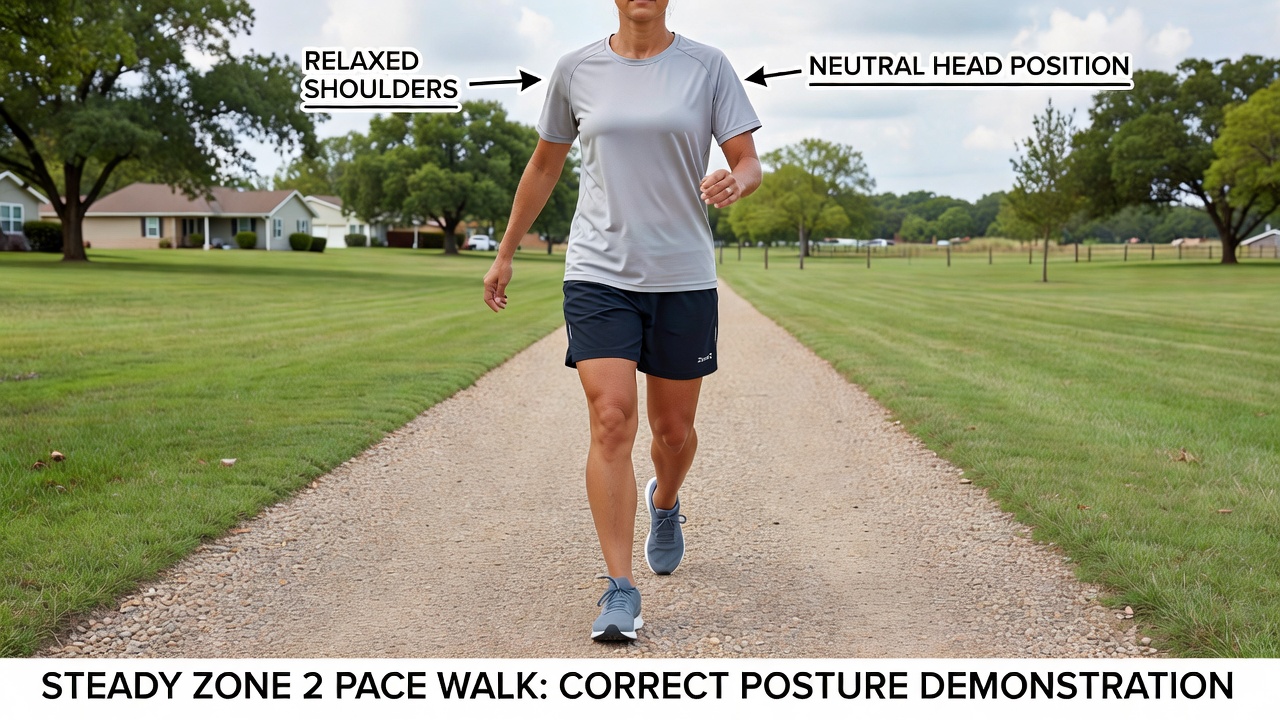
Proper posture during walks maximizes muscle engagement and reduces strain. Keep shoulders relaxed, head neutral, and core lightly engaged. Swing arms naturally and maintain a slight forward lean from the ankles rather than the waist. These adjustments engage the posterior chain more effectively, improving balance and reducing lower back discomfort over time.
Common mistakes include slouching or overstriding, which can lead to discomfort. Practice by checking alignment every five minutes during initial sessions. Beginners often benefit from imagining a string pulling the crown of the head upward, promoting spinal elongation. Over weeks, improved posture during walks translates to better daily habits, reducing overall musculoskeletal issues.
Step-by-Step Beginner Routines
Week 1 Routine: Three 15-minute walks at an easy pace, focusing on posture awareness and breathing rhythm. Prioritize consistency over intensity.
Week 3 Routine: Add one zone 2 session of 25 minutes, incorporating morning light exposure. Introduce variety by alternating flat terrain with gentle inclines.
Week 6 Routine: Combine elements into a 45-minute daily average with varied timing for circadian benefits. Include one longer 40-minute session on weekends to build endurance.
Week 8 Routine: Integrate brief mindfulness elements, such as noting five sensory observations during each walk, to enhance mental optimization alongside physical gains. These progressions emphasize gradual adaptation for lasting results.
Progress Tracking Methods
Beyond steps, track subjective markers such as energy levels on a 1-10 scale, sleep quality, and mood. Weekly reviews reveal patterns, allowing adjustments like shifting walk times for better outcomes. Additional methods include photographing the same walking route monthly to observe seasonal changes in environment and personal fitness, or noting clothing fit as an indirect indicator of body composition shifts.
Journal examples include noting pre- and post-walk feelings to correlate movement with wellness improvements. Some beginners create simple spreadsheets tracking variables like weather conditions alongside energy scores to identify optimal walking environments.
Common FAQs on Consistency and Results
How long until noticeable results appear?
Most beginners report improved energy within two to three weeks of consistent practice, with focus enhancements following shortly after. Individual results vary based on starting fitness levels and adherence.
What if motivation wanes?
Pair walks with enjoyable elements like podcasts or scenic routes. Start with shorter sessions on low-energy days to maintain the habit. Accountability partners or community walking groups can also provide external motivation.
Can walking replace other exercises?
It serves as an excellent foundation but complements strength training for balanced wellness. Consider adding bodyweight movements at the end of walks for variety.
How does walking compare to other low-cost biohacks?
Walking uniquely combines movement with outdoor exposure, offering benefits that indoor alternatives like stretching alone cannot match, particularly for circadian and mood regulation.
Conclusion
Walking biohacks offer a powerful yet simple entry into daily wellness optimization in 2026. By focusing on step goals, zone 2 pacing, circadian timing, and posture, beginners can achieve sustainable gains in energy and focus without additional costs or complexity. Consistent application of these protocols builds a strong foundation for lifelong health practices.

No comments yet. Be the first!