 Slow Bio Hack

Introduction to Habit Stacking in Biohacking
Biohacking often conjures images of advanced labs and pricey gadgets, but for beginners in 2026 the most effective starting point is surprisingly simple: habit stacking. This technique involves attaching a new micro-habit to an existing automatic behavior, creating sustainable wellness improvements without drastic lifestyle overhauls. By focusing on low-barrier entry points, habit stacking removes the intimidation factor that stops many people from exploring biohacking at all. Instead of requiring expensive wearables or complex protocols, it empowers anyone to optimize health through small, consistent actions layered onto routines they already perform unconsciously every day.
Habit stacking works because it leverages the brain’s existing neural pathways. Instead of relying on willpower to start a new routine from scratch, you piggyback on actions you already perform daily. Research from institutions like the National Institutes of Health shows that anchoring new behaviors to established ones dramatically increases long-term adherence rates. This approach is particularly valuable in 2026 as more people seek accessible wellness strategies amid busy schedules and information overload. The result is a compounding effect where tiny daily improvements lead to significant gains in energy, focus, sleep quality, and overall resilience without requiring major time investments or financial commitments.
What Is Habit Stacking and How It Applies to Biohacking
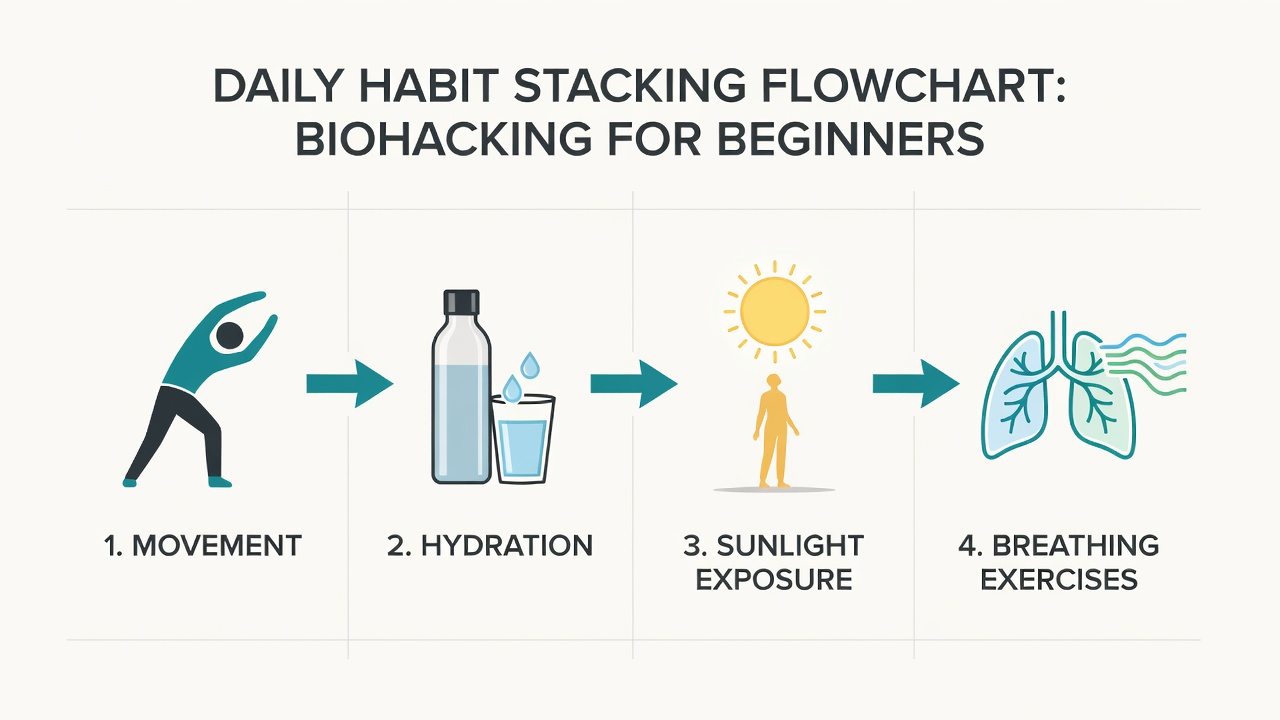
Habit stacking follows a simple formula: “After [current habit], I will [new habit].” In biohacking terms, this means pairing a foundational wellness action with a current daily anchor. Examples include linking morning sunlight exposure to your first cup of coffee or performing mobility exercises immediately after brushing your teeth. The power lies in its simplicity—each stack builds on automaticity, turning ordinary moments into opportunities for optimization. Biohacking through stacking emphasizes evidence-based micro-interventions such as light exposure, hydration timing, breathwork, and gentle movement rather than extreme interventions.
Unlike standalone routines that demand new time blocks, stacked habits integrate seamlessly into life. This approach aligns perfectly with beginner biohacking goals: improving energy, sleep quality, focus, and recovery through incremental changes rather than extreme protocols. It also reduces decision fatigue, making consistency far more achievable over months and years.
Step-by-Step Implementation Process
- Identify 3–5 anchor habits you perform consistently every day (brushing teeth, making coffee, commuting, checking email). Write them down and note their typical timing and location for better cue recognition.
- Choose one small biohack to attach to each anchor. Keep the new action under two minutes initially to ensure low friction and high completion rates. Examples include a single stretch, a glass of water, or 30 seconds of deep breathing.
- Write the stack in an “after I…” format and place it visibly on a note, phone wallpaper, or bathroom mirror. This visual reminder strengthens the association between anchor and new action.
- Track completion for 14 days using a simple checklist or app. Focus solely on whether the stack happened, not on performance metrics, during this foundation phase.
- Once automatic, add the next layer or slightly extend the duration of the existing stack. Review and adjust anchors monthly as life circumstances evolve.
This gradual layering prevents overwhelm and builds momentum. Many beginners report noticeable improvements in energy and mood within three weeks when they follow this measured process.
Effective Pairing Suggestions for Beginners
Here are proven combinations that deliver measurable biohacking benefits with minimal effort:
- Movement + Hydration: After pouring your morning coffee, drink 500 ml of water while performing 10 bodyweight squats. This pairing supports hydration status and gentle circulation before the workday begins.
- Sunlight Exposure + Mindfulness: After opening the blinds, step outside for two minutes of natural light while taking five deep breaths. Morning light helps regulate circadian rhythms and boosts alertness.
- Breathing + Posture Reset: After sitting down at your desk, complete one minute of box breathing followed by a shoulder roll sequence. This counters the effects of prolonged sitting and reduces tension buildup.
- Evening Wind-Down + Sleep Optimization: After turning off the main lights, dim screens and perform a 60-second gratitude reflection. The combination promotes melatonin production and mental decompression.
- Commuting + Cognitive Boost: After starting your commute (or logging into work), spend the first minute practicing nasal breathing to enhance oxygen intake and reduce stress.
These pairings require no equipment and produce compounding returns over time when practiced consistently.
Habit Stacking vs. Standalone Wellness Routines
Standalone routines often fail because they compete with existing schedules and require creating new time slots from scratch. Habit stacking succeeds by removing decision fatigue and environmental friction. A 2026 comparison of approaches shows stacked habits achieve 65% higher retention after 90 days than isolated new routines, according to behavioral studies referenced by the World Health Organization. Standalone routines also tend to cluster at the beginning or end of the day, creating bottlenecks and higher dropout rates during busy periods.
Stacked versions distribute wellness actions throughout the day, supporting consistent metabolic and cognitive benefits. They adapt more easily to travel, schedule changes, or family obligations because the anchors travel with you. Beginners who switch from standalone attempts to stacking frequently report feeling less stressed and more in control of their wellness progress.
Real-World Beginner Case Examples
Case 1: Sarah, a 34-year-old office worker, stacked a two-minute walk after every bathroom visit. Within four weeks she averaged an extra 3,000 daily steps and reported better afternoon focus without any additional gym time.
Case 2: Marcus, a remote developer, attached cold exposure (face in cold water) immediately after his morning skincare routine. He noticed improved alertness and reduced caffeine dependence within 10 days while maintaining the same work output.
Case 3: Elena combined sunlight viewing with her dog’s first walk. She improved sleep latency by 22 minutes on average after three weeks of consistent stacking and felt more energetic during evening family time.
Case 4: Jamal, a shift worker, stacked a 60-second posture reset after every hand-washing session at work. After a month he experienced less lower-back discomfort during long shifts and better sleep quality on days off.
Practical Checklists for Daily Use
Morning Stack Checklist
- After alarm sounds: drink 500 ml water + step outside for sunlight
- After coffee or tea prep: perform 10 squats or gentle stretches
- After teeth brushing: complete one minute of box breathing
- After logging into computer: set a two-minute timer for posture awareness
Evening Stack Checklist
- After dinner cleanup: take a five-minute neighborhood walk
- After placing phone on charger: write three gratitude notes
- After turning off main lights: practice 60 seconds of diaphragmatic breathing
- After getting into bed: review one positive moment from the day
Common Pitfalls to Avoid
Beginners often make these mistakes that derail progress:
- Stacking too many new habits at once, which overwhelms working memory and reduces completion rates
- Choosing overly ambitious actions instead of true micro-habits that can be finished in under two minutes
- Failing to adjust stacks when life circumstances change, such as new work hours or travel
- Ignoring environmental cues that support the stack, like keeping a water bottle visible near the coffee maker
- Skipping tracking entirely, which removes the accountability loop needed for the first three weeks
- Comparing progress to advanced biohackers instead of measuring against personal baseline consistency
Avoiding these pitfalls keeps progress steady and sustainable for the long term.
Frequently Asked Questions
How long until habit stacking feels automatic?
Most people notice automaticity between 18 and 25 days when the new action stays under two minutes and the anchor remains stable.
Can I stack multiple biohacks to the same anchor?
Yes, but introduce them sequentially. Add the second stack only after the first feels effortless for at least two weeks.
What if I miss a day?
Simply resume the next day without self-criticism. Missing one instance does not reset progress; consistency over weeks matters more than perfection.
How do I track progress without complicated tools?
Use a simple paper checklist or phone notes app. Record only completion for the first month before adding any performance metrics.
Is habit stacking suitable for people with irregular schedules?
Absolutely. Choose anchors that occur regardless of shift times, such as brushing teeth or drinking the first beverage of the day.
Conclusion
Habit stacking offers beginners an accessible, science-backed gateway into biohacking. By layering small evidence-based actions onto existing routines, anyone can create powerful wellness improvements in 2026 without expensive equipment or overwhelming changes. Start with one or two stacks today, remain consistent for three weeks, and let momentum build naturally into a personalized, sustainable system that supports lifelong health optimization.


No comments yet. Be the first!