 Slow Bio Hack

Introduction to Hydration as a Biohacking Tool
Hydration stands out as one of the most accessible entry points into biohacking for beginners. In 2026, optimizing daily water intake offers a low-cost way to enhance energy levels, sharpen mental focus, and support overall wellness without expensive gadgets or complex protocols. This guide breaks down the science, identifies overlooked dehydration signals, and delivers actionable hacks tailored for everyday life. Many people underestimate how small adjustments in fluid consumption can lead to noticeable improvements in mood stability, physical endurance, and cognitive clarity within just a few days of consistent practice.
Proper hydration influences nearly every bodily function, from cellular repair to cognitive performance. Research from authoritative sources underscores its role in preventing fatigue and supporting metabolic health. Beginners often discover that addressing hydration first creates a foundation that makes other biohacking efforts more effective.
The Science Behind Optimal Water Intake
Water comprises about 60 percent of the adult human body and plays a critical role in temperature regulation, nutrient transport, and waste elimination. Individual needs vary based on factors like activity level, climate, and diet, but general guidelines suggest aiming for consistent intake throughout the day rather than large volumes at once. The World Health Organization emphasizes balanced fluid consumption to maintain homeostasis and prevent both under- and over-hydration. Electrolytes such as sodium, potassium, and magnesium work alongside water to maintain fluid balance inside and outside cells.
Modern processed diets often lack sufficient minerals, which can impair how effectively the body retains water. Adding natural sources of electrolytes helps restore this balance. Studies also show that even mild dehydration of 1-2 percent body weight loss can reduce concentration and increase perceived effort during simple tasks. Understanding these mechanisms empowers beginners to treat hydration as a proactive daily strategy rather than a reactive response to thirst.
Common Dehydration Signs Beginners Miss
Many people recognize thirst as a late indicator, but earlier cues include subtle changes in mood, concentration dips, or dry skin. Other signs encompass headaches, darker urine, and reduced physical endurance during routine tasks. Tracking urine color offers a simple visual cue—pale yellow typically signals adequate hydration. Additional overlooked symptoms include irritability, muscle cramps, and cravings for salty or sweet foods that may actually signal mineral imbalance rather than true hunger.
Chronic mild dehydration can compound over time, affecting sleep quality and immune response. Beginners benefit from noting patterns, such as afternoon energy crashes that resolve after increased fluid intake. In office environments, dry air from heating or air conditioning accelerates moisture loss through breathing and skin, making proactive sipping especially important during work hours.
Practical Daily Hydration Hacks
Incorporate electrolyte additions by adding a slice of cucumber or a few berries to water for natural flavor and minerals. Time intake strategically: drink a glass upon waking to replenish overnight losses, then space sips before meals to aid digestion without diluting stomach acids excessively. Another effective strategy involves pairing water with movement—sip during short walks to enhance absorption. These low-effort adjustments create compounding benefits for focus and vitality.
Further hacks include infusing water with herbs like mint or basil for variety, using room-temperature water in colder months to encourage larger volumes, and avoiding excessive caffeine without compensatory fluid intake. Experiment with different temperatures and flavors to discover what encourages consistent habits without feeling like a chore.
Step-by-Step Morning and Evening Routines
Start your day with 500 ml of water mixed with a squeeze of fresh lemon and a tiny pinch of Himalayan salt. Follow with a balanced breakfast to stabilize blood sugar. Mid-morning, alternate plain water with herbal infusions like peppermint for variety and digestive support. Schedule an additional 300 ml around mid-afternoon when energy typically dips, perhaps combined with a short stretch break.
In the evening, taper intake two hours before bed while ensuring total daily consumption meets personal targets. A sample routine for a moderately active adult might include 2.5–3 liters spread across waking hours, adjusted for individual response. Track how you feel after each adjustment period of three to five days before making further changes.
Simple Tracking Methods Without Wearables
Use a marked reusable bottle or a basic journal to log intake at set intervals, such as every two hours. Note energy levels and mood on a 1–10 scale alongside fluid amounts to identify correlations. Apps with manual entry or printable charts provide structure without relying on sensors. Weekly reviews reveal trends, allowing tweaks like increasing morning volumes if afternoon fatigue persists. Another method involves weighing yourself at the same time each morning; stable weight often correlates with consistent hydration when diet remains steady.
Visual cues such as keeping a water bottle visible on your desk serve as gentle reminders. Over time, these practices become automatic and require less conscious effort.
Comparison of Common Water Sources
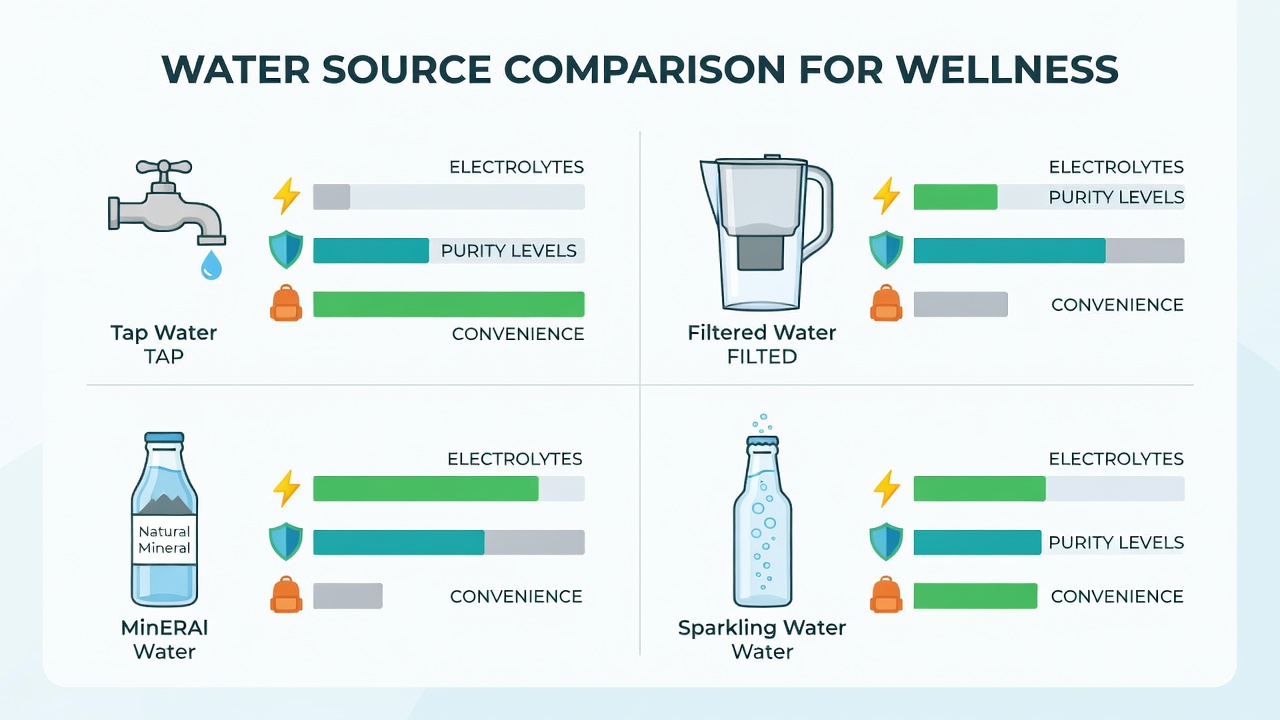
- Tap water: Convenient and often fluoridated for dental health; test locally for contaminants and consider a basic filter if taste or quality concerns arise.
- Filtered water: Removes chlorine and heavy metals while retaining beneficial minerals in many systems; popular choices include activated carbon or reverse osmosis units suited to household needs.
- Mineral water: Naturally rich in electrolytes; ideal for post-exercise recovery or days with higher sweat loss.
- Sparkling water: Provides hydration variety but may cause bloating if consumed in excess; best used as an occasional alternative rather than primary source.
Choose based on taste preference and local water quality reports for optimal results. Many people rotate sources throughout the week to balance convenience, cost, and mineral content.
Real-Life Examples and Personalization
A desk worker reported sustained afternoon focus after adding electrolyte drops to afternoon water and noticed fewer headaches within one week. An outdoor enthusiast noticed fewer cramps during hikes by timing intake before activity and increasing mineral-rich water on training days. A parent managing household tasks found that carrying a marked bottle helped maintain steady energy while juggling multiple responsibilities. Experiment for two weeks, then refine based on observed energy patterns and sleep quality.
Consult a healthcare professional for personalized advice, especially with existing medical conditions. Factors such as medications, pregnancy, or high physical demands may require tailored adjustments beyond general guidelines.
Mistakes to Avoid When Starting Hydration Biohacking
Common pitfalls include drinking large amounts only once or twice daily instead of spreading intake, ignoring electrolyte needs when increasing water volume, and relying solely on thirst as a guide. Another frequent error is overlooking hydration during travel or in air-conditioned spaces where moisture loss accelerates unnoticed. Beginners should also avoid comparing their intake directly to others without considering body size, activity, and climate differences.
Conclusion
Hydration biohacking empowers beginners to achieve meaningful wellness gains through consistent, mindful practices. By understanding the science, recognizing early dehydration cues, and implementing simple routines, individuals lay a strong foundation for long-term health optimization. Start small, track results, and refine habits gradually for sustainable benefits.
FAQ
Is eight glasses of water a day still valid advice?
Individual needs differ; focus on consistent sipping and bodily signals rather than rigid quotas. Adjust based on personal factors like body weight and activity.
Can I overhydrate?
Yes, excessive intake without electrolytes can dilute blood sodium. Balance remains key; listen to your body and spread consumption evenly.
How does diet affect hydration needs?
High-sodium or high-fiber meals increase fluid requirements, while water-rich foods like fruits contribute meaningfully to daily totals.
Should I drink water with meals?
Moderate amounts support digestion, but very large volumes may temporarily slow gastric emptying for some individuals.
Are there differences in hydration needs by age?
Older adults may experience reduced thirst sensation and benefit from scheduled reminders to maintain adequate intake throughout the day.

No comments yet. Be the first!