 Slow Bio Hack

Introduction to Beginner Biohacking Through Nutrition
Biohacking does not require expensive gadgets or extreme routines. For beginners in 2026, the most effective entry point is making targeted nutrition swaps that support steady energy, sharper focus, and faster recovery. These changes use everyday foods and timing adjustments rather than advanced protocols. The core idea is to optimize how your body processes fuel by replacing low-quality ingredients with nutrient-dense alternatives that work with your natural rhythms instead of against them. Many newcomers discover that consistent small adjustments lead to compounding benefits over weeks and months, turning daily meals into powerful tools for wellness.
Nutrition forms the foundation of biohacking because food directly influences blood sugar stability, hormone balance, inflammation levels, and cognitive performance. Unlike supplements or wearables, dietary swaps require no special equipment and can be implemented immediately using items already in most kitchens. Research from organizations like the World Health Organization highlights how balanced whole-food diets reduce fatigue and improve mental clarity, principles that align perfectly with beginner biohacking goals.
Why Nutrition Swaps Work Better Than Overhauls
Complete diet transformations often fail because they demand too much willpower at once. Targeted swaps succeed by preserving familiar eating patterns while upgrading individual components. For example, keeping your usual breakfast routine but improving its quality prevents decision fatigue. This approach also respects personal preferences and cultural food traditions, making long-term adherence far more realistic. Beginners who focus on swaps report higher satisfaction because results appear quickly without feelings of deprivation.
Identifying Common Dietary Pitfalls
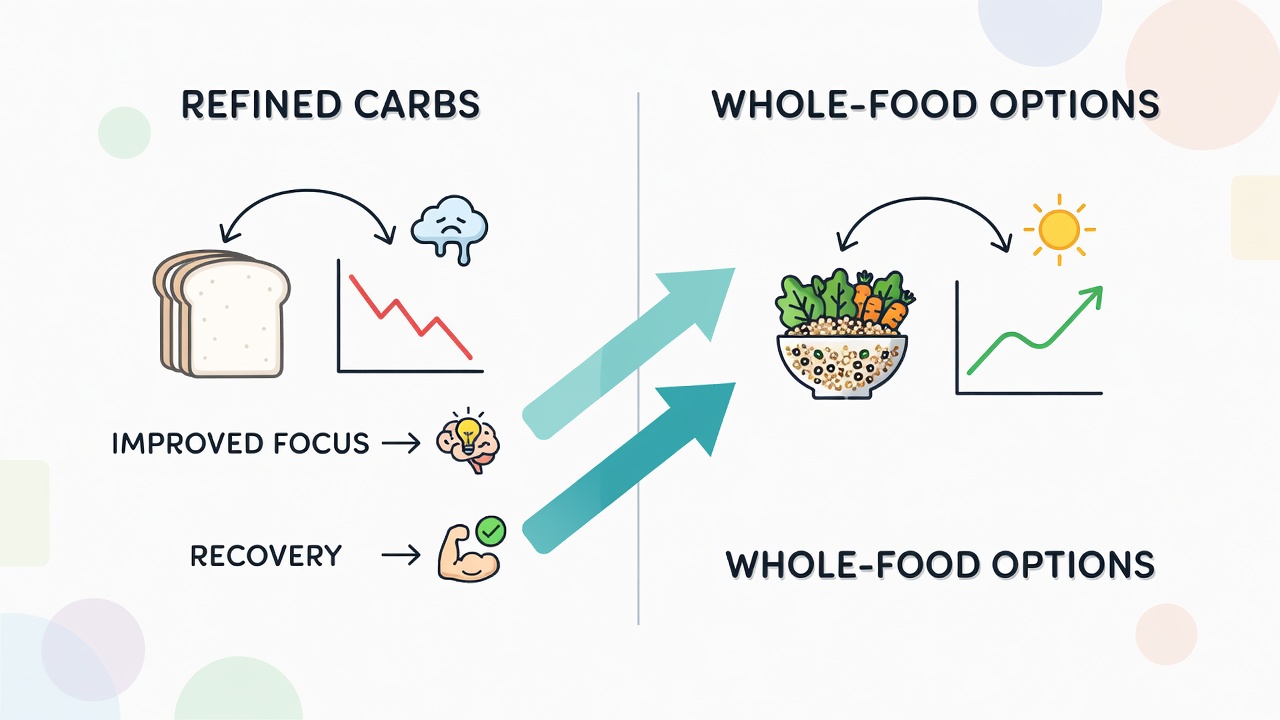
Most beginners unknowingly consume meals that cause energy crashes. Refined carbs such as white bread, sugary cereals, and pastries spike blood sugar followed by sharp drops. Over-reliance on processed snacks and large portions without protein or fiber also contributes to afternoon fatigue and poor concentration. Another frequent issue is inconsistent meal timing. Eating irregularly or skipping breakfast can disrupt circadian rhythms and reduce mental clarity. Many people also overlook how liquid calories from sodas or juices add up without providing satiety. Recognizing these patterns is the first step toward sustainable swaps. The Centers for Disease Control and Prevention notes that frequent consumption of refined carbohydrates correlates with higher rates of tiredness and metabolic stress, underscoring why replacement strategies matter.
Step-by-Step Nutrition Swaps
Replace refined carbohydrates with whole-food options that provide sustained fuel. Swap white rice for quinoa or cauliflower rice, white bread for sprouted-grain varieties, and sugary cereals for oatmeal topped with nuts and berries. These alternatives stabilize blood sugar while delivering more nutrients. Pair proteins and healthy fats with every meal. Instead of a plain bagel, choose avocado on whole-grain toast with eggs. Replace afternoon candy with Greek yogurt and a handful of almonds. These combinations slow digestion and maintain focus longer. Timing matters. Try eating your largest meal earlier in the day and keep dinner lighter. A simple swap like moving dessert to mid-afternoon can improve nighttime recovery. Breakfast example: trade a muffin for a smoothie bowl with spinach, banana, protein powder, and flaxseeds. Lunch upgrade: replace a deli sandwich on white bread with a large salad base plus grilled chicken, olive oil dressing, and chickpeas. Dinner adjustment: use zucchini noodles instead of pasta and add extra vegetables plus lean protein. Snack rotation: choose apple slices with almond butter over chips. Each swap targets a specific pain point while keeping preparation simple.
Portion and Pairing Strategies
Effective biohacking focuses on balance rather than restriction. Use the plate method: fill half with vegetables, one-quarter with protein, and one-quarter with complex carbohydrates. Add a source of healthy fat such as olive oil or seeds to enhance absorption of fat-soluble vitamins. Beginners often over-portion healthy foods. Measure nuts and seeds initially until you learn appropriate serving sizes. Pairing fiber-rich vegetables with proteins reduces cravings and supports gut health. Consider color variety on your plate to ensure a broad spectrum of micronutrients. For instance, combining red peppers, leafy greens, and orange carrots provides antioxidants that aid recovery from daily stressors.
Building a Weekly Swap Plan
Start with one swap per meal category during week one. Week two, add timing adjustments such as finishing meals two hours before bed. Week three, introduce a new pairing rule like always including a vegetable at breakfast. Track adherence with a simple checklist. This gradual rollout prevents overwhelm and allows your taste buds and digestion to adapt comfortably.
Tracking Initial Results
Keep a simple journal noting energy levels, focus, and sleep quality after each swap. Rate these factors on a scale of one to ten at the same time daily. After two weeks, patterns emerge that guide further adjustments. Many beginners also track basic metrics such as morning energy upon waking or post-meal mood. Consistent data helps identify which swaps deliver the greatest personal benefit. Digital apps can assist, but paper journals work equally well for those preferring minimalism.
Real-World Beginner Case Examples
Sarah, a 34-year-old office worker, replaced her morning pastry with overnight oats containing chia seeds and berries. Within ten days she reported steadier energy until lunch and fewer cravings. Mark, a college student, swapped sugary energy drinks for sparkling water with lemon and a protein shake. His afternoon focus improved and he slept better at night. Another example involves Lisa, a busy parent who exchanged processed frozen meals for prepped grain bowls on Sundays. She noticed reduced bloating and better afternoon productivity within three weeks. These examples show that small, repeatable changes compound over time without requiring major lifestyle overhauls.
Comparison Table of Swap Benefits
| Original Choice | Biohacking Swap | Primary Benefits |
|---|---|---|
| White bread toast | Sprouted-grain toast with avocado | Stable blood sugar, increased fiber |
| Sugary cereal | Oatmeal with nuts and fruit | Longer satiety, better focus |
| Processed snacks | Greek yogurt and berries | Improved recovery, gut support |
| Large late dinner | Balanced lunch and lighter evening meal | Better sleep quality |
Mistakes to Avoid When Starting
- Attempting too many swaps simultaneously, which leads to burnout.
- Ignoring portion sizes of even healthy foods like nuts or avocado.
- Skipping protein at breakfast, causing mid-morning energy dips.
- Expecting overnight results instead of allowing two to four weeks for adaptation.
- Neglecting hydration, which amplifies many dietary shortcomings.
Frequently Asked Questions
Is biohacking nutrition expensive?
Many effective swaps use affordable staples such as oats, eggs, beans, and seasonal produce. Focus on whole foods rather than specialty products to keep costs manageable.
How sustainable are these changes long term?
Starting with one or two swaps per week builds habits gradually. Most beginners find the improvements in energy and mood make the adjustments feel natural rather than restrictive.
Can I combine these swaps with other wellness practices?
Yes. Nutrition forms the foundation. Once comfortable, you can layer in light movement or sleep hygiene without overwhelming your routine.
Will these swaps work if I have dietary restrictions?
Absolutely. The principles adapt easily to vegetarian, gluten-free, or other needs by choosing appropriate whole-food replacements that match your requirements.
Conclusion
Beginner biohacking succeeds when nutrition swaps remain simple and consistent. By addressing refined carbs, improving pairings, and tracking results, anyone can experience better daily wellness in 2026. Start today with one replacement and build from there for lasting impact.


No comments yet. Be the first!