 Slow Bio Hack

Introduction to Gratitude Journaling in Biohacking
Gratitude journaling stands out as one of the simplest yet most effective entry points into biohacking for beginners in 2026. This practice involves regularly noting things you appreciate, which can rewire thought patterns for better mental clarity and lower stress levels. Unlike complex gadgets or supplements, it requires no investment beyond a few minutes daily and complements other wellness routines seamlessly. Biohacking focuses on optimizing biology through small, consistent habits, and gratitude journaling fits perfectly as a foundational mental optimization tool, drawing from positive psychology to influence brain chemistry positively. Beginners often overlook this low-tech method in favor of flashy devices, yet it delivers profound results by fostering a mindset shift that supports everything from better sleep to improved decision-making.
Many people start biohacking journeys overwhelmed by options like intermittent fasting or red light therapy, but gratitude journaling provides an immediate, equipment-free way to begin. It builds emotional resilience, making subsequent hacks more sustainable. In 2026, with rising awareness of mental health in wellness communities, this practice has gained traction as a core habit for daily optimization.
The Science Behind Gratitude Journaling
Research shows that consistent gratitude practices can decrease cortisol levels and improve emotional regulation. Studies from institutions like the National Institutes of Health highlight how expressing thanks activates reward centers in the brain, fostering resilience against daily stressors. Similarly, the Mayo Clinic notes its role in enhancing overall well-being by promoting better sleep and focus. Neuroimaging reveals changes in the prefrontal cortex after just weeks of practice, leading to heightened empathy and reduced symptoms of anxiety. The mechanism involves dopamine release, which reinforces positive thinking loops and gradually diminishes the brain's negativity bias.
This method works by shifting focus from negatives to positives, creating neural pathways that support long-term mental health. For beginners, the impact becomes noticeable within weeks when practiced mindfully, often translating to measurable improvements in energy and cognitive performance.
Selecting Effective Gratitude Prompts
Choosing the right prompts helps maintain consistency and depth. Start with simple questions like: What made me smile today? Who am I thankful for and why? How did my body support me this morning? Advanced options include reflecting on challenges that led to growth or moments of unexpected kindness. Rotate prompts weekly to prevent repetition and keep the practice fresh. For example, one day focus on sensory experiences such as the taste of morning coffee, while another explores relational gratitude like a supportive conversation with a colleague. Customize prompts around life areas such as career, health, or creativity to ensure comprehensive coverage. Beginners should avoid overly broad prompts that lead to superficial entries; instead, aim for specificity, such as naming a particular event or person rather than general statements like "I'm grateful for my family."
Building a 5-Minute Daily Routine
Integrate journaling into your morning or evening without overwhelm. Step 1: Set a timer for five minutes in a quiet space. Step 2: Write three specific items of gratitude, using full sentences for clarity. Step 3: Add one sentence explaining why each matters to deepen emotional connection. Step 4: Close with a deep breath and a quick review of the entries. Perform this at the same time daily to build habit strength, perhaps right after brushing teeth or before bed. Over time, this routine enhances energy and focus by reducing mental clutter and priming the mind for positive interactions. Example entry: "I am grateful for the sunlight during my walk because it lifted my mood and reminded me of nature's simple gifts." Track adherence with a small calendar mark to reinforce the habit loop.
Sample Weekly Template
Use this structured template as a starting point and adapt as needed:
- Monday: Gratitude for physical health and movement, such as noting how a short stretch improved posture.
- Tuesday: Appreciation for relationships and connections, detailing a specific act of kindness received.
- Wednesday: Thanks for learning opportunities or work wins, including lessons from setbacks.
- Thursday: Recognition of simple comforts like food or nature, describing sensory details.
- Friday: Reflection on personal strengths shown this week, with examples of resilience.
- Saturday: Gratitude for rest and leisure moments, highlighting recovery activities.
- Sunday: Overall week highlights and intentions for the next, blending review with forward focus.
Customize this template in a notebook or digital format to suit your lifestyle, adding personal variations each month for continued engagement.
Tracking Mood Improvements Over 30 Days
Monitor progress by rating mood on a 1-10 scale before and after journaling each day. Note patterns in energy, sleep quality, and stress through brief annotations like "Felt more focused after writing about my team." Many beginners report measurable gains in focus and reduced anxiety by day 21, with cumulative effects building through consistent reflection. Use a simple spreadsheet or journal margin for entries to visualize trends clearly, perhaps graphing weekly averages. Over 30 days, compare baseline metrics such as average daily stress ratings to end-of-month figures. This data-driven approach turns the practice into a true biohacking experiment, revealing correlations between journaling consistency and improved cognitive sharpness or sustained vitality.
Pen-and-Paper vs. Apps: Key Comparisons
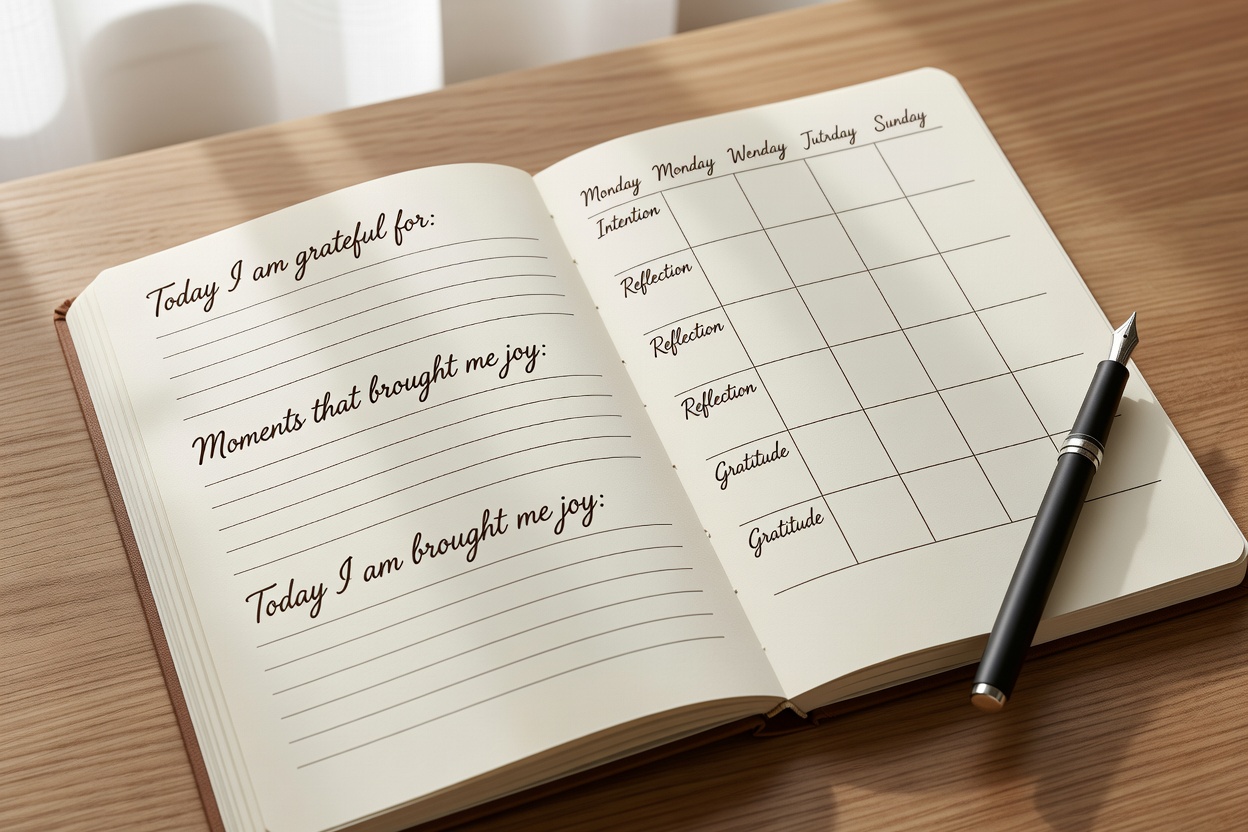
Traditional notebooks offer tactile benefits that enhance mindfulness and reduce screen time. They allow free-form writing without distractions, fostering deeper emotional processing through the physical act of handwriting. Apps provide reminders, templates, and analytics but may introduce digital fatigue or notifications that disrupt flow. Choose paper for deeper reflection or apps if you prefer data tracking and portability across devices. Both methods deliver similar wellness benefits when used consistently, though studies suggest handwriting may strengthen memory retention of grateful moments. Experiment for one week with each to determine personal preference based on lifestyle factors like travel frequency or tech comfort.
Common Pitfalls to Avoid
Many beginners struggle with forcing positivity or skipping days due to busy schedules. Avoid generic entries by being specific and sensory-rich in descriptions. Do not compare your journal to others or social media versions, as authenticity drives real change. Skip perfectionism—messy notes are fine and often more genuine. If motivation dips, revisit why you started rather than abandoning the habit; pair it temporarily with another enjoyable activity like listening to calming music. Another pitfall is inconsistent timing, which weakens habit formation; anchor it to an existing routine instead. Addressing these early ensures long-term adherence and maximizes benefits for mental clarity.
Integrating with Existing Biohacking Practices
Pair journaling with meditation, cold exposure, or nutrition tracking for amplified results. Use it post-workout to reinforce positive body awareness or alongside sleep optimization routines by noting evening gratitudes that promote relaxation. This creates a holistic approach without added complexity, as the practice enhances adherence to other protocols by lowering overall stress. For instance, combine with breathwork by journaling immediately after a session to capture heightened states of appreciation. Over months, this integration supports sustained energy levels and sharper focus across multiple biohacking domains.
Long-term Benefits and Sustainability
Beyond the initial 30 days, regular gratitude journaling contributes to lasting shifts in perspective, including greater life satisfaction and emotional stability. Sustainability comes from flexibility—adjust prompt depth or frequency during high-stress periods rather than quitting. Many practitioners evolve the habit into gratitude walks or verbal sharing with family, keeping it dynamic. These adaptations prevent burnout while maintaining the core benefits of reduced stress and enhanced wellness.
FAQ
How does gratitude journaling fit with other biohacks?
It serves as a low-barrier mental foundation that enhances physical protocols by improving adherence and reducing stress-related setbacks, creating synergy across your routine.
What measurable results can I expect for energy and focus?
Users often notice steadier energy and sharper concentration within 30 days, supported by consistent mood tracking data that shows upward trends in daily ratings.
Is this suitable for complete beginners?
Absolutely—start with one prompt daily and expand as comfort grows, building confidence before layering in more advanced techniques.
Can I combine it with therapy or professional mental health support?
Yes, many find it complements professional guidance by providing daily self-reflection tools that reinforce therapeutic insights.
Conclusion
Gratitude journaling empowers beginners to biohack their wellness effectively in 2026. By committing to this simple practice, you lay groundwork for sustained mental clarity, stress reduction, and integrated health improvements that compound over time.


No comments yet. Be the first!