 Slow Bio Hack

Introduction to Beginner Biohacking for Immunity
Biohacking the immune system starts with small, consistent changes that build resilience over time. In 2026, wellness trends emphasize accessible methods that fit everyday life without expensive gadgets or extreme protocols. This guide focuses on low-cost techniques like nutrition adjustments, daily movement, natural light exposure, and basic supplement comparisons to help beginners strengthen immunity sustainably. Understanding your immune system involves recognizing how lifestyle factors influence its function. Simple biohacks target inflammation reduction, gut health support, and circadian rhythm alignment for long-term results. Beginners often overlook how interconnected these elements are, yet research shows that foundational habits deliver the most reliable outcomes when practiced daily.
The appeal of biohacking lies in its emphasis on personalization. Rather than following rigid plans, individuals experiment with what works for their schedules and bodies. This approach aligns perfectly with 2026 wellness trends that prioritize sustainability over quick fixes, helping users avoid burnout while achieving measurable improvements in energy and resistance to illness.
Daily Nutrition Swaps for Immune Support
Replacing processed foods with whole options forms the foundation of immune optimization. Swap refined sugars for natural alternatives like berries or honey in moderation. Incorporate fermented foods such as yogurt or kimchi to promote gut bacteria that aid immunity. These changes support the microbiome, which plays a central role in immune response. Focus on variety to ensure a broad spectrum of vitamins and minerals without relying on costly specialty items.
- Replace white bread with whole-grain versions rich in fiber to stabilize blood sugar and reduce inflammation.
- Add leafy greens to meals instead of starchy sides for added antioxidants and vitamins.
- Choose omega-3 sources like walnuts or flaxseeds over processed snacks to support cellular health.
- Include colorful vegetables daily to boost phytonutrient intake naturally.
These swaps enhance nutrient intake while keeping costs low using seasonal produce available at local markets. Over several weeks, users typically notice improved digestion and fewer energy crashes, which indirectly bolsters immune function through better overall health.
Lifestyle Adjustments: Movement and Light Exposure
Regular movement boosts circulation and immune cell activity. Aim for 30 minutes of walking daily, which requires no equipment and fits into commutes or breaks. Combine this with morning sunlight exposure to regulate sleep and vitamin D levels naturally. Light exposure helps synchronize internal clocks, leading to deeper rest that supports immune repair processes during sleep.
Practical steps include a 10-minute outdoor walk after breakfast and stretching routines in the evening. For those with desk jobs, standing breaks every hour combined with short walks multiply benefits. Users report better energy and fewer seasonal illnesses after adopting these habits consistently, often within the first month of implementation.
Basic Supplement Comparisons with Pros and Cons
Supplements can fill gaps but should complement diet and lifestyle rather than replace them. Compare common options for beginners to make informed choices based on individual needs and tolerances. For authoritative guidance on immune health, refer to resources from the World Health Organization.
- Vitamin D: Pros include supporting immune modulation and bone health; cons involve needing blood tests for accurate dosing and potential interactions with medications.
- Zinc: Pros aid wound healing and infection resistance; cons may cause nausea if taken on an empty stomach and should not exceed recommended amounts.
- Vitamin C: Pros provide antioxidant benefits and support collagen production; cons show limited additional impact beyond food sources in many studies.
- Probiotics: Pros enhance gut flora diversity; cons vary by strain quality and require refrigeration for some products.
Always consult a professional before starting. A food-first approach remains preferable, with supplements used strategically during high-stress periods or seasonal changes. Explore evidence-based overviews at Mayo Clinic for deeper insights.
Step-by-Step Daily Routine for Immune Biohacking
Build a sustainable routine with these steps that integrate all key elements:
- Start the day with hydration and 15 minutes of sunlight exposure to kickstart circadian alignment.
- Incorporate a nutrient-dense breakfast featuring the nutrition swaps outlined earlier.
- Take a midday walk for combined movement and additional light benefits.
- Include a short mindfulness pause in the afternoon to manage stress, which can suppress immunity.
- End with a wind-down routine including herbal tea, limited screen time, and consistent sleep timing.
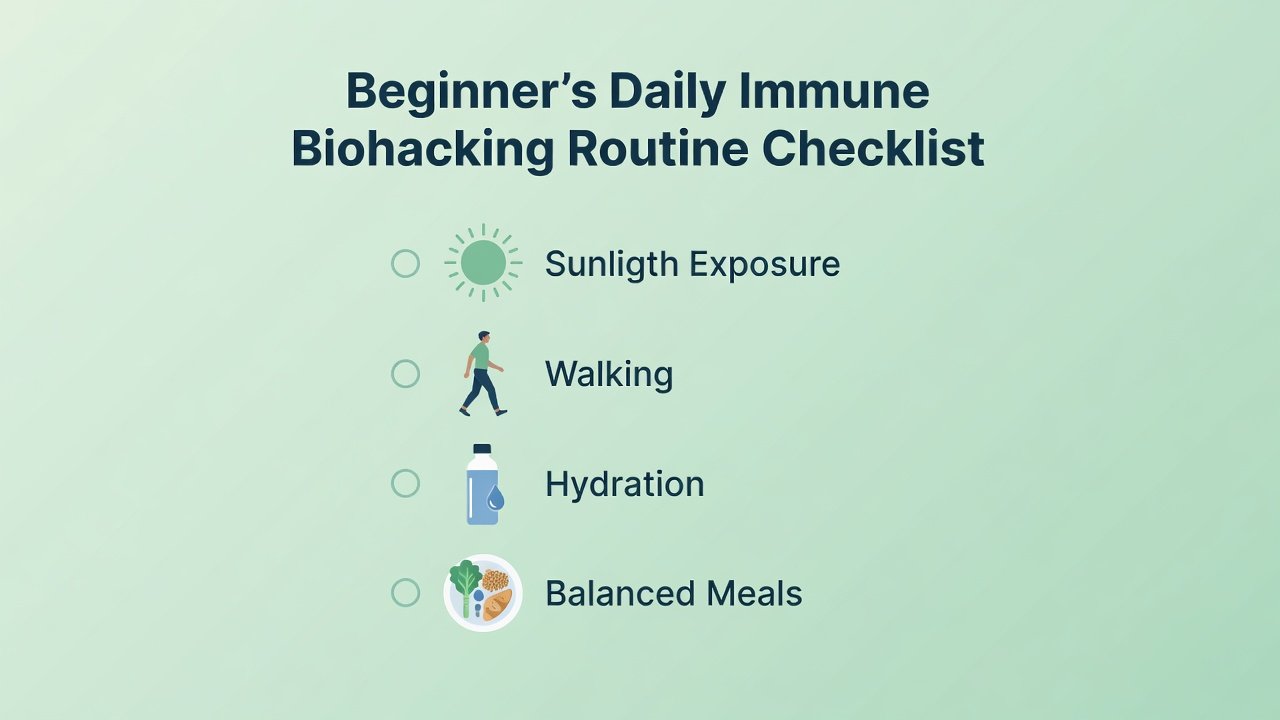
Variations allow flexibility for different lifestyles, such as indoor light therapy alternatives on rainy days or batch-prepping meals on weekends. Real-world examples show office workers improving immunity markers after three months of this routine through better sleep quality and reduced stress levels.
Real-World Examples from Everyday Users
A teacher in her 30s replaced afternoon coffee with green tea and added evening walks, noting fewer colds during winter months and improved focus during classes. A remote worker focused on fermented foods and morning light, reporting sustained energy and quicker recovery from minor illnesses over six months. Another example involves a parent who introduced family walks and vegetable swaps, observing reduced sick days for the household. These cases highlight how small changes compound for wellness gains aligned with 2026 trends toward holistic, affordable health practices.
Common Mistakes to Avoid
Beginners often overcomplicate routines by adding too many changes at once, leading to inconsistency. Focus on one area like nutrition first before layering others. Another pitfall is neglecting consistency in sleep, which undermines other efforts and increases vulnerability to illness. Ignoring hydration or attempting extreme fasting without guidance can also backfire. Track progress simply through a journal to maintain motivation and adjust as needed.
Frequently Asked Questions
How long until I see results from these biohacks?
Most notice improvements in energy within 2-4 weeks, with stronger immune resilience building over 3-6 months of consistent practice.
Are these methods suitable for all ages?
Yes, the low-cost, habit-based approaches work across adult age groups, though individual needs vary and professional advice is recommended for specific conditions.
Can I combine these with medical advice?
Always integrate biohacking with guidance from healthcare providers, especially if managing conditions. Additional reliable information is available through Centers for Disease Control and Prevention.
What if I travel frequently or have an irregular schedule?
Adapt by prioritizing portable options like carrying nuts for snacks, using hotel room light exposure, and maintaining a consistent bedtime regardless of time zones.
Conclusion
Optimizing immunity through beginner biohacking relies on sustainable habits in nutrition, movement, light, and mindful supplementation. Start small, track progress, and adjust for lasting wellness in 2026 and beyond. Consistency turns these accessible strategies into powerful tools for long-term health.

No comments yet. Be the first!