 Slow Bio Hack

Introduction to Digital Detox as Beginner Biohacking
Constant connectivity from smartphones and screens contributes to elevated stress levels and diminished focus for many people. Digital detox emerges as an accessible form of beginner biohacking that requires no expensive tools or supplements. By intentionally reducing tech exposure, individuals can lower cortisol, improve sleep quality, and sharpen mental clarity. This approach complements other wellness practices like movement routines or journaling, making it ideal for those new to optimization techniques. In today's hyper-connected world, where the average person spends over four hours daily on mobile devices, starting with simple boundaries can yield profound shifts in energy and productivity without any financial investment.
Research from the World Health Organization highlights how excessive screen time correlates with mental health challenges, underscoring the value of structured breaks. In this guide, we explore the physiological impacts of always-on technology, provide a step-by-step 7-day detox plan, share practical examples, and include implementation tools to ensure lasting results. Whether you are a busy professional or a student juggling multiple responsibilities, these strategies offer a low-barrier entry into biohacking that builds foundational habits for long-term wellness.
The Effects of Constant Connectivity on the Body and Mind
Prolonged device use disrupts natural circadian rhythms through blue light exposure, which suppresses melatonin production. This leads to poorer sleep and daytime fatigue. Additionally, frequent notifications trigger dopamine responses similar to addictive behaviors, keeping the nervous system in a heightened state of alertness. Over time, this contributes to chronic stress, reduced attention span, and even physical issues like eye strain or neck tension from poor posture. The sympathetic nervous system remains activated, elevating heart rate and blood pressure in ways that mimic low-level fight-or-flight responses throughout the day.
Studies indicate that average adults check their phones over 100 times daily, fragmenting concentration and hindering deep work. Biohacking enthusiasts view digital detox as a foundational reset that amplifies benefits from other habits, such as exercise or mindfulness. By addressing tech-induced overload first, beginners create space for sustainable improvements in overall vitality. Furthermore, constant scrolling can reduce opportunities for boredom, which researchers link to creative problem-solving and emotional processing. Without these natural pauses, many experience heightened anxiety and diminished ability to focus on single tasks for extended periods.
Step-by-Step 7-Day Digital Detox Plan
Embarking on a detox does not require going cold turkey. A gradual approach builds compliance and minimizes discomfort. Follow this structured plan tailored for beginners, with daily action items and reflection prompts to track progress.
Days 1-2: Awareness and Preparation
Track your current usage with built-in phone features. Identify peak scrolling times and set initial boundaries, such as no devices during meals. Prepare by downloading offline content like podcasts or books for evening hours. On day one, review your app usage statistics and note emotional triggers that prompt checking your phone. Day two focuses on creating a simple log to record how you feel before and after each session of reduced use, building self-awareness that supports adherence.
Days 3-4: Introduce Device Curfews
Establish a phone curfew one hour before bed. Replace evening screen time with light stretching or reading physical books. Use blue-light filters on remaining daytime use to ease the transition. Day three involves testing a 30-minute curfew and adjusting based on family or work needs. By day four, extend the curfew slightly and incorporate a short breathing exercise to replace the habit loop of reaching for your device.
Days 5-7: Full Integration and Reflection
Extend screen-free periods to include mornings upon waking. Journal daily wins and note improvements in mood or energy. By day seven, assess which changes feel sustainable for ongoing practice. Day five introduces a morning ritual without screens for the first 20 minutes after waking. Days six and seven emphasize evaluating social media limits and experimenting with full offline blocks during focused work sessions.
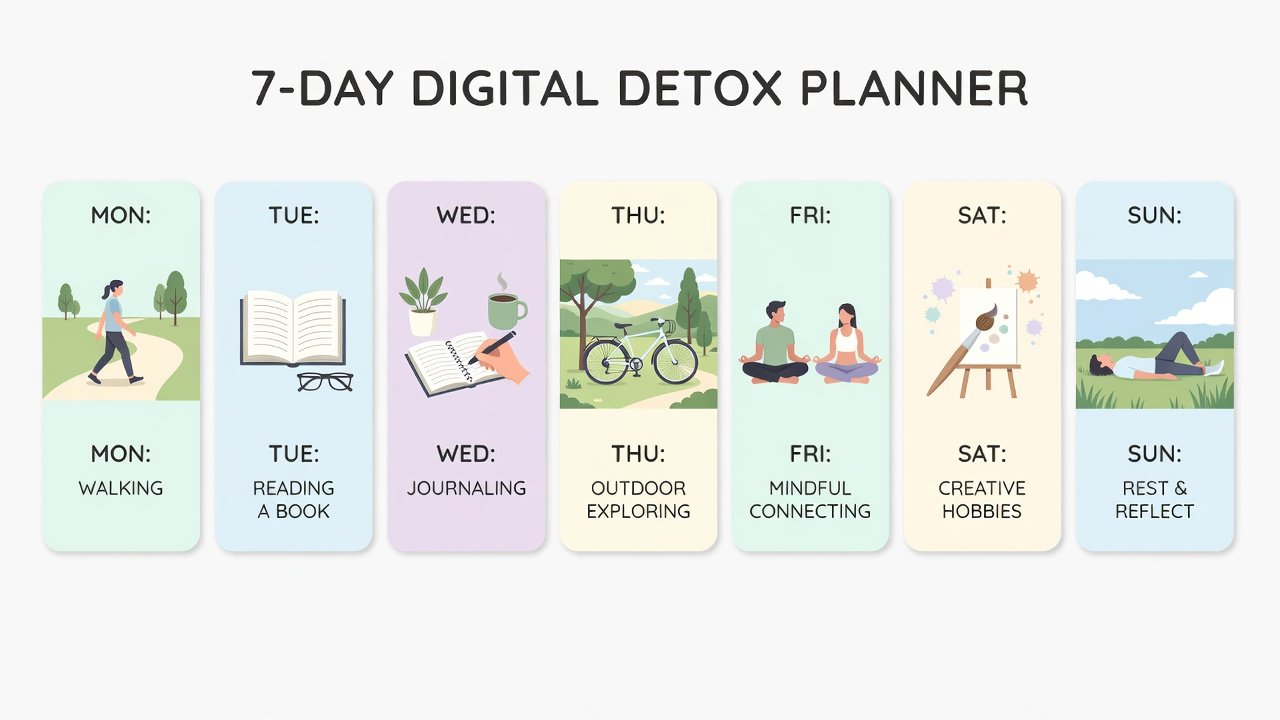
Practical Examples: Device Curfews and Blue-Light Filters
Device curfews work best when paired with environmental cues, like charging phones in another room overnight. Blue-light filter apps or glasses reduce melatonin suppression during necessary evening screen sessions. Combine these with movement by taking device-free walks, which enhances circulation and clears mental fog more effectively than passive scrolling. Another practical tactic involves setting specific notification categories to allow only urgent calls and messages during work blocks, preserving mental bandwidth for deep tasks.
Journaling offers a strong comparison: both detox and journaling promote introspection, but detox provides immediate nervous system relief while journaling builds long-term emotional processing. Beginners often find combining the two yields synergistic effects for focus and resilience. Movement routines such as yoga or brisk walks serve as excellent companions because they engage the body physically while the mind recovers from digital overload. Users report that replacing 20 minutes of scrolling with a short outdoor walk leads to better afternoon concentration and reduced evening restlessness.
Real-World Case Studies and Implementation Checklists
One professional reported sharper morning productivity after implementing a strict 9 PM device curfew, noting better sleep within the first week. Another participant reduced social media to 30 minutes daily and experienced fewer anxiety spikes during work hours. A third case involved a college student who created tech-free study zones and improved exam scores by 15 percent over a semester through better retention and reduced distractions. These examples illustrate how small, consistent changes compound over time.
- Checklist item 1: Audit apps and delete non-essential notifications.
- Checklist item 2: Designate tech-free zones in home and office.
- Checklist item 3: Schedule weekly offline activities like hiking or board games.
- Checklist item 4: Track mood and energy in a simple notebook for 30 days.
- Checklist item 5: Review progress weekly and adjust boundaries as needed.
Common Mistakes to Avoid and Long-Term Maintenance
Many beginners make the error of attempting an all-or-nothing approach, leading to quick burnout. Instead, focus on incremental wins and allow flexibility for emergencies. Another frequent pitfall is neglecting to communicate boundaries with family or colleagues, which can create unnecessary friction. For sustained success, revisit your detox rules monthly and incorporate seasonal adjustments, such as lighter limits during holidays when social connectivity matters more.
Frequently Asked Questions for Beginners
What withdrawal symptoms might occur?
Initial irritability or restlessness is common but typically subsides within 48-72 hours as dopamine regulation improves. Some also notice temporary increases in boredom that eventually give way to renewed creativity.
How does this compare to other biohacks?
Unlike supplements, digital detox requires zero cost and directly targets root causes of tech-related stress. It pairs especially well with movement and journaling for amplified results.
Can I still use devices for work?
Yes, focus on boundaries outside work hours while maintaining professional responsiveness during designated times. Use tools like scheduled send features to protect personal downtime.
Is a full week enough or should I extend it?
Seven days provides a solid foundation, but many continue with ongoing rules such as weekend digital minimalism for deeper benefits.
How do I handle FOMO from missing online content?
Recognize that most updates are not urgent. Curate a short list of trusted sources and check them intentionally once per day rather than reacting to every alert.
Conclusion
Digital detox stands out as an empowering entry point into biohacking, delivering measurable wellness gains through intentional disconnection. By following the 7-day plan and incorporating examples like curfews, beginners can reclaim focus and reduce stress without complexity. Start today to experience compounding benefits alongside complementary habits like movement and reflection, building a resilient foundation for ongoing optimization.


No comments yet. Be the first!