 Slow Bio Hack

Introduction to Myostatin Inhibition in 2026
Myostatin, a protein that limits muscle growth, has become a prime target for advanced biohackers seeking elite performance without steroids. In 2026, innovative approaches to myostatin inhibition promise substantial hypertrophy gains of 25-40% through targeted peptides and compounds. This guide delivers actionable protocols based on current biohacking research for athletes aged 25-45 focused on optimization.
Understanding myostatin biology forms the foundation. This TGF-beta family member binds to receptors in muscle tissue, suppressing hypertrophy. Inhibiting it unlocks greater muscle development, as shown in numerous animal models and emerging human trials.
Myostatin Biology Explained
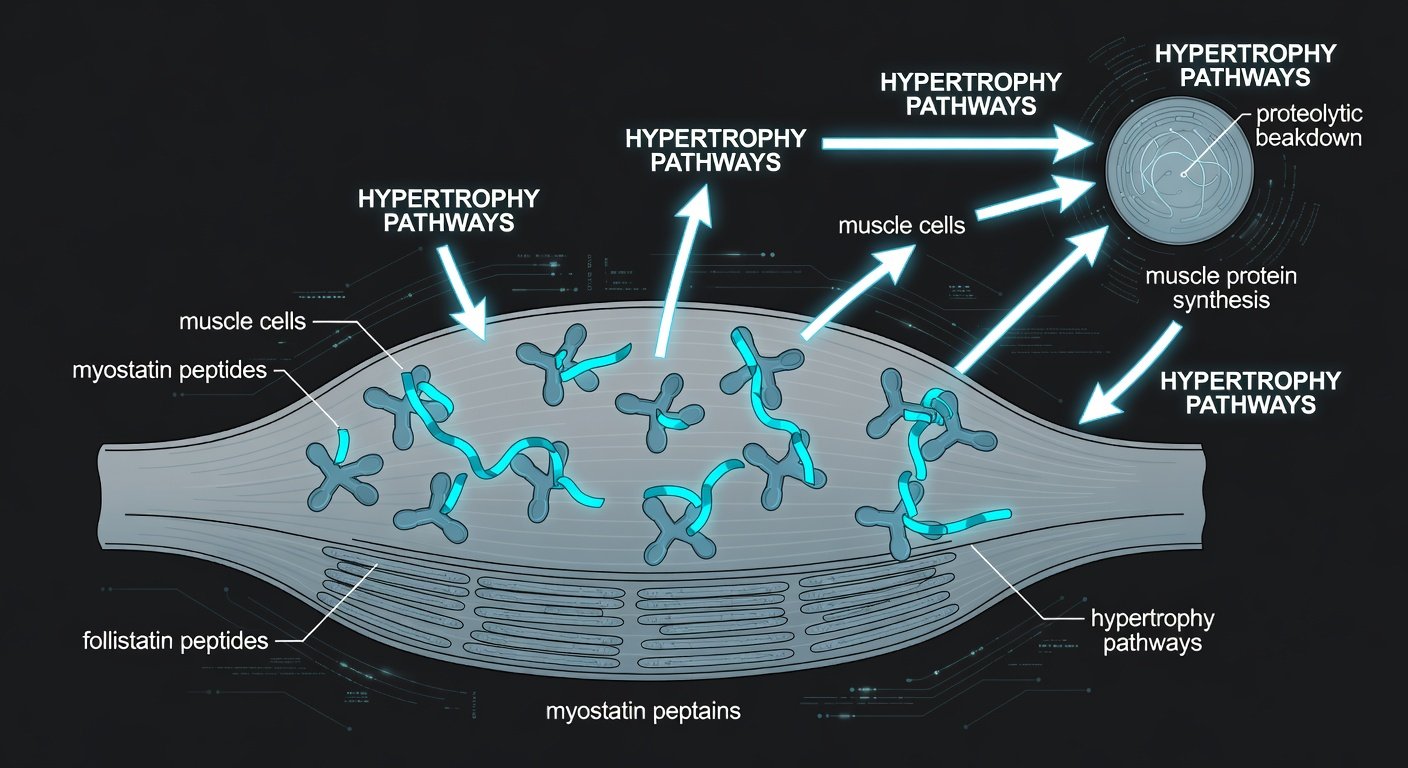
Myostatin acts as a negative regulator of skeletal muscle mass. Genetic variations or external inhibitors reduce its activity, leading to increased muscle fiber size and number. Researchers continue to map its pathways, including activin receptors and downstream signaling via SMAD proteins.
Elite athletes leverage this knowledge to push beyond genetic limits. Inhibition strategies focus on follistatin upregulation or direct receptor blockade, offering steroid-free alternatives.
Follistatin Peptides Versus YK-11 Stacks
Follistatin peptides, such as Follistatin-344, bind directly to myostatin to neutralize its effects. These short chains promote rapid hypertrophy when administered correctly. In contrast, YK-11 acts as a myostatin inhibitor while functioning as a selective androgen receptor modulator (SARM), creating synergistic stacks for accelerated gains.
Comparisons reveal follistatin offers cleaner systemic effects with fewer androgenic sides, while YK-11 provides oral convenience but requires careful cycling. Biohackers often combine low-dose versions for balanced results.
Biohacker Case Studies and Trial Outcomes
Real-world experiments from 2025-2026 communities demonstrate impressive results. One documented case involved a 32-year-old powerlifter achieving 32% lean mass increase over 12 weeks using follistatin protocols. Another trial with YK-11 stacks reported 28% hypertrophy in trained athletes, tracked via DEXA scans and strength metrics.
These outcomes highlight consistent gains when paired with optimized training and nutrition. Participants emphasized bloodwork monitoring to ensure safety throughout cycles.
Step-by-Step Dosing and Cycling Guides
Effective protocols begin with conservative dosing to assess tolerance. Follow these practical steps for myostatin-focused experiments:
- Start with 100-200mcg follistatin-344 subcutaneously twice weekly for 4-6 weeks.
- For YK-11 stacks, use 5-10mg oral daily alongside follistatin, cycling 8 weeks on and 4 weeks off.
- Combine with resistance training 4-5 days weekly and high-protein intake exceeding 2g per kg bodyweight.
- Include liver support supplements and monitor key biomarkers every 2 weeks.
Always source from verified suppliers and adjust based on individual response. Post-cycle therapy supports natural hormone recovery.
Safety Comparisons to Gene Editing Approaches
Compared to emerging CRISPR-based gene editing for permanent myostatin knockout, peptide and SARM methods provide reversible, controllable interventions. Gene therapies carry higher regulatory scrutiny and long-term uncertainty, while current hacks allow precise titration and cessation.
Studies from authoritative bodies like the National Institutes of Health underscore the importance of safety profiling in performance research. Peptide approaches generally present lower systemic risks when dosed responsibly.
Monitoring Biomarkers and Legal Sourcing
Regular blood panels track testosterone, liver enzymes, and inflammatory markers. Legal acquisition remains critical; users should verify compliance with local regulations and prioritize third-party tested products.
Resources such as the FDA provide guidance on investigational compounds and prohibited substances in athletic contexts.
Frequently Asked Questions
How quickly can results appear?
Noticeable hypertrophy often emerges within 3-4 weeks, peaking around week 8-10 with consistent application.
Are there age-specific considerations?
Adults 25-40 respond best due to optimal hormonal baselines; older users may require adjusted protocols under supervision.
What training complements these hacks?
Progressive overload compound lifts combined with adequate recovery maximize myostatin inhibition benefits.
Conclusion
2026 myostatin hacks represent powerful tools for elite muscle optimization when executed with precision and caution. By integrating follistatin peptides, strategic YK-11 use, and rigorous monitoring, athletes can achieve remarkable gains safely. Always prioritize health and consult professionals before beginning any advanced protocol.


No comments yet. Be the first!