 Slow Bio Hack

2026 Mitochondrial Uncoupling Experiments for Elite Performance
Mitochondrial uncoupling has emerged as a frontier in biohacking for athletes seeking superior fat oxidation and metabolic efficiency. In 2026, researchers and elite performers continue to explore agents that disrupt the proton gradient in mitochondria, allowing energy to dissipate as heat rather than ATP production. This process can accelerate fat loss while preserving muscle when paired with precise training and monitoring. Athletes at the highest levels are turning to these methods to break through plateaus in body composition and endurance, but success requires deep understanding of mechanisms, careful agent selection, and rigorous oversight to avoid adverse outcomes.
The Science of Mitochondrial Uncoupling
Mitochondrial uncoupling proteins (UCPs) naturally regulate energy expenditure by allowing protons to leak across the inner mitochondrial membrane. Synthetic agents amplify this effect, increasing basal metabolic rate without additional exercise. Studies from institutions like the National Institutes of Health highlight how controlled uncoupling enhances lipid metabolism through increased fatty acid oxidation and reduced efficiency of oxidative phosphorylation. However, the mechanism carries risks, including hyperthermia and oxidative stress if mismanaged. In elite contexts, the goal is mild uncoupling that boosts calorie burn by 10-20% above baseline while athletes maintain high training volumes. This differs from extreme uncoupling seen in older compounds, which often led to uncontrolled temperature spikes. Researchers emphasize that uncoupling also influences reactive oxygen species production, potentially offering protective effects when dosed correctly, but only under continuous biomarker surveillance.
Key Agents: DNP, Derivatives, and Natural Alternatives
Traditional 2,4-dinitrophenol (DNP) remains a reference compound but is largely supplanted by safer derivatives and novel molecules. BAM15, a newer uncoupler, shows promise in preclinical models for selective fat loss with reduced toxicity profiles. Side-by-side comparisons reveal BAM15 may offer improved mitochondrial selectivity compared to older DNP variants, resulting in less impact on lean tissue. DNP derivatives focus on modified structures aiming for lower systemic exposure and shorter half-lives. Natural-inspired options include plant-derived compounds under investigation for gentler uncoupling effects. Athletes often evaluate these based on onset speed, duration of action, and recovery time post-cycle. Emerging research also examines combinations with NAD+ precursors to support mitochondrial health during uncoupling phases.
- DNP derivatives: Focus on modified structures aiming for lower systemic exposure and reduced peak temperature effects.
- BAM15: Natural-inspired compound with research interest in metabolic flexibility and targeted adipose tissue reduction.
- Other candidates: Emerging plant-derived uncouplers and synthetic analogs under active investigation for performance applications.
NIH research resources provide ongoing updates on these compounds and their evolving safety data.
Dosage Titration and Safety Monitoring
Effective protocols emphasize gradual titration guided by blood markers such as liver enzymes, thyroid function, and inflammatory cytokines. Athletes typically begin with micro-doses and increase by small increments every 3-5 days while logging subjective symptoms and objective metrics. Core temperature monitoring via wearable sensors becomes essential, with alerts set for rises above 1.5 degrees Celsius. Bloodwork every 10–14 days helps detect early deviations in ALT, AST, TSH, and CRP levels. Electrolyte panels and oxidative stress markers like malondialdehyde are also tracked to guide adjustments. In practice, a 12-week protocol might start at 20% of target dose and ramp slowly, pausing if any marker exceeds reference ranges.
Integration with Resistance Training
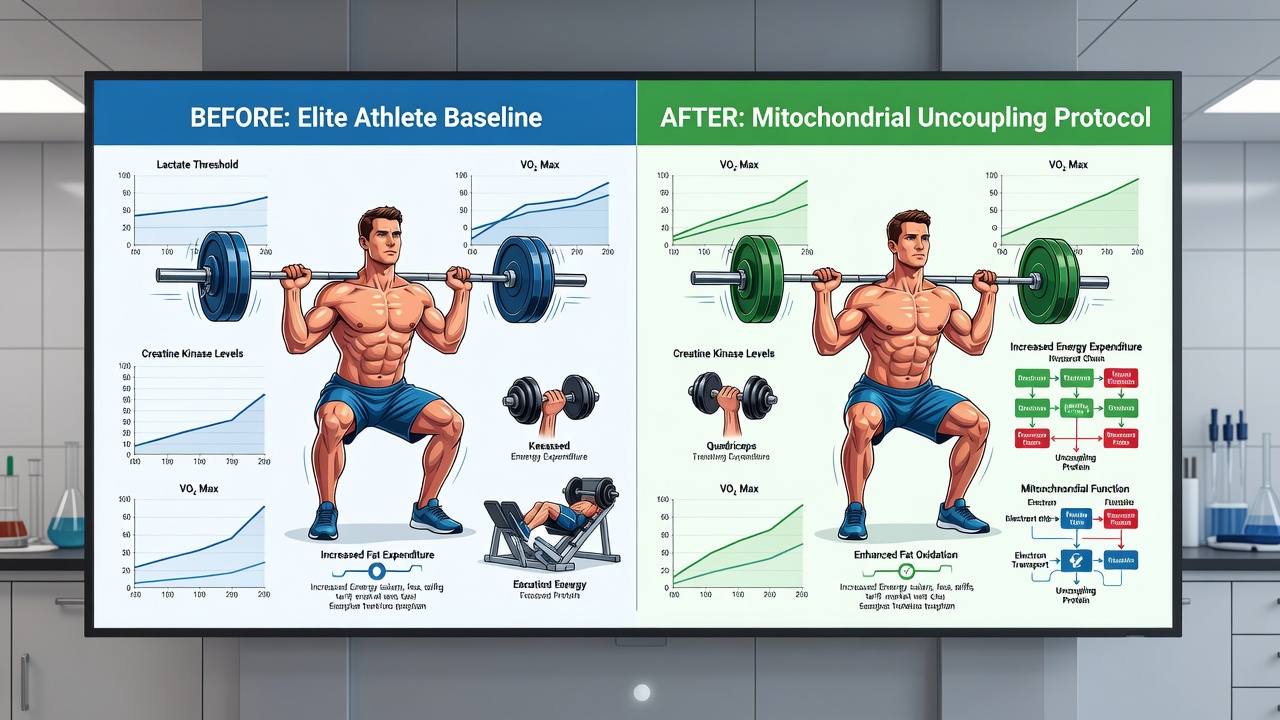
Uncoupling protocols pair best with periodized resistance training to prevent muscle catabolism. High-intensity lifts maintain anabolic signaling while uncouplers promote lipolysis. Sample weekly structures include compound movements on non-fasting days and active recovery sessions to support mitochondrial adaptation. For example, a four-day split might feature heavy squats and deadlifts on days with higher caloric intake, followed by moderate volume sessions on uncoupling peak days. Protein intake is kept elevated at 2.2-2.6 grams per kilogram of body weight to further protect muscle. Recovery modalities such as cold exposure and sleep tracking help mitigate any added stress from elevated metabolism.
Real-World Case Studies from Elite Athletes
Case examples from competitive lifters and endurance athletes in 2025–2026 demonstrate measurable shifts in body composition. One tracked cohort of professional cyclists reported average increases in power output alongside reduced body fat percentages when combining uncoupling phases with structured nutrition. A 28-year-old powerlifter documented a 4.2% drop in body fat over eight weeks while maintaining squat and bench press totals, attributing success to weekly DEXA scans and daily temperature logs. Another endurance runner achieved a 6% improvement in time-to-exhaustion tests after integrating BAM15 with high-volume training blocks. Outcomes varied by individual genetics and adherence to monitoring schedules, underscoring the need for personalization.
Metabolic Outcome Comparisons
Comparative data tables in recent reviews show differences in VO2 max improvements and fat oxidation rates across agents. Natural compounds often yield steadier gains with fewer acute side effects, while synthetic options may accelerate short-term results under strict oversight. Athletes frequently compare resting metabolic rate changes, with some noting 150-250 kcal daily increases during peak phases. These differences guide selection depending on whether the priority is rapid fat loss or sustained performance during competition prep.
Legal Status and Regulatory Considerations
Many uncoupling agents remain restricted or banned for human use outside research settings. FDA guidelines classify DNP as not approved for consumption. Athletes should verify local regulations and anti-doping rules before experimentation. International federations continue to update prohibited lists annually, making pre-cycle checks mandatory for competitive individuals.
Side-Effect Mitigation Strategies
Common concerns include elevated body temperature and electrolyte imbalance. Mitigation involves hydration protocols exceeding 5 liters daily, electrolyte replenishment with sodium, potassium, and magnesium, and immediate cessation at the first sign of distress. Antioxidant support through compounds like NAC and CoQ10, combined with sleep optimization to eight hours nightly, further buffers potential oxidative damage. Regular medical consultations allow rapid intervention if issues arise.
Measurable Performance Gains: VO2 Max and Power Output
Documented experiments note VO2 max increases of 3–7% in monitored subjects alongside power output improvements during resistance phases. These gains depend heavily on baseline fitness and concurrent training quality. Elite users often pair uncoupling with zone 2 cardio to enhance fat adaptation, resulting in better race-day efficiency and reduced perceived exertion at threshold intensities.
Step-by-Step Implementation Guide
- Complete baseline bloodwork including full metabolic panel, hormone profile, and inflammatory markers, plus a DEXA scan for body composition.
- Select agent based on risk tolerance, sourcing reliability, and specific performance goals after consulting recent literature.
- Begin gradual introduction with daily logging of temperature, heart rate variability, and subjective energy levels.
- Adjust training load and nutrition in real time, emphasizing recovery on high-dose days.
- Conduct post-cycle evaluation with repeat testing and a structured deload period before returning to normal training.
Frequently Asked Questions
What is the legal status of mitochondrial uncoupling agents?
Most synthetic uncouplers like DNP are prohibited for human consumption in many jurisdictions. Always consult current regulations via official sources such as WHO health advisories before considering any protocol.
How can side effects be mitigated?
Regular biomarker tracking, conservative dosing approaches, professional medical supervision, and proactive hydration form the foundation of risk reduction for any uncoupling experiment.
What performance gains are realistic?
Elite users report modest VO2 max and power improvements when protocols are executed alongside optimized training, though individual results differ significantly based on genetics, adherence, and overall lifestyle factors.
Conclusion
Mitochondrial uncoupling experiments represent a high-stakes frontier in 2026 performance optimization. Success hinges on rigorous safety practices, evidence-based agent selection, and integration with proven training methods. Athletes considering these approaches must prioritize health monitoring and legal compliance above all else to achieve sustainable gains without compromising long-term well-being.


No comments yet. Be the first!