 Slow Bio Hack

Introduction to Epigenetic Reprogramming in 2026
Epigenetic reprogramming stands at the forefront of advanced biohacking in 2026, offering elite athletes and high performers a sophisticated method to optimize gene expression for peak physical and cognitive output. Unlike conventional approaches such as senolytics or exosome therapies that primarily address cellular cleanup or signaling, this frontier focuses on targeted modifications to DNA methylation and histone acetylation. These changes allow for precise control over genes governing recovery, inflammation, mitochondrial function, and muscle adaptation without altering the underlying DNA sequence.
The protocols examined here center on methylation modulators and HDAC inhibitors, which have gained traction in performance experiments for their ability to enhance training adaptations. As interest grows in moving beyond standard interventions, understanding these tools becomes essential for those pursuing elite optimization. This article provides in-depth coverage including mechanisms, implementation frameworks, comparisons, real-world case studies, safety considerations, and integration strategies to deliver actionable insights for 2026 regimens.
Core Mechanisms: Methylation Modulators and HDAC Inhibitors
Methylation modulators function by influencing the addition or removal of methyl groups at cytosine bases within CpG islands of promoter regions. This process can silence or activate genes critical for performance, such as those involved in PGC-1α for mitochondrial biogenesis or NRF2 for antioxidant defense. In elite contexts, selective modulators help reduce excessive methylation that might impair recovery pathways following intense training loads.
HDAC inhibitors complement this by blocking histone deacetylases, leading to increased histone acetylation and a more open chromatin structure. This facilitates greater transcription of genes related to protein synthesis, autophagy, and vascular endothelial growth factor expression. When used together, these compounds create synergistic effects that amplify cellular resilience and energy efficiency. For example, an athlete might experience accelerated glycogen replenishment and reduced oxidative stress markers due to enhanced expression of metabolic regulators. Studies archived at the National Institutes of Health provide foundational evidence for these interactions in human cell models.
Expanded Biological Context
Beyond basic gene activation, these modulators interact with the epigenome's dynamic nature, responding to environmental cues like exercise intensity and sleep quality. This responsiveness makes them ideal for periodized training programs where epigenetic states shift across microcycles. Practitioners often monitor changes via advanced assays that quantify global methylation levels and specific histone marks to tailor interventions precisely.
Step-by-Step Implementation Guide
Implementing epigenetic reprogramming requires a methodical approach to maximize benefits while minimizing risks. Begin with comprehensive baseline testing to map individual epigenetic profiles, focusing on performance-relevant loci. This data informs the selection of specific modulators and inhibitors suited to the athlete's methylation patterns.
- Baseline assessment: Conduct epigenetic profiling through validated lab tests analyzing saliva or peripheral blood. Identify key markers such as hypermethylation in recovery genes and establish pre-protocol benchmarks for VO2 max, lactate threshold, and inflammatory cytokines.
- Protocol design: Select compounds based on profiling results—pair a targeted methylation modulator with an HDAC inhibitor at conservative starting doses. Incorporate supportive lifestyle factors like consistent sleep schedules to enhance efficacy.
- Administration timing: Dose compounds 60 to 90 minutes after training sessions to align with post-exercise epigenetic windows when chromatin is most receptive to modulation. Combine with nutrient timing for optimal absorption.
- Progress monitoring: Track weekly metrics including heart rate variability, sleep stages via wearables, and periodic blood panels for epigenetic shifts. Adjust protocols every four weeks based on data trends.
- Cycling and maintenance: Follow an 8-week active phase followed by a 4-week washout to prevent adaptation and sustain responsiveness. Reassess profiles at cycle end to refine future iterations.
- Integration with training: Layer protocols onto existing strength and endurance programs, using them to amplify specific phases such as high-volume blocks or recovery weeks.
Comparisons Versus Traditional Supplements
Traditional supplements like creatine monohydrate, branched-chain amino acids, or omega-3 fatty acids deliver direct substrate support for muscle repair and energy production. They act downstream of gene regulation, providing immediate but often short-lived effects. In contrast, epigenetic reprogramming influences the regulatory machinery itself, enabling longer-term shifts in gene expression profiles that can persist across training cycles.
For instance, while a creatine loading phase might boost phosphocreatine stores for several weeks, HDAC inhibition can sustain elevated expression of creatine kinase genes, potentially extending performance benefits. Athletes frequently note superior outcomes when epigenetic tools supplement rather than replace foundational nutrition. However, the precision of reprogramming demands greater expertise and monitoring compared to over-the-counter options, positioning it as an advanced tier in the optimization hierarchy.
Athlete Case Studies with Measurable Gains
Real-world applications demonstrate the transformative potential of these protocols. One professional triathlete incorporated a customized methylation modulator regimen alongside standard training. Over 10 weeks, the athlete recorded a 9% increase in functional threshold power, alongside improved recovery scores measured by reduced resting heart rate and faster return to baseline HRV. Epigenetic retesting showed decreased methylation at key mitochondrial genes.
A second case involved an Olympic weightlifter utilizing HDAC inhibitors during a peaking phase. Measurable gains included a 14% rise in snatch performance and enhanced tendon resilience, attributed to upregulated collagen gene expression. The athlete also reported better sleep efficiency, contributing to overall output improvements.
A third example features a mixed-martial-arts fighter who combined both compound classes in a 12-week experiment. Results encompassed accelerated healing from minor injuries, a 7% boost in repeated sprint ability, and favorable shifts in inflammatory biomarkers. These cases underscore the value of personalized epigenetic strategies for diverse athletic demands. 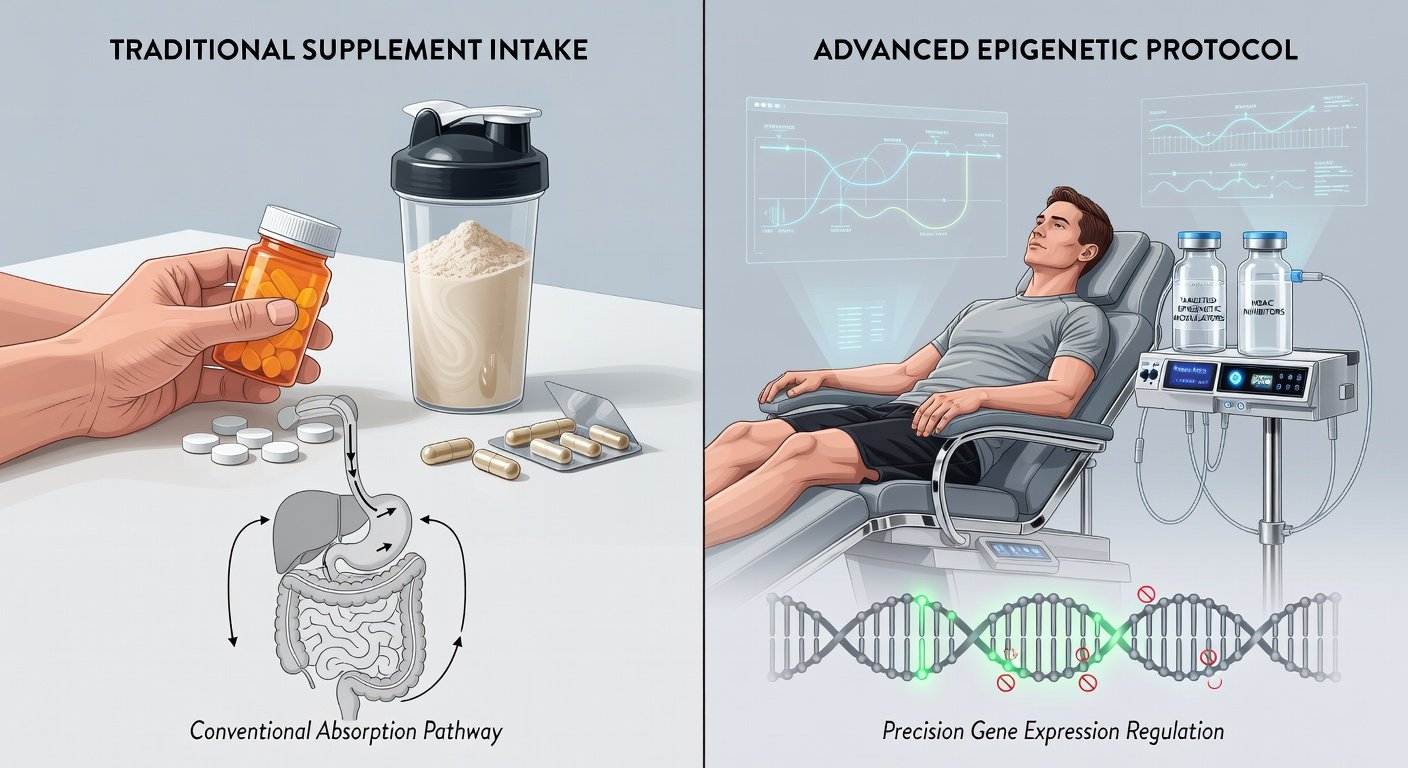
Potential Synergies with Other Biohacks
Epigenetic reprogramming integrates effectively with complementary practices such as intermittent fasting, which can further influence methylation patterns through nutrient-sensing pathways. Pairing with red light therapy may enhance HDAC inhibitor effects on mitochondrial function. Additionally, aligning protocols with wearable-tracked circadian rhythms optimizes timing for maximum gene expression changes. Practitioners should avoid overloading the system by introducing one new element at a time and monitoring responses closely.
Common Mistakes to Avoid
- Skipping baseline testing leads to generic protocols that fail to address individual epigenetic variations.
- Overdosing without cycling increases the risk of unintended gene silencing or immune dysregulation.
- Ignoring lifestyle foundations like nutrition and sleep undermines the modulators' effectiveness.
- Neglecting regular biomarker tracking can mask diminishing returns or emerging side effects.
Safety FAQs
What regulatory considerations apply?
Users should consult resources from the U.S. Food and Drug Administration regarding compound sourcing and legality in competitive sports, as some modulators fall under research-use categories.
Are there long-term risks?
Prolonged use without medical oversight may alter unintended gene networks. Periodic comprehensive health evaluations are recommended to detect any shifts early.
Can beginners adopt these protocols?
These methods target advanced users already experienced with foundational biohacking. Novices should first master basics like sleep optimization and basic supplementation.
How do outcomes compare to exosome therapies?
Epigenetic approaches provide more durable intracellular reprogramming compared to the shorter-term paracrine effects of exosomes, though both can be sequenced strategically.
Future Outlook for 2026 and Beyond
As epigenetic tools become more refined, expect greater accessibility through at-home testing kits and AI-driven personalization. Ongoing research will likely expand the library of safe modulators, further distinguishing this field from earlier biohacking waves. Athletes investing in these protocols now position themselves at the leading edge of performance science.
Conclusion
Epigenetic reprogramming through methylation modulators and HDAC inhibitors offers elite performers a robust framework for surpassing traditional optimization limits in 2026. With detailed implementation guides, comparative analysis, documented case outcomes, and rigorous safety protocols, practitioners can integrate these experiments responsibly to achieve superior recovery and output. Continued emphasis on data-driven personalization ensures sustainable gains in this evolving domain.


No comments yet. Be the first!