 Slow Bio Hack
Conquering Jet Lag: Why Oura and Whoop Are Your Ultimate Travel Allies
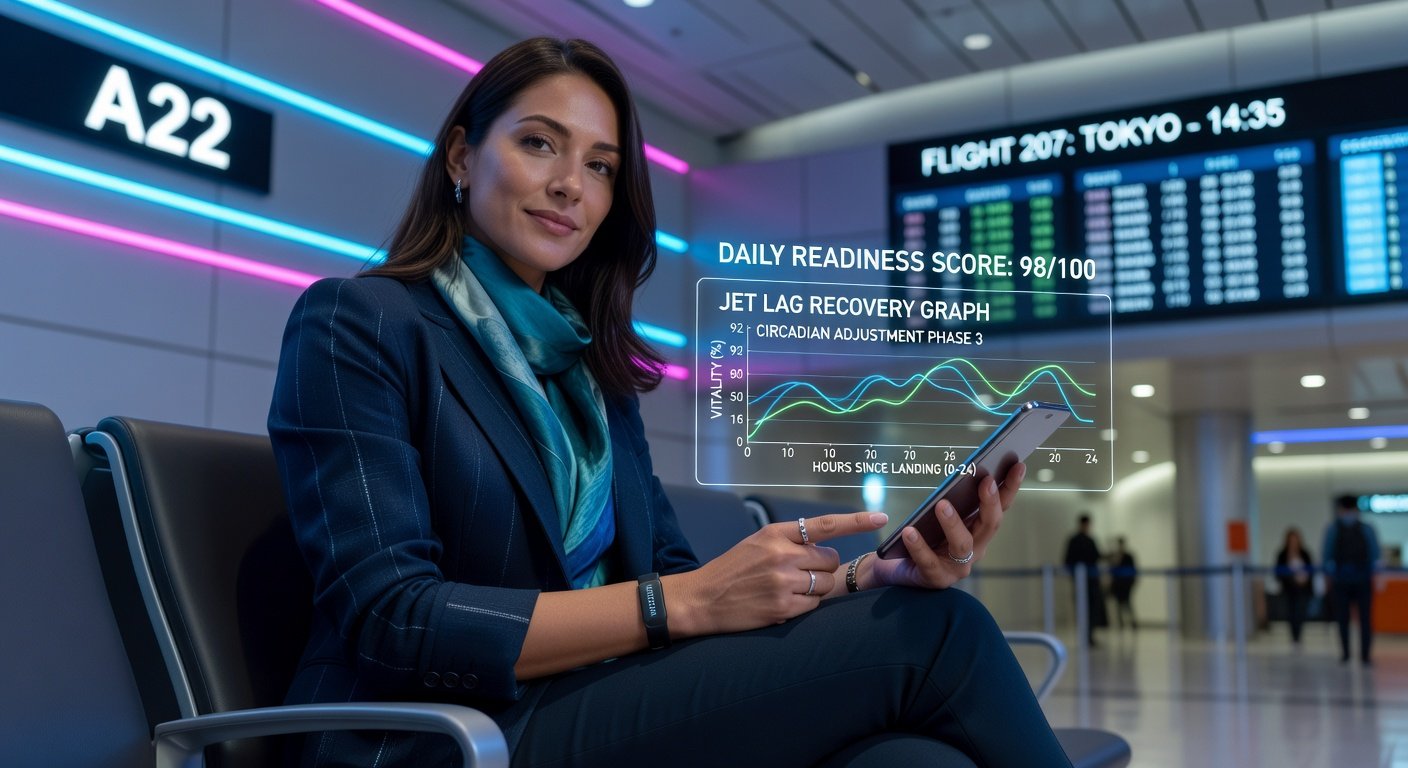
Jet lag strikes hard—disrupted sleep, fatigue, foggy brain, and plummeting productivity. For frequent flyers, executives, or adventure seekers, it's a productivity killer. Enter 2026's wearable tech heroes: Oura Ring and Whoop strap. These devices don't just track sleep; they deliver actionable insights via readiness scores, heart rate variability (HRV), and recovery metrics to outsmart circadian disruptions.
Oura's sleek ring monitors sleep stages, body temperature, and HRV with pinpoint accuracy. Whoop, the screenless band, excels in strain, recovery, and sleep coaching. Together or solo, they turn data into jet lag-busting strategies. This guide dives deep into pre-flight prep, in-flight adjustments, post-arrival recovery, and seamless data syncing across time zones. By 2026, their AI-enhanced readiness scores predict your resilience like never before.
Whether crossing 3 or 12 time zones, these hacks restore rhythm fast. Let's break it down step by step.
Understanding Jet Lag Through Wearable Data
Jet lag happens when your internal clock clashes with destination time. Symptoms peak 1-2 days post-flight: poor deep sleep, low HRV, elevated resting heart rate (RHR). Oura and Whoop quantify this—Oura's Readiness Score (0-100) factors sleep, HRV, RHR, temperature, and activity. Whoop's Recovery score (green/yellow/red) mirrors it, emphasizing strain balance.
In 2026, both integrate advanced circadian modeling. Oura's app forecasts 'Jet Lag Impact' based on flight details you input. Whoop's 'Travel Mode' auto-adjusts for time shifts. Track these metrics pre- and post-travel to baseline your recovery speed.
- Key Metrics to Watch:
- HRV: Higher = better recovery; jet lag tanks it.
- Deep/Restorative Sleep: Aim for 1.5-2 hours nightly.
- Readiness/Recovery: Target 80+ (Oura) or green (Whoop).
- RHR: Stable or lower post-adjustment.
Pro tip: Log flights in apps beforehand. For science-backed jet lag info, check the CDC's travel health page.
Pre-Flight Routines: Prime Your Body for Time Zone Shifts
Start 3-7 days early. Gradually shift sleep: advance bedtime/wake by 1 hour daily for eastward travel, delay for westward. Use wearables to enforce.
- Baseline Your Scores: Wear Oura/Whoop 24/7 for a week. Note average Readiness (e.g., 85) and sleep efficiency (85-90%).
- Optimize Sleep Hygiene: Oura's tags let you note caffeine/alcohol. Whoop coaches wind-down routines.
- Strategic Light Exposure: Morning light boosts alertness (per Oura's circadian insights). Apps suggest 30-min walks.
- Light Exercise: Whoop recommends low-strain activities to build resilience without fatigue.
- Nutrition Sync: Time meals to destination—avoid heavy dinners if shifting forward.
Example: Flying NYC to Tokyo (13-hour advance). Days 1-3: Bed at 10 PM, wake 6 AM; track HRV rise. Oura users report 20% faster adaptation with pre-shifting.
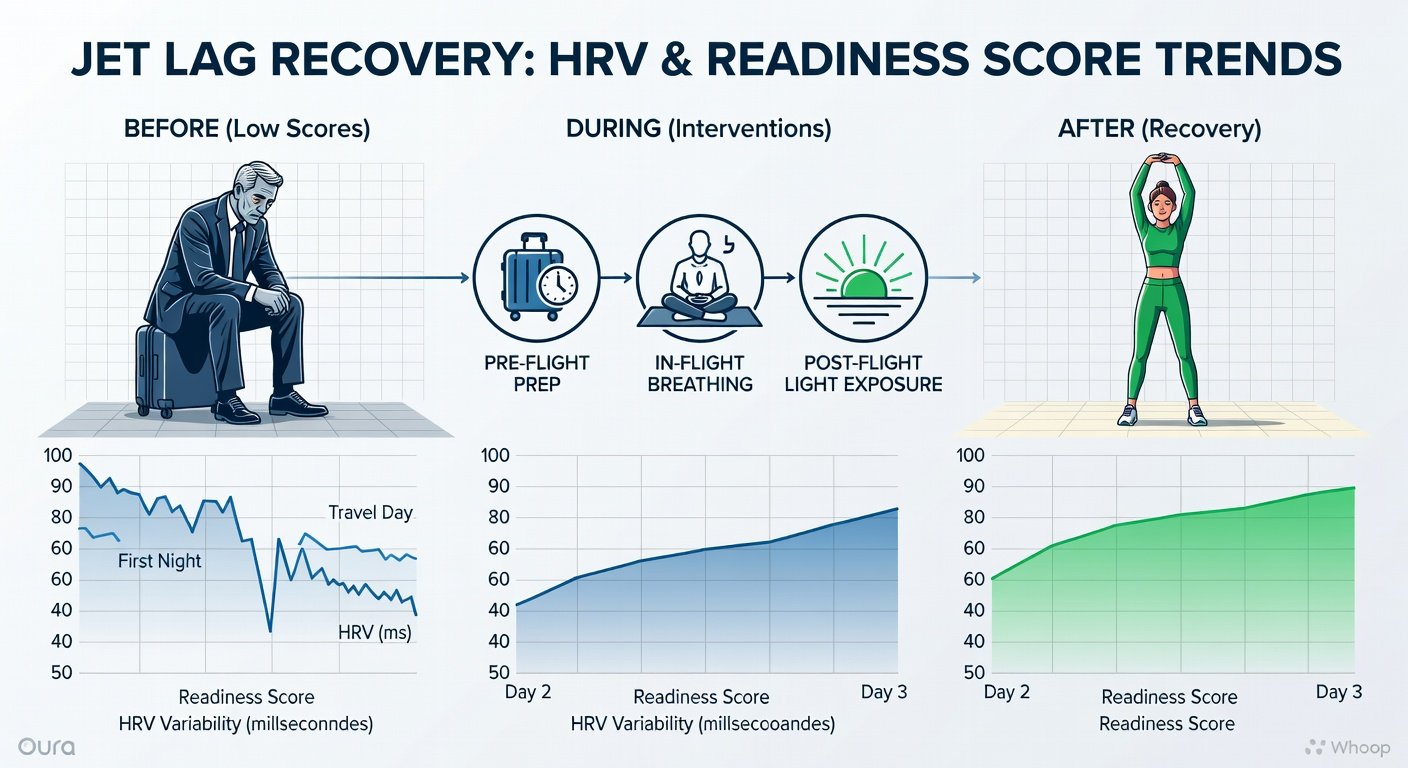
In-Flight and Real-Time HRV Adjustments
Airports and planes wreck recovery. Use wearables for live tweaks.
- Pre-Boarding: Hydrate (Oura/Whoop remind via app). Light walk to spike HRV.
- Onboard Monitoring: Whoop's continuous tracking flags dehydration via RHR spikes. Oura's ring stays comfy for 7+ days.
- HRV Hacks: If yellow/red recovery, do 5-min breathing (apps guide box breathing). Nap strategically—Oura detects optimal windows.
- Anti-Jet Lag Protocol: Melatonin 0.5-3mg at destination bedtime (consult doc). Time caffeine post-landing.
2026 update: Both devices offer 'Flight Recovery Mode' with vibration nudges for movement. Sync with airline apps for turbulence-aware strain logging.
Post-Flight Recovery: Protocols Using 2026 Readiness Scores
Land and attack. Day 1: Prioritize light over sleep if needed.
Day 1-2 Protocol
- Get natural light ASAP—30-60 mins outdoors. Oura's light exposure tracker confirms dose.
- Short naps (<30 mins) if Readiness <70.
- Low-strain activity: Walks per Whoop strain coach.
- Evening wind-down: Dim lights, no screens (apps enforce).
Day 3+ Acceleration
Push for full sleep cycle alignment. If HRV lags, add cold showers (boosts via Oura biofeedback). Track progress: Scores should climb 10-15 points daily.
Real example: Business traveler LAX to London (8-hour advance). Prepped 4 days, used Whoop for 20-min naps, hit green recovery by Day 2—versus week's fog sans tech.
Syncing Data Across Time Zones Seamlessly
No data blackouts. Both auto-detect shifts via GPS or manual input.
- Oura: App switches local time; scores adjust for 'effective sleep' in transit time.
- Whoop: Travel Mode displays dual times; journal tags flights.
- Cross-Device Sync: Export to Apple Health/Google Fit for unified view.
- 2026 AI Perks: Predictive 'Adaptation Timeline'—e.g., 'Full recovery by Wed 8 AM'.
Visit Oura's official site or Whoop's homepage for latest app features.
Oura vs Whoop: Which Wins for Jet Lag Warriors?
| Feature | Oura Ring | Whoop 5.0 |
|---|---|---|
| Battery | 7 days | 5 days (2026 model) |
| Comfort | Sleek ring | Flexible band |
| Readiness | Score + trends | Color-coded recovery |
| Travel Tools | Circadian forecast | Auto strain adjust |
| Price | Subscription model | Membership tiers |
Oura for discreet, long-battery tracking; Whoop for athletes needing strain depth. Many stack both.
Common Mistakes to Avoid
- Ignoring pre-flight prep—wastes device potential.
- Over-napping: Caps deep sleep debt.
- Forgetting hydration: Spikes RHR 10-20%.
- Not tagging anomalies: Skews insights.
FAQs: Oura, Whoop, and Jet Lag
Q: How fast can I beat 6-hour jet lag?
A: 3-4 days with protocols; wearables cut to 2.
Q: Do they work without subscription?
A: Basic tracking yes; scores need it.
Q: Best for red-eye flights?
A: Whoop's nap coach shines.
Final Takeoff: Travel Smarter in 2026
Jet lag doesn't stand a chance against Oura and Whoop's data-driven hacks. Implement pre-flight shifts, monitor HRV live, recover with readiness protocols, and sync effortlessly. Your next trip? Peak performance from touchdown. Experiment, track, adapt—your body will thank you.

No comments yet. Be the first!