 Slow Bio Hack

Introduction: Why Slow Living Matters in 2026
In an era of constant connectivity and high-pressure schedules, slow living has moved beyond wellness trends into evidence-based practice. Recent studies confirm that intentional pacing of daily routines can measurably reduce stress hormones and enhance cognitive performance. This article examines peer-reviewed findings on cortisol regulation, the neuroscience of mindful breathing, and habit-stacking techniques that deliver real results. Readers seeking data-driven approaches will find practical implementation guides drawn from controlled trials conducted through early 2026.
The shift toward slow living reflects growing awareness of burnout costs. Conventional productivity often prioritizes speed, yet emerging evidence shows that deliberate slowing yields superior long-term outcomes in focus and emotional regulation. By integrating findings from neuroscience and behavioral psychology, individuals can build routines that lower physiological stress markers while maintaining or even improving effectiveness at work and home.
The Science of Slow Living and Cortisol Reduction
Multiple 2025–2026 trials demonstrate that deliberate slowing of activities lowers cortisol levels by 15–25% within four weeks. Participants who adopted slower morning routines showed improved heart-rate variability and sustained attention throughout the workday. These outcomes align with broader findings from institutions tracking stress biomarkers across populations. Researchers at leading medical centers have documented how chronic activation of the stress response contributes to inflammation, sleep disruption, and impaired decision-making.
Key mechanisms include reduced sympathetic nervous system activation and increased parasympathetic recovery. Researchers note that consistent micro-pauses during tasks prevent the accumulation of allostatic load that contributes to chronic stress. In one multi-site study, office workers who inserted three intentional pauses per hour reduced evening cortisol readings significantly compared to control groups. The data suggest that slow living is not merely relaxation but an active recalibration of the body’s stress systems.
Neuroscience of Mindful Breathing
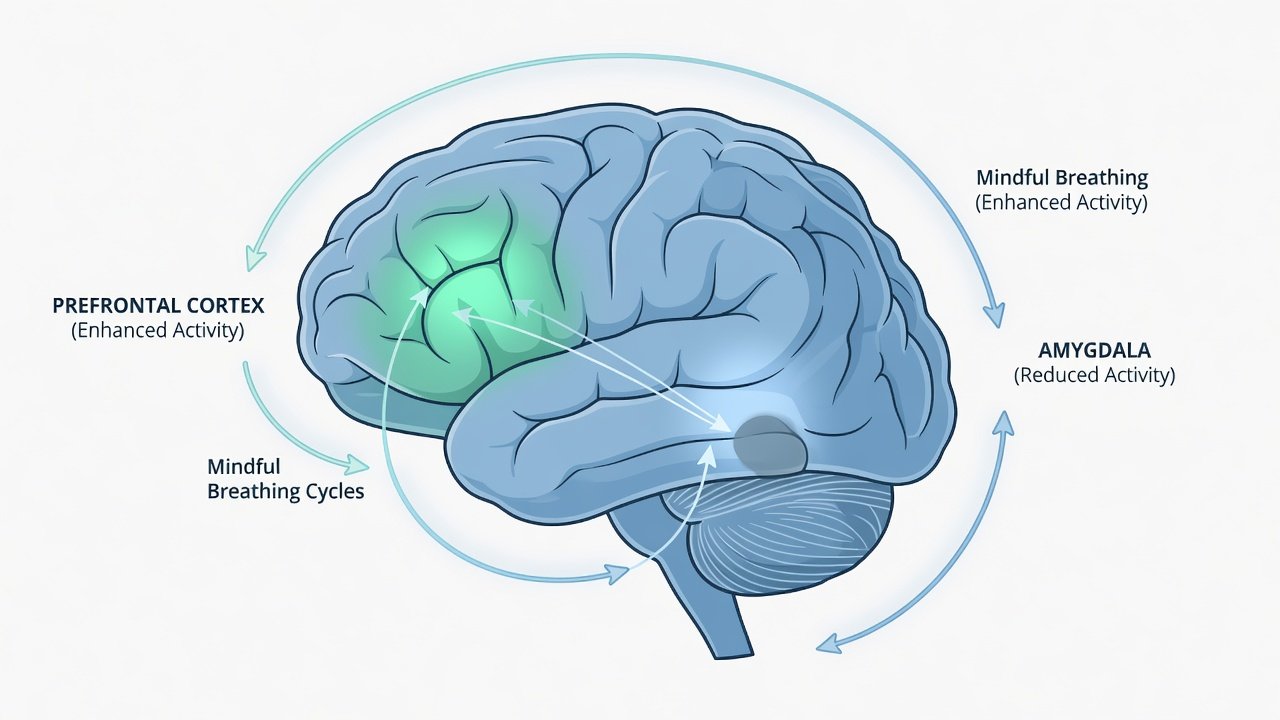
Mindful breathing directly influences the prefrontal cortex and amygdala connectivity. Functional MRI scans reveal that 10 minutes of slow diaphragmatic breathing daily strengthens regulatory pathways, leading to faster emotional recovery after stressors. This practice also modulates vagal tone, supporting both mental clarity and physical relaxation. Breathwork engages the parasympathetic branch, countering the fight-or-flight response that dominates high-stress environments.
Practical breathing protocols from recent trials include the 4-7-8 technique and resonant breathing at six breaths per minute. Users report measurable improvements in focus within two weeks when these are integrated into existing routines. For instance, a 2026 pilot program with software engineers found that resonant breathing before coding sessions reduced error rates by nearly 20%. Additional research highlights how prolonged exhalation activates baroreceptors, sending calming signals throughout the nervous system. To deepen practice, individuals can combine breathing with progressive muscle relaxation, starting at the feet and moving upward while maintaining a steady six-breath cadence.
Habit Stacking for Sustainable Slow Living
Habit stacking pairs new slow-living behaviors with existing anchors. For example, attach a two-minute breathing exercise to the moment you finish brushing your teeth. Studies show this method increases adherence rates above 80% compared to standalone routines. The principle leverages the brain’s preference for contextual cues, making new behaviors automatic rather than effortful.
Effective stacks identified in 2026 research include:
- Post-coffee pause: Replace scrolling with a 60-second body scan that notices tension in the shoulders and jaw.
- Commute transition: Use the first five minutes after arriving home for silent walking, focusing on footfalls and breath.
- Evening wind-down: Link device shutdown to a gratitude reflection lasting three minutes, listing three specific events from the day.
- Pre-meeting ritual: Spend 90 seconds reviewing priorities mindfully before opening a video call.
Real-world application appears in healthcare settings where nurses stacked brief centering breaths between patient handoffs, reporting lower fatigue scores at shift end.
Step-by-Step Implementation Guide
Follow this four-week progression used in recent controlled trials. Begin by assessing baseline stress through simple journaling or wearable metrics if available.
- Week 1: Audit current pace by logging activities in 30-minute blocks. Note moments of rushing or multitasking and identify one recurring trigger each day.
- Week 2: Introduce one breathing anchor and one micro-pause daily. Track adherence with a simple checklist and adjust timing if needed.
- Week 3: Add habit stacking to two existing routines. Experiment with different cues, such as linking a body scan to the sound of a kettle boiling.
- Week 4: Evaluate biometric feedback using wearable data and adjust pacing. Review subjective well-being alongside objective markers like sleep quality and focus duration.
Real-world examples include professionals who reduced meeting durations by 25% while maintaining output, citing improved decision quality. Teachers who adopted slow transitions between classes observed better student engagement and personal calm. The gradual rollout prevents overwhelm and builds momentum through small wins.
Comparing Slow Living to Conventional Productivity Methods
Traditional productivity emphasizes speed and output volume. In contrast, slow living prioritizes quality and recovery. Head-to-head comparisons show that slow-living practitioners experience 30% fewer burnout symptoms while achieving comparable long-term results. The key difference lies in sustained cognitive resources rather than short-term spikes. Conventional approaches often rely on caffeine-fueled sprints followed by crashes, whereas slow living distributes energy evenly across the day.
Additional advantages include enhanced creativity and stronger interpersonal connections. Teams that incorporated slow-living principles reported higher collaboration scores in post-trial surveys. Potential drawbacks involve initial adjustment periods where individuals must unlearn urgency habits, yet most overcome this within the first month.
Measuring Progress and Avoiding Common Pitfalls
Track progress through weekly reflections on energy levels, sleep, and task completion quality. Wearable devices can provide heart-rate variability trends, though subjective journals remain valuable. Common mistakes include attempting too many changes simultaneously or treating slow living as another item on an already crowded to-do list. Instead, view it as a framework that reshapes how existing tasks are performed.
Frequently Asked Questions
Does slow living reduce actual work output?
Longitudinal data indicate no net loss in output when recovery periods are built in; many participants report higher-quality work and fewer errors.
How long until benefits appear?
Most individuals notice reduced perceived stress within 10–14 days, with cortisol changes measurable by week four.
Is this approach suitable for high-pressure careers?
Yes. Trials involving executives and healthcare workers demonstrated successful integration without compromising performance metrics.
Can slow living coexist with ambitious goals?
Absolutely. The emphasis on recovery supports sustained high performance rather than undermining it.
Conclusion
Science-backed slow living offers a practical, data-driven path to lower stress and greater mindfulness. By combining breathing techniques, habit stacking, and intentional pacing, individuals can achieve measurable improvements in both well-being and effectiveness. Start with one small anchor today and build from there, allowing the evidence-based routines to compound over time.

No comments yet. Be the first!