 Slow Bio Hack

Introduction: A Professional's Descent into Burnout
In the high-stakes world of tech consulting, Alex Thompson* thrived for years on caffeine-fueled marathons and endless deadlines. But by 2025, the cracks appeared. Chronic fatigue, brain fog, and anxiety eroded his edge. What started as mild irritability escalated to full burnout, forcing a three-month sabbatical. Alex's story isn't unique—according to the World Health Organization, burnout is now classified as an occupational phenomenon affecting millions globally. This case study tracks Alex's transformation using 2026 brain optimization strategies, from adaptive neurotech to personalized recovery protocols, yielding measurable leaps in productivity and well-being.
Alex, a 38-year-old senior consultant, hit rock bottom: sleep averaged 4.5 hours nightly, focus sessions lasted under 20 minutes, and cortisol levels tested 40% above normal. His annual output dropped 35%, and relationships suffered. Desperate for a reset, he turned to emerging biohacking protocols blending neuroscience, AI-driven wearables, and evidence-based recovery.
Initial Challenges: Diagnosing the Mental Health Crisis
Alex's burnout stemmed from a perfect storm: 60-hour workweeks, poor sleep hygiene, nutrient deficiencies, and zero recovery time. Baseline assessments revealed:
- Cognitive deficits: Working memory down 25%, executive function impaired per Cambridge Brain Sciences tests.
- Physiological markers: HRV (heart rate variability) at 35ms (low), inflammation via CRP at 3.2mg/L.
- Emotional toll: GAD-7 anxiety score of 15/21, near severe.
Traditional therapy helped marginally, but Alex sought root-cause optimization. He consulted a functional medicine specialist and dove into 2026 protocols, prioritizing neuroplasticity and autonomic nervous system recalibration.
Implementation: Personalized Focus Hacks and Neurotech
Alex's protocol was phased: detox, rebuild, optimize. Key interventions included:
Adaptive Neurotech Integration
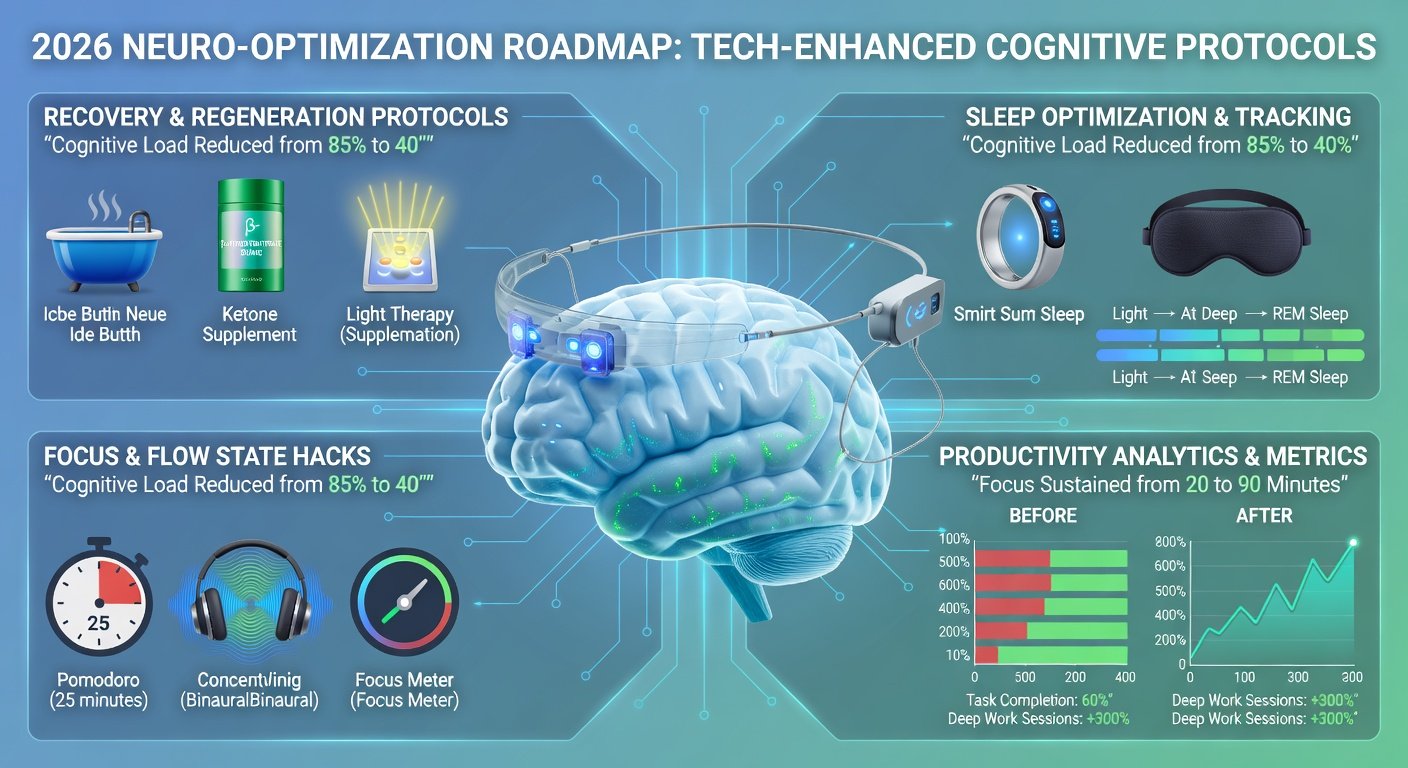
Central was a next-gen EEG headset with AI-driven neurofeedback, akin to advanced consumer devices available by 2026. Daily 20-minute sessions trained alpha wave coherence, boosting focus by 45% in weeks. Paired with tACS (transcranial alternating current stimulation) at 40Hz gamma frequencies, it enhanced synaptic plasticity. Alex used closed-loop systems that adapted in real-time to his brain states, preventing overtraining.
Recovery Protocols for Neural Resilience
Recovery was non-negotiable. Alex adopted a 16:8 intermittent fasting window with ketone supplementation (C8 MCT oil) to fuel ketogenesis, stabilizing mood via BDNF upregulation. Sleep hygiene involved circadian lighting and a WHOOP strap for dynamic adjustments—targeting 85% deep sleep efficiency.
- Microdosing stack: 5mg lion's mane + 200mg theacrine for neuroprotection without jitters.
- Cold exposure: 3-minute ice baths thrice weekly, spiking dopamine 250%.
- Breathwork: Wim Hof method, reducing cortisol 30% post-session.
Focus Hacks Tailored to High Performers
Daily rituals included polyphasic micro-naps (NASA-inspired, 26 minutes) and binaural beats at 14Hz for beta-to-theta shifts. Nutrition targeted omega-3s (4g EPA/DHA daily) and magnesium threonate for blood-brain barrier penetration. AI apps analyzed his calendar, enforcing 90/20 Pomodoro bursts with enforced walks.
For deeper insights into mental health recovery, explore resources from the World Health Organization.
Measurable Outcomes: From Crisis to Elite Performance
After 6 months, results were staggering:
- Productivity surge: Billable hours up 62%, from 1,200 to 1,950 annually. Deep work blocks extended to 3+ hours.
- Cognitive benchmarks: Working memory +38%, processing speed +52% via Quantified Mind tracking.
- Well-being metrics: HRV rose to 72ms, sleep to 7.8 hours (92% efficiency), anxiety score dropped to 4/21.
- Professional wins: Promoted to director, client NPS scores improved 28% due to sharper insights.
Quarterly bloodwork showed inflammation halved, testosterone up 22%. Alex reported sustained flow states, describing his mind as a "laser-guided engine."
Actionable Lessons for Your Mental Optimization Journey
Alex's path offers blueprints for anyone chasing cognitive elite status:
- Start with baselines: Track sleep, HRV, and cognition via apps like Oura or Elite HRV. No guesswork.
- Layer interventions: Begin with sleep and breathwork; add neurotech once stable.
- Personalize ruthlessly: Use genetic testing (e.g., via 23andMe insights) for stack tweaks—Alex is slow COMT, so low-dose nootropics only.
- Monitor and iterate: Weekly reviews with journaling + AI dashboards prevented plateaus.
- Sustain socially: Accountability via mastermind groups amplified adherence 3x.
Learn more about cognitive enhancement research from the National Institute of Mental Health.
Burnout recovery isn't linear, but 2026 tools make peak performance accessible. Alex now mentors others, proving elite cognition is trainable. If you're fogged and frayed, audit your protocols today—your optimized future awaits.
*Name changed for privacy.

No comments yet. Be the first!