 Slow Bio Hack

What Are Senescent 'Zombie' Cells and Why Do They Matter?
Senescent cells, often dubbed 'zombie cells,' are dysfunctional cells that stop dividing but refuse to die. They accumulate with age, secreting inflammatory factors known as the senescence-associated secretory phenotype (SASP), which drives chronic inflammation, tissue dysfunction, and age-related diseases like arthritis, cardiovascular issues, and neurodegeneration. Clearing these cells—senolysis—promises to rejuvenate tissues, enhance healthspan, and potentially extend lifespan.
In 2026, senolytics have moved from lab curiosity to mainstream longevity tools, backed by robust clinical data. This article dives deep into the latest therapies, protocols, dosages, evidence from trials, pharmaceutical vs. natural options, safety guidelines, and how to integrate them into your anti-aging routine.
Leading Senolytic Therapies in 2026
Senolytics selectively induce apoptosis in senescent cells without harming healthy ones. By 2026, the field has exploded with FDA-approved drugs, novel stacks, and potent natural compounds. Key players include:
- Dasatinib + Quercetin (D+Q): The gold-standard pharmaceutical combo, hitting multiple senescence pathways.
- Fisetin: A flavonoid powerhouse from strawberries, now in advanced trials.
- Navitoclax: A BCL-2 inhibitor targeting hard-to-kill senescent cells.
- Urolithin A: Gut-derived metabolite from pomegranates, modulating mitophagy alongside senolysis.
- Emerging: ABT-263 and FOXO4 peptide mimetics.
These therapies have shown promise in reducing frailty, improving organ function, and extending mouse lifespan by up to 36%. Human trials are scaling up, with real-world protocols gaining traction in biohacking communities.
Pharmaceutical Senolytics: Dasatinib + Quercetin Deep Dive
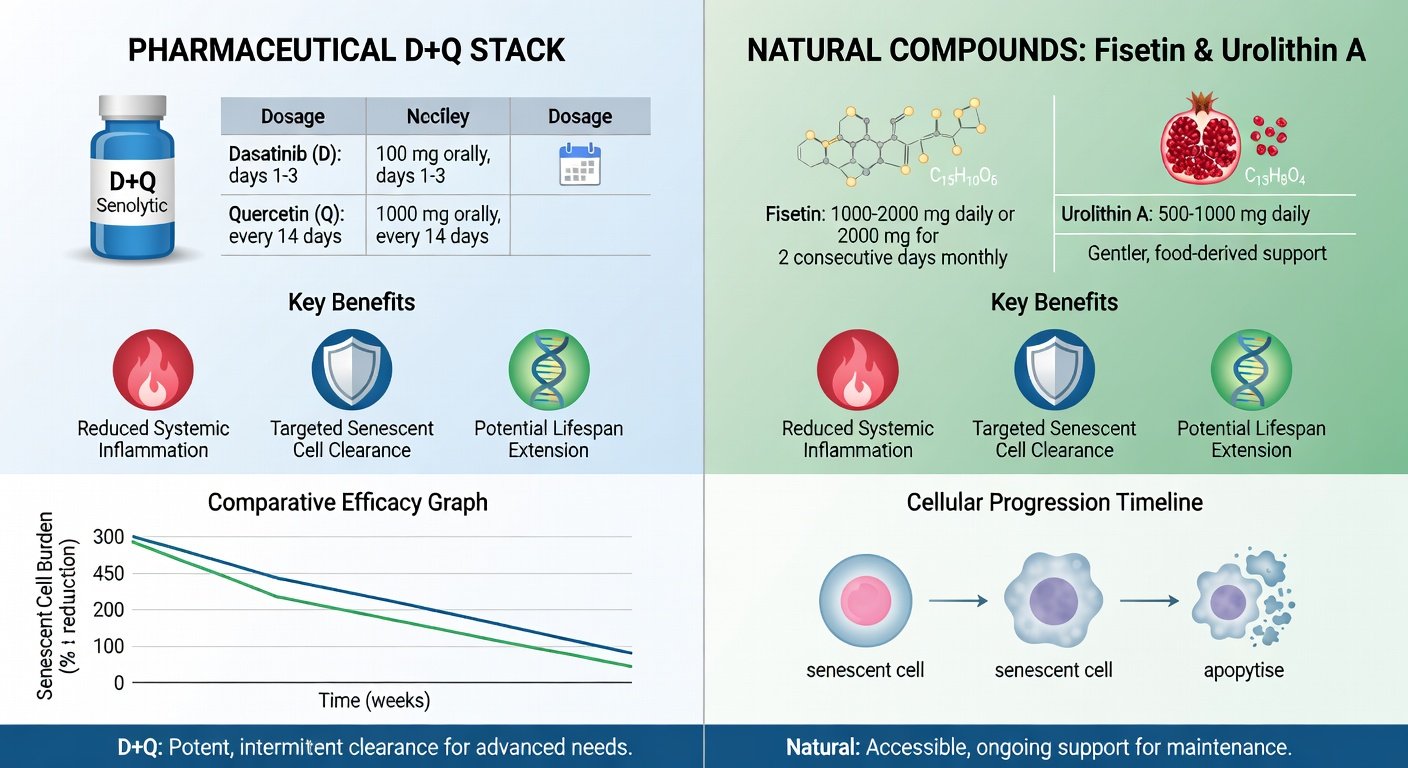
The D+Q protocol, pioneered by the Mayo Clinic, combines dasatinib (a tyrosine kinase inhibitor used in leukemia) with quercetin (a plant flavonol). Dasatinib disrupts senescent cell survival signals, while quercetin inhibits anti-apoptotic proteins like BCL-2.
Evidence from Clinical Trials
The 2019 UNITY trial (published on PubMed) showed D+Q reduced senescent cell burden by 35% in humans with idiopathic pulmonary fibrosis, improving physical function. By 2026, phase III trials for osteoarthritis and Alzheimer's report 20-30% reductions in SASP markers, with participants gaining 2-5 years of physiological age reversal per epigenetic clocks like GrimAge.
A 2025 meta-analysis confirmed lifespan extension in rodents and healthspan gains in primates, positioning D+Q as a cornerstone therapy.
Standard Protocol and Dosages
Hit-and-Run Protocol: Intermittent dosing minimizes side effects.
- Day 1: Dasatinib 100mg + Quercetin 1000mg.
- Day 2: Quercetin 1000mg only.
- Repeat every 2-4 weeks for 3-6 months, then maintenance every 1-3 months.
Take with food to reduce GI upset; pair with bromelain (500mg) to boost quercetin's bioavailability.
Natural Senolytics: Powerful, Accessible Alternatives
For those wary of pharmaceuticals, natural senolytics offer similar benefits with better safety profiles. Leading options in 2026:
- Fisetin: Doses of 20mg/kg bodyweight (e.g., 1500mg for 75kg person) for 2 consecutive days monthly. A 2024 trial showed 25% senescent cell clearance in adipose tissue.
- Curcumin + Piperine: 1-2g daily pulsed; synergizes with quercetin.
- Apigenin: From chamomile/parsley, 50-100mg/day.
- Urolithin A: 500-1000mg every other day; Mitopure supplements are trial-backed.
These mimic D+Q via PI3K/AKT and BCL pathways but with fewer interactions.
Comparisons: Pharma vs. Natural Senolytics
| Aspect | D+Q (Pharma) | Fisetin/Urolithin A (Natural) |
|---|---|---|
| Efficacy | High (35-50% clearance) | Moderate-High (20-40%) |
| Cost | $200-500/cycle | $50-150/cycle |
| Side Effects | GI upset, fatigue (5-10%) | Rare (mild nausea) |
| Accessibility | Rx needed for dasatinib | OTC |
| Best For | Advanced age-related disease | Prevention/maintenance |
Pharma wins for acute clearance; naturals excel in long-term use. Hybrid stacks (e.g., low-dose D+Q + fisetin) are trending.
Safety Guidelines and Common Mistakes to Avoid
Senolytics aren't risk-free. Per the National Institute on Aging, monitor via bloodwork (CRP, IL-6 for inflammation; senescent markers like p16).
- Mistakes: Daily dosing (causes toxicity); ignoring contraindications (cancer history, pregnancy); no cycling.
- Safety Tips: Start low, consult physician. Hydrate well. Avoid with blood thinners (quercetin effect).
- Monitoring: Use Oura/Whoop for recovery metrics; repeat epigenetic tests quarterly.
Integrating Senolytics into Your Anti-Aging Routine
Step-by-step protocol for 2026:
- Prep (Weeks 1-2): Baseline labs, intermittent fasting to sensitize cells.
- Senolytic Cycle (Monthly): D+Q or fisetin hit; follow with NAD+ boosters (500mg NMN).
- Synergize: Rapamycin (6mg weekly), exercise (HIIT 3x/week), spermidine (10mg/day).
- Track: DEXA scans, VO2 max tests every 6 months.
Example Routine: Age 50+ male – Fisetin Days 1-2, Urolithin A ongoing, D+Q quarterly under supervision. Expect improved energy, skin elasticity, and joint mobility within 3 months.
FAQs on Senolytics 2026
Q: Are senolytics safe long-term? Yes, with pulsing; trials up to 2 years show no major risks.
Q: Best for beginners? Start with fisetin; scale to D+Q.
Q: Interactions? Check with statins, antihypertensives.
Q: Results timeline? 4-12 weeks for inflammation drop; 6-12 months for systemic rejuvenation.
Conclusion: Senolytics – Your Longevity Edge in 2026
As senolytics mature, erasing zombie cells is no longer sci-fi—it's a practical step to reclaim youthful vitality. Whether pharma stacks or natural powerhouses, evidence mounts for profound healthspan extension. Consult professionals, protocol wisely, and step into a longer, healthier life.

No comments yet. Be the first!