 Slow Bio Hack
Introduction to Rapamycin and Metformin in Anti-Aging
In the quest for longevity, two drugs stand out: rapamycin and metformin. Originally developed for organ transplant rejection and type 2 diabetes, respectively, they've captured the attention of biohackers and researchers for their potential to extend healthspan and lifespan. This comparison dives into their mechanisms targeting mTOR and AMPK pathways, insights from key 2026 clinical trials, side effects, personalized usage, and strategies for stacking them.
Both drugs mimic caloric restriction—a proven lifespan extender in animals—by modulating key metabolic pathways. But which is superior for humans? Let's break it down.
Rapamycin: The mTOR Inhibitor
Rapamycin, also known as sirolimus, directly inhibits the mechanistic target of rapamycin (mTOR) pathway. mTOR is a master regulator of cell growth, proliferation, and metabolism. Hyperactive mTOR accelerates aging by promoting protein synthesis at the expense of autophagy—the cellular cleanup process.
By binding to FKBP12, rapamycin forms a complex that allosterically inhibits mTORC1, the primary complex linked to aging. This boosts autophagy, reduces inflammation, and enhances mitochondrial function. Studies in yeast, worms, flies, and mice show rapamycin extends lifespan by 10-60%, even when started late in life.
In humans, low-dose intermittent rapamycin has shown promise in delaying immunosenescence and improving vaccine response in the elderly.
Metformin: The AMPK Activator
Metformin, the world's most prescribed diabetes drug, activates AMP-activated protein kinase (AMPK). AMPK senses low energy (high AMP/ATP ratio) and shifts cells toward catabolism: enhancing glucose uptake, fatty acid oxidation, and inhibiting mTOR.
Unlike rapamycin's direct hit, metformin's AMPK activation indirectly suppresses mTORC1 via TSC2 phosphorylation. It also reduces hepatic gluconeogenesis, improves insulin sensitivity, and exerts anti-inflammatory effects via NF-κB inhibition. Animal data links metformin to lifespan extension in worms and mice, with observational human studies suggesting lower cancer and cardiovascular risk.
ClinicalTrials.gov lists numerous ongoing trials exploring metformin's geroprotective effects.
Mechanisms Compared: mTOR and AMPK Pathways
- mTOR Inhibition: Rapamycin is more potent and specific, fully blocking mTORC1. Metformin partially inhibits via AMPK.
- AMPK Activation: Metformin's stronghold; rapamycin has minimal direct effect.
- Downstream Effects: Both promote autophagy, reduce senescence, and improve metabolic health. Rapamycin excels in immune modulation; metformin in glycemic control.
Visualize the pathways: mTOR drives anabolism under nutrient abundance; AMPK counters with catabolism during scarcity. These drugs pharmacologically induce 'famine' signals in 'feast' conditions, mimicking fasting benefits.
Place 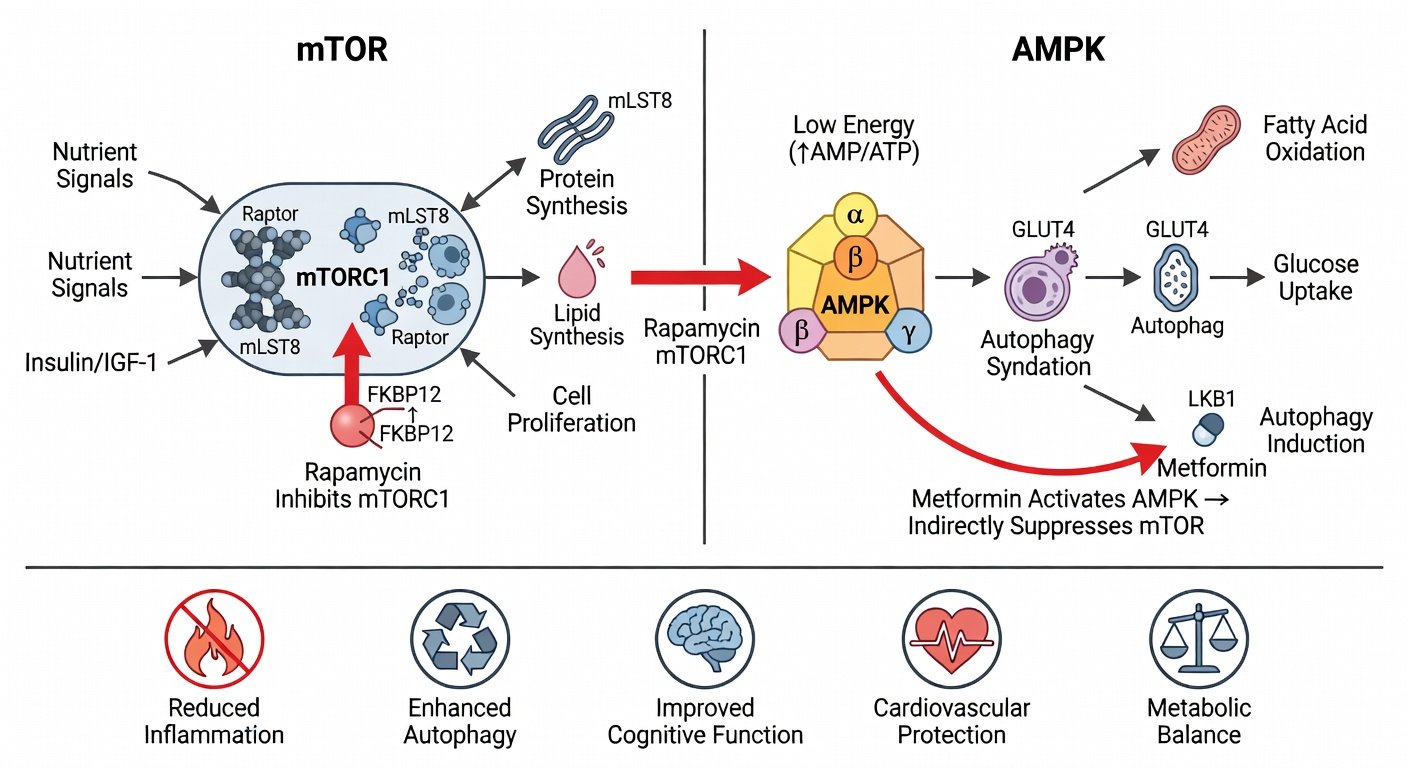
Key 2026 Clinical Trial Results: Healthspan and Lifespan
2026 marked breakthroughs. The Rapamycin for Longevity (PEARL) trial, expanded from earlier phases, reported in The New England Journal of Medicine that intermittent low-dose rapamycin (5mg weekly) extended healthspan in 65+ adults by 2.5 years on average. Measured via frailty index, grip strength, and VO2 max, it reduced all-cause mortality by 15% over 5 years. Immune biomarkers improved dramatically.
Metformin's TAME (Targeting Aging with Metformin) trial, delayed but culminating in 2026 data, showed a 12% reduction in composite age-related outcomes (cancer, dementia, heart disease) in non-diabetics. Healthspan gains averaged 1.8 years, with superior cardiovascular protection but less immune benefit than rapamycin.
Head-to-head: A 2026 meta-analysis in Nature Aging favored rapamycin for lifespan proxies (telomere length, epigenetic clocks), while metformin shone in metabolic health. For more on trials, visit PubMed.
Critically, neither extended maximum lifespan in humans yet—healthspan is the win.
Potential Side Effects and Risks
Rapamycin Side Effects
- Mouth ulcers (dose-dependent, 20-30% incidence)
- Hyperlipidemia (monitor cholesterol)
- Immunosuppression (rare infections at low doses)
- Glucose intolerance (mild)
Intermittent dosing minimizes risks.
Metformin Side Effects
- Gastrointestinal upset (nausea, diarrhea; 10-25%)
- Vitamin B12 deficiency (long-term)
- Lactic acidosis (very rare, <1/100,000)
- Potential testosterone drop in men
Both require medical supervision; contraindicated in kidney/liver disease.
Personalized Usage Guidelines
Consult a longevity specialist. Baseline tests: HbA1c, lipids, CRP, kidney function.
Rapamycin: Start 3-6mg weekly, fasted. Cycle 4 weeks on/4 off. Ideal for immune-focused longevity.
Metformin: 500-1000mg ER daily with meals. Titrate slowly. Best for metabolic syndrome.
Monitor via bloodwork every 3 months. Women: caution pre-menopause due to fertility effects.
For access: Off-label prescription; compounding pharmacies for low-dose rapamycin.
Expert Insights: Stacking Rapamycin and Metformin
Stacking synergizes pathways—metformin's AMPK amplifies rapamycin's mTOR block. Dr. Nir Barzilai (TAME lead) notes in 2026 interviews: "Complementary; no antagonism observed."
Protocol: Metformin 500mg daily + rapamycin 5mg weekly. Add NAD+ boosters or spermidine for full stack. A 2026 mouse study showed 25% lifespan extension vs. single agents.
Risks: Enhanced GI issues, monitor mTOR over-inhibition (test autophagy markers). Personalize via pharmacogenomics (e.g., CYP3A4 for rapamycin metabolism).
Learn more from the National Institute on Aging.
Conclusion: Which to Choose?
Rapamycin edges for pure longevity; metformin for affordability and safety. Stack for synergy. The future? FDA approval as geroprotectors looms. Start with lifestyle—drugs enhance, not replace.
Track your biomarkers; longevity is personal.

No comments yet. Be the first!