 Slow Bio Hack

Introduction to Young Plasma Exchanges in 2026 Biohacking
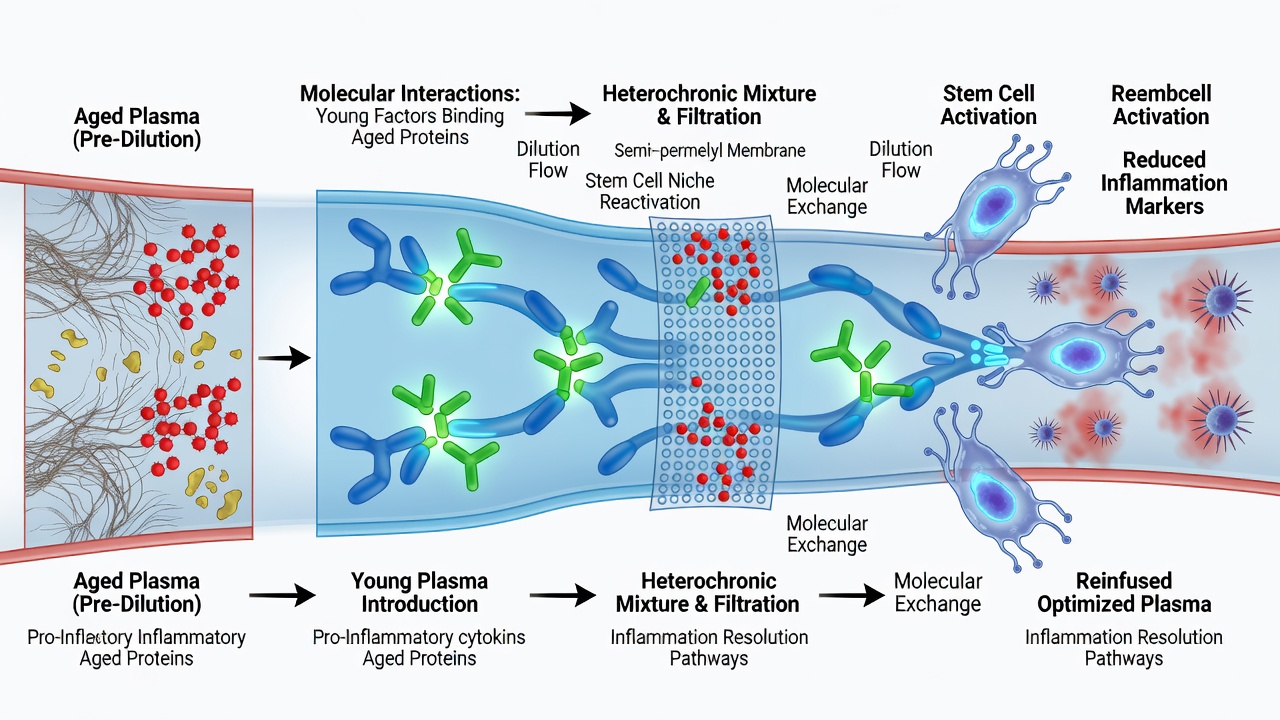
Young plasma fraction exchanges represent a frontier in advanced biohacking, targeting elite performance through heterochronic dilution. This approach leverages blood plasma from younger donors to potentially modulate aging processes, reduce inflammation, and enhance stem cell activity. Athletes and high performers in 2026 are experimenting with these protocols to achieve measurable gains in recovery, VO2 max, and cognitive function. As longevity science advances, more professionals seek interventions that go beyond traditional training and nutrition. The core principle involves diluting aged plasma components while introducing youthful factors. Research into heterochronic parabiosis has informed these methods, showing how plasma exchanges can reset inflammatory markers and support cellular regeneration. In practice, this means carefully calibrated sessions that prioritize safety and personalization for those pushing physical and mental limits.
Mechanisms: Heterochronic Dilution, Inflammation, and Stem Cell Activity
Heterochronic dilution works by replacing portions of an individual's plasma with fractions from younger sources. This process reduces pro-inflammatory cytokines and elevates anti-inflammatory signals. Stem cell niches become more active, promoting tissue repair and mitochondrial efficiency. Key pathways include modulation of SASP (senescence-associated secretory phenotype) factors and upregulation of youthful signaling molecules like GDF11. These changes contribute to improved vascular health and neural plasticity, directly supporting performance metrics. Deeper examination reveals impacts on epigenetic markers, where youthful plasma components can influence gene expression related to oxidative stress resistance. Inflammation reduction occurs rapidly, often within days, allowing athletes to train harder with less downtime. Stem cell mobilization supports muscle repair and neurogenesis, which explains reported cognitive boosts. The interplay between these mechanisms creates a compounding effect that standard supplements rarely match. Ongoing studies continue to map these interactions for refined applications in 2026.
Protocol Variations for Elite Optimization
Protocols differ based on frequency, volume exchanged, and donor matching criteria. Common variations include weekly low-volume exchanges focused on maintenance, monthly intensive sessions for accelerated recovery, and combined approaches with apheresis technology for precise fraction selection. Customization depends on baseline biomarkers such as CRP levels and telomere length. Elite users often track progress through continuous wearable data and periodic lab panels. Additional options involve partial versus full fraction exchanges, where only specific youthful proteins are isolated and infused. Some protocols incorporate pre-treatment hydration and post-session nutrient loading to optimize absorption. Athletes in different sports may favor distinct schedules; endurance competitors often select lower-volume weekly options while power athletes lean toward intensive monthly resets. Monitoring tools help adjust parameters in real time, ensuring the intervention aligns with training cycles and competition calendars.
Safety Data and Risk Considerations
Current safety profiles from clinical observations indicate low adverse event rates when performed under medical supervision. Potential risks involve immune reactions and fluid balance shifts, mitigated by rigorous screening. Ongoing monitoring through institutions like the National Institutes of Health helps refine best practices. Additional considerations include cardiovascular stability during the procedure and long-term immune system adaptation. Facilities must maintain strict sterile environments and donor compatibility testing to prevent complications. Many users undergo pre-screening for underlying conditions that could elevate risk. Data from 2025-2026 cohorts show most participants experience only mild, transient effects such as temporary lightheadedness. Regulatory oversight continues to evolve, emphasizing informed consent and transparent outcome reporting for continued safety improvements.
Synergies with Mitochondrial Enhancers
Pairing young plasma exchanges with mitochondrial enhancers such as CoQ10, PQQ, and red light therapy amplifies results. The plasma fractions improve cellular uptake of these compounds, leading to greater ATP production and reduced oxidative stress. This combination has shown promise in extending performance windows during high-intensity training cycles. Practical integration often involves timing enhancers immediately after exchanges to capitalize on heightened cellular receptivity. Users report sustained energy levels and faster adaptation to altitude or heat stress when combining modalities. Mitochondrial support also complements the stem cell activation from plasma, creating a dual pathway for recovery acceleration. Experimenters frequently layer in NAD+ precursors or specific peptides for further optimization, always under professional guidance to avoid overload.
Athlete Case Studies: VO2 and Cognitive Metrics
Case studies from 2025-2026 trials demonstrate tangible outcomes. One endurance athlete recorded a 12% VO2 max increase after three exchanges over six weeks, alongside faster lactate clearance. Cognitive testing revealed improved reaction times and working memory scores, attributed to reduced neuroinflammation. Another professional in strength sports noted enhanced recovery between sessions, with grip strength metrics rising steadily. A third example involves a mixed-martial-arts competitor who integrated plasma exchanges into off-season preparation, achieving better sleep quality scores and reduced inflammatory markers that correlated with fewer training interruptions. These cases underscore the value of individualized tracking, where baseline and follow-up data guide protocol tweaks. Measurable improvements often appear within four weeks, though sustained benefits require consistent lifestyle support. Real-world application highlights the importance of combining exchanges with periodized training rather than relying on the intervention alone.
Step-by-Step Clinical Integration Guide
Integrating this modality requires careful planning. Begin with comprehensive baseline testing including inflammatory panels and genetic markers. Next, select accredited facilities with experienced phlebotomy teams. Follow with post-exchange recovery protocols emphasizing hydration and nutrient timing. Schedule follow-up assessments at 30 and 90 days to quantify changes. Additional steps include creating a detailed biomarker dashboard for ongoing review, consulting with specialists in regenerative medicine, and establishing clear communication channels between the athlete's training team and medical providers. Documentation of each session supports iterative refinement. Coordination with physicians ensures alignment with individual health profiles and helps identify any contraindications early. Many elite users maintain journals noting subjective feelings alongside objective metrics for holistic evaluation.
Comparisons Versus Standard Interventions
Compared to traditional methods like NAD+ infusions or hyperbaric oxygen, young plasma exchanges offer broader systemic effects through direct factor replacement. While standard interventions target single pathways, plasma approaches address multiple aging hallmarks simultaneously. However, they require more logistical coordination than at-home supplements or basic training adjustments. Versus cryotherapy or sauna protocols, plasma exchanges provide deeper molecular-level changes rather than acute recovery boosts. Cost and accessibility differ markedly, with plasma methods demanding clinical settings. Users weighing options often start with less invasive modalities before progressing to exchanges. Direct head-to-head data remains limited, but anecdotal reports suggest complementary use yields superior results for those seeking comprehensive optimization.
Practical FAQ
What are the primary risks involved?
Risks remain low with proper medical oversight but can include transient fatigue or minor immune responses. Thorough donor screening minimizes complications.
How is sourcing handled ethically?
Reputable programs rely on screened, voluntary young adult donors through regulated blood banks, following guidelines from organizations such as the Mayo Clinic.
What measurable outcomes can users expect?
Typical reports include improved recovery times, elevated energy levels, and better biomarker profiles within 4-8 weeks, though individual results vary based on lifestyle factors.
How does one locate qualified providers?
Search for clinics affiliated with research institutions or certified in apheresis procedures, and verify credentials through bodies like the U.S. Food and Drug Administration resources.
Are there lifestyle factors that enhance results?
Yes, consistent sleep, targeted nutrition, and periodized exercise amplify the benefits of plasma exchanges by supporting the underlying cellular mechanisms.
Conclusion
Young plasma fraction exchanges in 2026 stand as a sophisticated tool within elite biohacking arsenals. By understanding mechanisms, protocols, and synergies, performers can explore these experiments responsibly while tracking objective gains in longevity and recovery. Continued research and personalized application will shape future refinements in this evolving field.


No comments yet. Be the first!