 Slow Bio Hack
Introduction to Organoid Biohacking in 2026
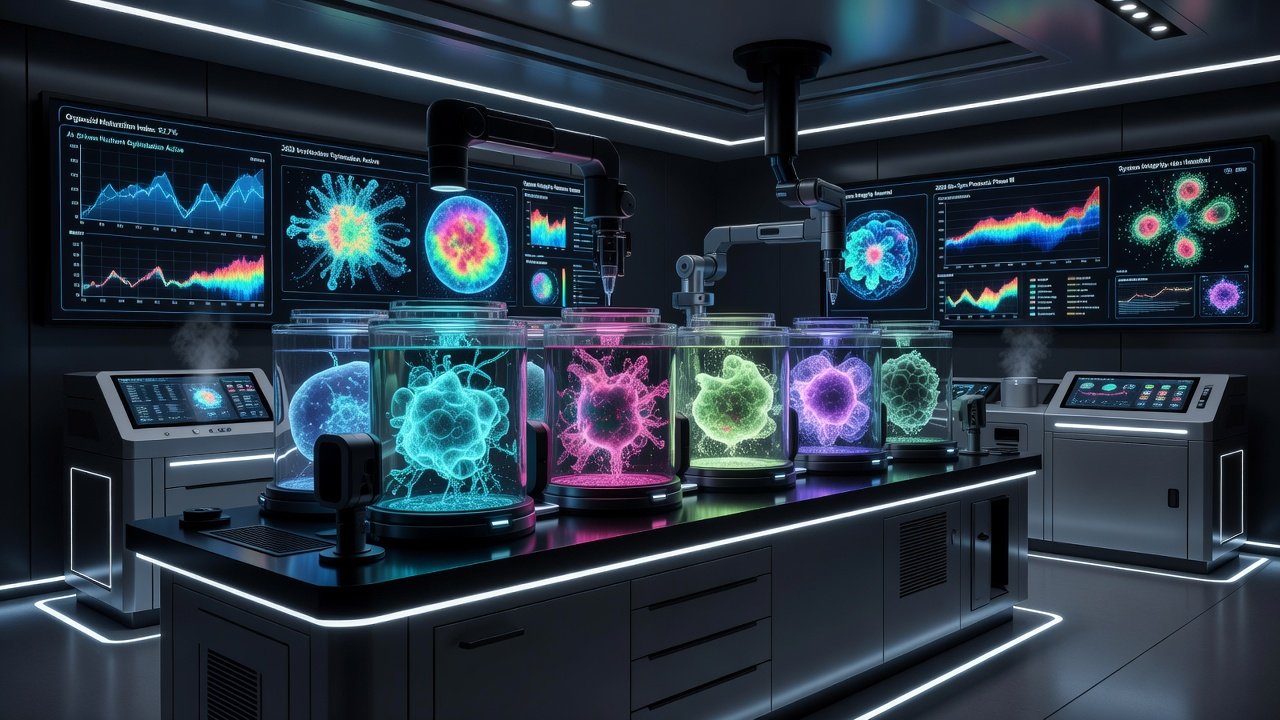
Organoid biohacking represents a cutting-edge evolution in personalized optimization, leveraging lab-grown mini-organs to simulate and enhance human physiological responses. This approach targets measurable improvements in areas like endurance, recovery, and cognitive function by modeling tissue-level interactions outside the body. As of late 2026, enthusiasts and researchers are translating these models into protocols that go beyond conventional supplements or exercise regimens. The technology draws from advances in stem cell research and tissue engineering, allowing individuals to create personalized replicas of their own organs for experimentation. This bridges the gap between laboratory research and practical biohacking, offering a level of customization previously unavailable in standard performance enhancement routines.
The core appeal lies in its precision: organoids derived from a user's cells allow testing of interventions in a controlled, individualized environment before real-world application. Practitioners can observe how specific compounds affect mitochondrial function, cellular aging, or neural signaling in a way that mirrors their unique biology. This method reduces guesswork and accelerates the path to tangible gains in metrics such as VO2 max and cognitive processing speed.
Understanding Organoids for Performance Enhancement
Organoids are three-dimensional cell cultures that mimic the structure and function of real organs, such as liver, brain, or muscle tissue. In biohacking contexts, they enable simulation of metabolic pathways, mitochondrial efficiency, and cellular senescence without direct human trials initially. For elite athletes and high performers, this means experimenting with variables like nutrient timing or compound exposure on tissue models that closely replicate personal biology. Researchers have noted that these models maintain key physiological traits for weeks, providing reliable data on how interventions might translate to in vivo results.
Key advantages include reduced risk compared to direct experimentation and the ability to iterate rapidly on protocols targeting biomarkers such as VO2 max or neural plasticity metrics. Unlike traditional cell cultures, organoids exhibit complex interactions between cell types, offering insights into systemic effects that single-lineage studies miss.
Sourcing and Growing Organoids at Home or in Labs
Accessing organoids begins with ethical cell sourcing, typically through induced pluripotent stem cells (iPSCs) derived from blood or skin samples. Commercial biobanks and research facilities provide starter kits, while advanced users may collaborate with certified labs for custom growth using bioreactors and growth factor media. Step-by-step implementation includes: 1) Obtain ethical cell samples via medical consultation and genetic screening. 2) Reprogram cells into iPSCs using standardized kits available through approved suppliers. 3) Culture in 3D scaffolds with specific media for organ-specific differentiation over 4-8 weeks, monitoring pH, temperature, and nutrient levels daily. 4) Validate maturity through microscopy, gene expression analysis, and functional assays. 5) Scale up viable organoids for repeated testing cycles.
Timelines vary, with initial organoid viability often achieved within 30-60 days under optimal conditions. Examples from early adopters show successful liver organoid batches used to test metabolic enhancers, yielding data that informed personalized supplement stacks with improved absorption rates.
Integrating AI for Real-Time Monitoring and Feedback
AI systems enhance organoid experiments by analyzing live data streams from sensors embedded in culture environments. Machine learning algorithms process metrics like oxygen consumption, pH shifts, and electrical activity to predict performance outcomes. Integration involves connecting organoid chambers to IoT-enabled platforms that feed data into models trained on human performance datasets. This setup delivers actionable insights, such as optimal dosing windows for compounds, far surpassing static monitoring methods. 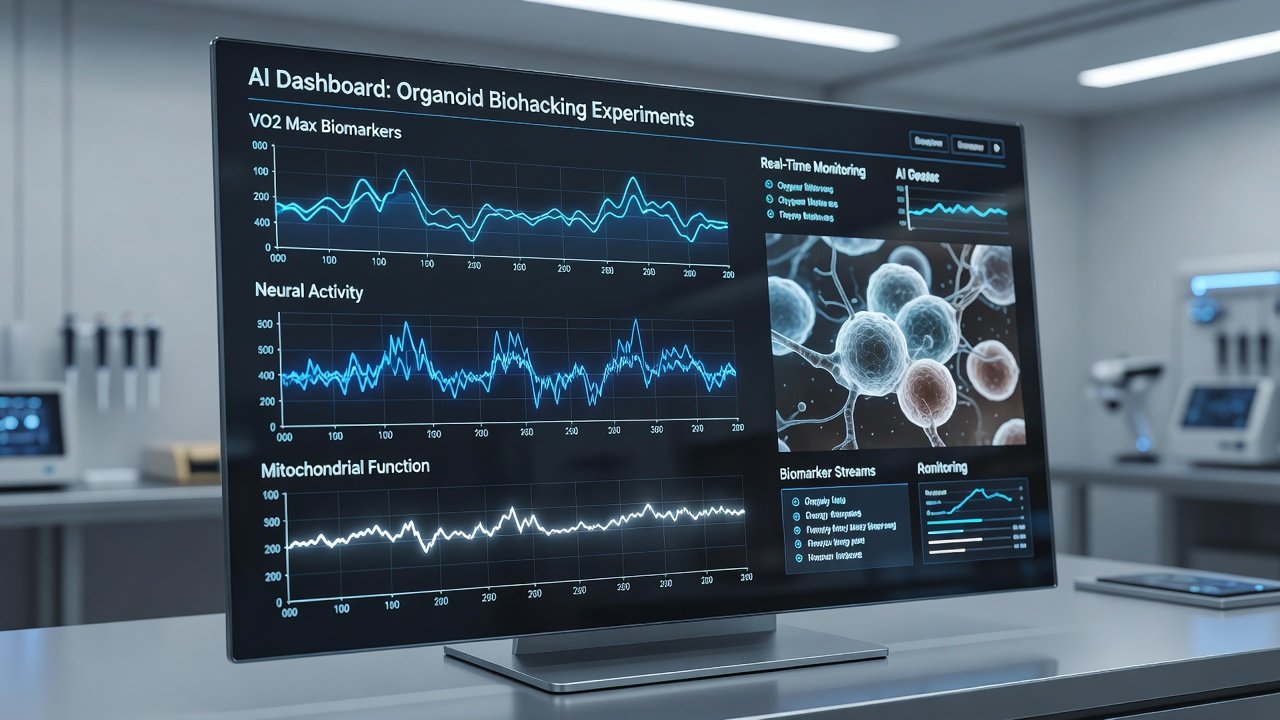
Practical examples include dashboards that flag anomalies in real time, allowing immediate adjustments to exposure timelines. Users have combined these systems with wearable data from their own bodies to create closed-loop feedback protocols that refine interventions iteratively.
Comparing Organoid Approaches to Mitochondrial and Senolytic Strategies
Traditional mitochondrial optimization focuses on compounds like CoQ10 or PQQ to boost cellular energy, while senolytics target aged cells with agents such as dasatinib. Organoid models offer superior predictive power by testing these in integrated tissue environments, revealing synergistic or antagonistic effects not visible in isolated cell studies. Users report faster convergence on effective protocols when cross-validating against organoid data, with potential gains in VO2 max improvements of 5-15% over baseline traditional methods alone.
- Step 1: Establish baseline biomarkers via bloodwork and wearables.
- Step 2: Run parallel organoid tests with mitochondrial boosters versus senolytics over controlled 14-day exposure periods.
- Step 3: Analyze AI outputs for differential impacts on tissue resilience and recovery markers.
- Step 4: Translate top-performing interventions to human application with phased exposure starting at low concentrations.
- Step 5: Monitor progress through repeat biomarker testing at 4-week intervals.
Dosage, Exposure Timelines, and Measurable Biomarkers
Effective protocols often start with short exposure timelines of 7-14 days on organoids to identify thresholds before human translation. For instance, testing a mitochondrial enhancer might involve gradual increases in concentration while tracking oxygen utilization rates. Biomarkers like VO2 max can be modeled through organoid respiration assays, while cognitive metrics correlate with neural organoid firing patterns. Regular validation against real-world tests ensures alignment, with many seeing measurable shifts after 8-12 weeks of consistent application.
Risk Mitigation and Ethical Considerations
Primary risks include contamination during culturing and unintended genetic drift in organoids. Mitigation involves sterile lab protocols, regular genetic sequencing, and starting with low-exposure timelines. Ethical sourcing demands informed consent and avoidance of proprietary cell lines without approval. Always consult regulatory bodies for compliance, such as guidelines from the National Institutes of Health and the U.S. Food and Drug Administration. Additional resources on international standards are available via the World Health Organization.
FAQ on Organoid Biohacking
What ethical sourcing practices are recommended?
Prioritize autologous cells from the individual and partner with accredited institutions following established guidelines to ensure safety and legality.
How are biomarkers like VO2 max measured in these models?
Organoid oxygen uptake assays correlate strongly with human cardiopulmonary tests, validated through comparative studies at research centers worldwide.
Are there timelines for noticeable performance shifts?
Most protocols show initial biomarker shifts within 8-12 weeks of translated interventions, with full optimization requiring 3-6 months of consistent monitoring and adjustment.
What common mistakes should beginners avoid?
Avoid skipping validation steps or using non-sterile equipment, which can compromise entire batches and lead to inaccurate data.
Conclusion
Organoid biohacking in 2026 opens new avenues for elite performance by providing personalized, data-driven insights. By combining careful sourcing, AI oversight, and rigorous comparison to established methods, practitioners can achieve safer, more effective optimization. Continued adherence to ethical standards will be essential as this field advances, empowering users to push boundaries responsibly.


No comments yet. Be the first!