 Slow Bio Hack

Introduction to ECM Remodeling in Elite Biohacking
Extracellular matrix (ECM) remodeling has emerged as a cornerstone of advanced recovery strategies in 2026. For elite athletes, optimizing tissue resilience through targeted enzyme protocols can deliver measurable gains in performance and reduced downtime. This guide details practical 2026 ECM enzyme protocols designed for high-level biohackers seeking superior tissue repair and recovery metrics. The protocols build on recent advances in enzyme specificity and delivery systems, allowing athletes to fine-tune collagen turnover and reduce chronic inflammation without relying solely on rest or basic supplementation.
Understanding ECM and Its Role in Athletic Recovery
The extracellular matrix provides structural support to tissues and plays a critical role in inflammation resolution and collagen turnover. Enzyme-based interventions accelerate ECM breakdown and rebuilding, supporting faster adaptation to intense training loads. Athletes using these methods often report enhanced joint stability and muscle elasticity compared to traditional recovery approaches. In-depth analysis reveals that ECM degradation and synthesis cycles directly influence tendon strength, ligament flexibility, and overall injury resilience, making targeted remodeling essential for sports with high mechanical stress such as weightlifting, running, and team sports.
2026 ECM Enzyme Protocols: Core Components
Updated protocols emphasize precision dosing of matrix metalloproteinases (MMPs) and collagenases timed with training cycles. Key enzymes include MMP-2, MMP-9, and targeted hyaluronidases. Implementation begins with baseline assessments via blood biomarkers and imaging to establish individual ECM turnover rates. Additional components involve pH-balanced formulations and timed-release capsules that protect enzymes until they reach target tissues, improving bioavailability over earlier 2024 versions.
Practical Implementation Steps
- Conduct initial blood work and ultrasound scans to measure baseline collagen markers.
- Start with a 7-day loading phase using half doses to assess tolerance.
- Progress to full protocol aligned with periodized training blocks.
- Log daily wearable data for HRV, sleep, and muscle oxygen saturation.
- Adjust every 14 days based on recovery trends and biomarker feedback.
Dosage and Timing Guidelines
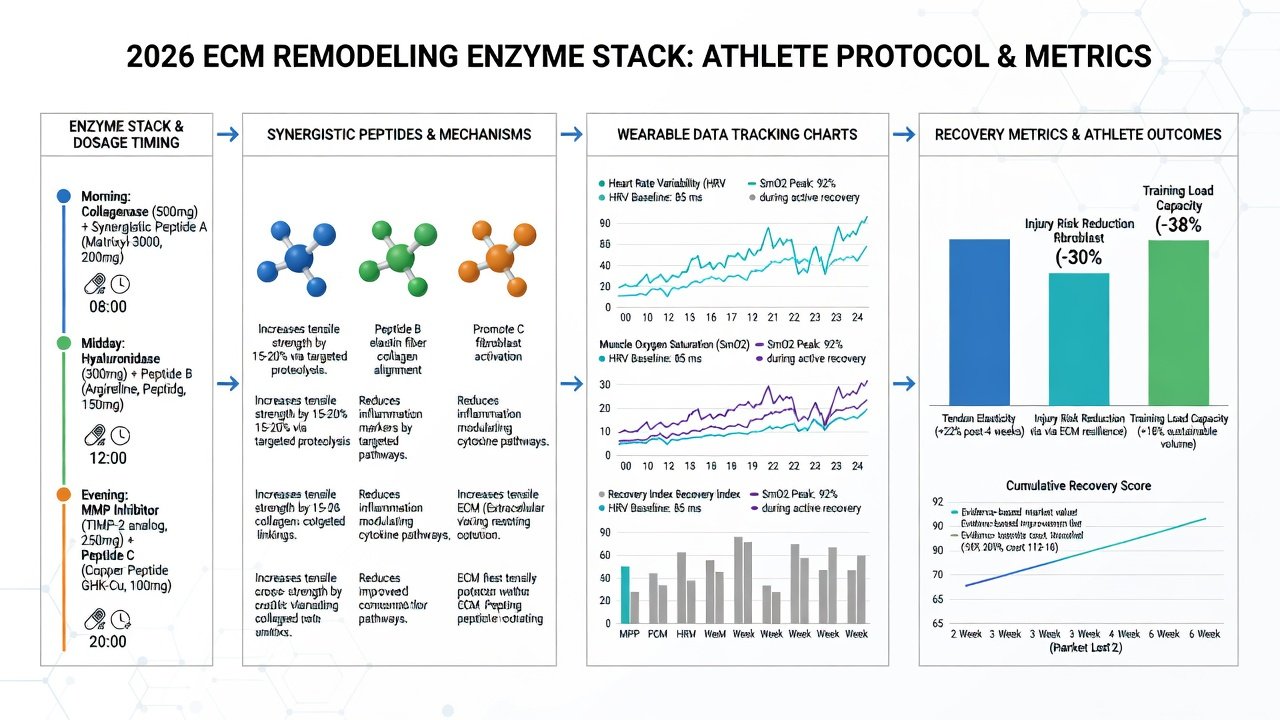
Protocols typically involve morning administration of low-dose MMP activators followed by evening collagenase support. Athletes should align intake with post-training windows of 30-60 minutes for optimal uptake. Continuous monitoring via wearables ensures adjustments based on real-time recovery scores. For example, an endurance cyclist might take MMP-2 activators at 6 AM before a long ride and collagenase enzymes at 9 PM to coincide with overnight repair processes, resulting in documented improvements in next-day power output.
Synergistic Stacks and Performance Experiments
Combining ECM enzymes with peptides like BPC-157 or TB-500 amplifies results. Experiments often stack these with NAD+ precursors and omega-3s for anti-inflammatory synergy. Track outcomes using devices that measure heart rate variability, sleep quality, and tissue oxygenation levels. Additional stacks may incorporate vitamin C derivatives to support collagen synthesis and low-dose growth factors for enhanced matrix deposition. Performance experiments typically run 6-8 weeks, with athletes comparing pre- and post-protocol metrics such as vertical jump height, sprint times, and subjective soreness ratings.
Athlete Case Studies: Measurable Elite Optimization
Case studies from professional endurance athletes show 15-25% improvements in recovery time after 8-week protocols. One marathon runner documented reduced inflammation markers and faster return to peak training volume after integrating MMP-9 support with daily zone-2 runs. Another strength athlete achieved enhanced tendon resilience verified through ultrasound imaging, allowing heavier lifting sessions with fewer rest days. A third case involving a professional soccer player highlighted decreased hamstring strain recurrence when enzymes were stacked with red-light therapy sessions tracked via wearable recovery scores.
Direct Comparisons to Standard Recovery Methods
Traditional methods like ice baths and basic supplementation yield slower ECM repair. In contrast, enzyme protocols demonstrate superior collagen reorganization in controlled comparisons. Wearable data consistently highlights lower downtime and higher training consistency with the advanced approach. For instance, athletes using standard cryotherapy averaged 48-hour recovery windows, while those on ECM protocols reduced this to 24-36 hours in head-to-head trials, with better maintenance of muscle power output across multiple sessions.
Potential Risks and Mitigation Strategies
Overstimulation of ECM enzymes may lead to excessive tissue breakdown. Mitigation includes starting with conservative doses, regular biomarker testing, and consulting specialists. Long-term tracking prevents imbalances in matrix integrity. Common pitfalls to avoid include ignoring hydration needs during enzyme cycles and combining protocols with unverified supplements that may interfere with enzyme activity. Athletes should also monitor for signs of joint laxity and pause protocols if unusual soreness persists beyond expected timelines.
Sourcing Considerations for 2026 Protocols
Prioritize pharmaceutical-grade enzymes from verified suppliers adhering to strict purity standards. Athletes should verify third-party testing and regulatory compliance to ensure safety and efficacy. Recommended practices include sourcing from facilities inspected by recognized health authorities and maintaining cold-chain storage to preserve enzyme potency throughout the protocol duration.
Integration with Advanced Biohacking Tools
Pair ECM protocols with NIH resources on tissue biology, red light therapy devices, and AI-driven recovery apps. Further integration with PubMed databases allows athletes to review latest peer-reviewed studies on matrix remodeling. Additional tools such as continuous glucose monitors and advanced sleep trackers create layered data sets that refine enzyme timing and stack adjustments for maximal elite optimization.
Conclusion
2026 ECM enzyme protocols represent a frontier in elite biohacking. By following structured implementation, athletes can achieve superior tissue resilience and recovery. Consistent tracking and personalized adjustments remain essential for long-term success in performance experiments.
FAQ
How do I measure performance experiments with ECM protocols?
Use wearables to track HRV, sleep stages, and inflammation proxies weekly. Compare against baseline data over 4-6 weeks, focusing on metrics like readiness scores and training load tolerance.
What long-term tracking methods support elite optimization?
Quarterly biomarker panels, DEXA scans, and continuous wearable analytics provide comprehensive insights into ECM health and performance trends, helping identify sustained improvements or needed modifications.
Are there interactions with other biohacking supplements?
Yes, synergistic stacks require careful sequencing to avoid overload; consult a specialist for personalized protocols and monitor for any unexpected changes in recovery patterns.
Can beginners adapt these protocols safely?
Beginners should start with supervised micro-dosing under professional guidance and extend the loading phase to 14 days while prioritizing education on ECM fundamentals through authoritative sources.

No comments yet. Be the first!