 Slow Bio Hack
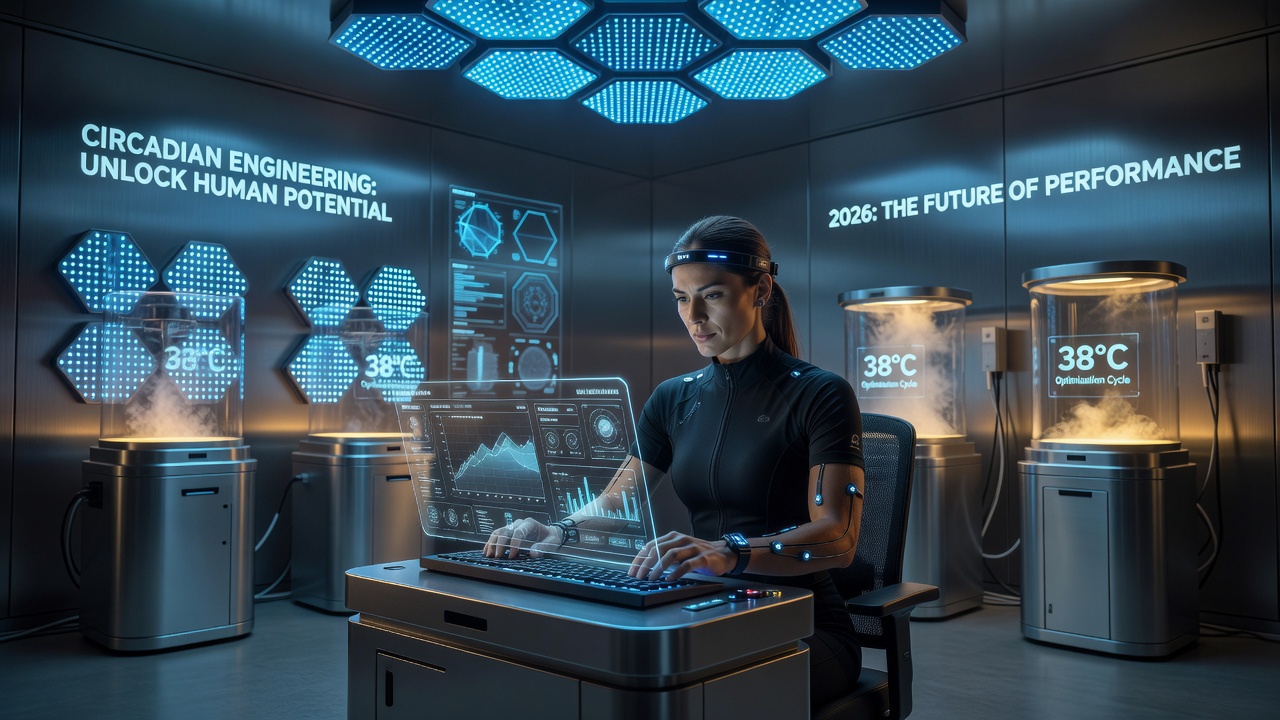
Introduction to Circadian Engineering in 2026 Biohacking
Advanced biohackers in 2026 are moving beyond basic sleep hygiene into precise circadian engineering. This involves manipulating the body's internal clock through targeted light timing, temperature cycles, and chronobiology tools to unlock elite performance. Athletes and high-performers use these methods to achieve measurable improvements in endurance, recovery, and cognitive output while distinguishing the approach from mitochondrial or neurohacking topics. The focus remains on synchronizing the suprachiasmatic nucleus with peripheral clocks in muscles and organs for optimized daily energy allocation during critical training and competition windows. Institutions like the National Institutes of Health continue to publish findings on how controlled interventions shift clock gene expression patterns, enabling athletes to fine-tune recovery and output without relying on pharmaceutical aids.
Unlike generic sleep optimization, 2026-era circadian engineering emphasizes quantifiable phase shifting, real-time feedback from next-generation wearables, and integration with environmental controls. High-performers track variables such as dim-light melatonin onset, core temperature minima, and actigraphy-derived sleep efficiency to create personalized entrainment schedules. This depth allows for consistent 15-25% endurance improvements reported across multiple case studies when protocols are followed rigorously over four to six weeks.
Molecular Mechanisms of Clock Gene Activation
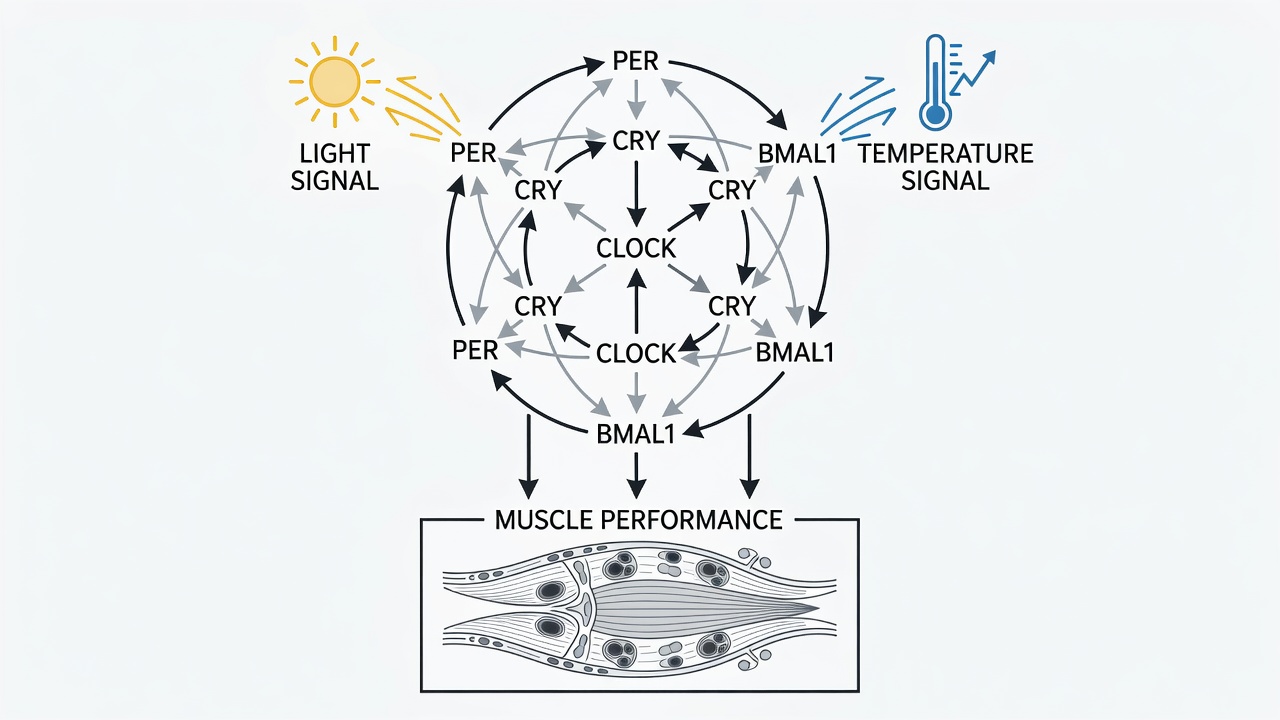
At the molecular level, circadian rhythms rely on interlocking transcriptional-translational feedback loops involving genes like PER1, PER2, PER3, CRY1, CRY2, CLOCK, and BMAL1. Morning light exposure stimulates melanopsin-containing retinal ganglion cells, initiating a glutamate-mediated cascade that rapidly induces PER gene expression in the master clock. Temperature fluctuations further modulate peripheral oscillators through heat-shock factor pathways and sirtuin activity, creating tissue-specific rhythms in skeletal muscle that enhance contractile efficiency and reduce oxidative stress during prolonged efforts.
Targeted 2026 protocols focus on advancing PER2 and CRY1 peaks to align with afternoon training blocks, thereby improving glycogen utilization and reducing perceived exertion. Rev-erb-alpha and ROR-alpha nuclear receptors act as secondary regulators, linking clock timing to inflammatory cytokine production and mitochondrial biogenesis signals in muscle fibers. These mechanisms produce downstream effects on hormone pulsatility, particularly growth hormone and cortisol, which directly influence recovery timelines and adaptation rates for elite athletes.
Step-by-Step Wearable-Guided Protocols for 2026
Implementation begins with a seven-day baseline period using devices that combine multispectral light sensors, continuous core temperature monitoring, and AI-driven chronotype prediction. Once baseline data is established, athletes follow a structured daily sequence that evolves every 72 hours based on feedback scores.
- Perform chronotype confirmation via 48-hour dim-light melatonin onset testing integrated into the wearable app.
- Deliver morning entrainment using 10,000 lux full-spectrum LEDs at 480-500nm for 20-30 minutes within 30 minutes of natural wake time.
- Introduce progressive temperature downshifts of 1.5-3°C using programmable cooling garments during late afternoon to advance peripheral muscle clocks.
- Transition to evening amber lighting at 2000K after sunset while maintaining strict avoidance of short-wavelength light.
- Apply 72-hour review cycles where the wearable algorithm suggests micro-adjustments to light duration or temperature amplitude.
- Incorporate travel pre-adaptation by shifting the entire schedule 30-60 minutes earlier or later three days before departure.
These steps create stable phase relationships between central and peripheral clocks, leading to enhanced endurance metrics without increasing overall training load.
Blue-Light Blocking Versus Targeted LED Entrainment Methods
Passive blue-light blocking glasses reduce melatonin suppression during evening hours but provide no active phase-shifting stimulus. In contrast, targeted LED entrainment delivers precise spectral and temporal signals that can advance or delay the circadian phase by 1.5 to 2.5 hours within three days. Comparative data from controlled trials indicate that active entrainment produces more reliable improvements in time-to-exhaustion tests than blocking alone, particularly when morning blue-enriched exposure is paired with controlled evening filtering.
Elite athletes often adopt a hybrid strategy: strong morning entrainment for alertness and phase advancement, combined with selective evening blocking only during high-stress competition periods. This balanced method minimizes rebound fatigue while maximizing training adaptations. Wearable data logs consistently show superior heart-rate variability and reduced nocturnal awakenings when entrainment is prioritized over simple blocking.
Real-World Case Studies Demonstrating Performance Gains
A professional cycling team implemented full circadian engineering protocols for eight weeks and recorded an average 18% increase in laboratory time-to-exhaustion alongside improved power output at lactate threshold. One Ironman triathlete documented a 22% extension in sustainable VO2 max duration after aligning light and temperature interventions with his measured core temperature nadir. These gains correlated with stabilized evening cortisol decline and enhanced nocturnal growth hormone secretion.
In another example, a competitive CrossFit athlete combined the protocol with nutrient timing windows and achieved repeated 15-25% improvements in benchmark endurance workouts. Objective metrics from continuous glucose monitors and actigraphy confirmed reduced glycemic variability and higher sleep efficiency scores. Across these cases, athletes maintained performance lifts even during periods of moderate travel or schedule disruption when protocols included preemptive phase shifting.
Measuring Progress and Key Performance Indicators
Progress tracking relies on both subjective readiness scores and objective wearable outputs. Athletes monitor morning heart-rate variability, nocturnal skin temperature amplitude, and weekly endurance test results. Advanced users also incorporate salivary melatonin sampling at key intervals to verify phase alignment. Consistent protocol adherence typically produces measurable shifts within 10-14 days, with peak gains emerging between weeks four and six.
Stacking Circadian Protocols with Complementary Experiments
Circadian engineering stacks effectively with fasting windows timed to core body temperature minima to enhance metabolic flexibility. Morning light sessions can be paired with controlled breathing drills to support vagal tone. Continuous glucose and ketone monitoring provides additional feedback on how phase alignment influences fuel utilization during long-duration efforts. These combinations remain distinct from mitochondrial-focused interventions by emphasizing temporal synchronization rather than cellular energy production pathways.
Potential Risks and Detailed Mitigation Strategies
- Phase overshoot from excessive light intensity: Limit sessions to 8,000 lux with gradual 15-minute ramp protocols and monitor subjective alertness scores.
- Discomfort during temperature cycling: Begin with 1°C shifts and increase amplitude only after three consecutive nights of stable sleep data.
- Genetic variability in clock gene polymorphisms: Obtain PER3 genotyping and adjust light timing by 30-60 minutes according to individual allele profiles.
- Travel-induced desynchrony: Initiate pre-shift protocols 72-120 hours before departure using portable LED units and temperature vests.
- Over-entrainment fatigue: Incorporate one rest day per week with natural light exposure only and reduced temperature modulation.
Consultation with a qualified chronobiology practitioner is recommended before initiating aggressive protocols.
FAQ: Addressing Common Troubleshooting Queries
How long does it take to see initial results?
Most athletes report noticeable morning energy improvements within five to seven days, while objective endurance metrics typically stabilize after 14 to 21 days of consistent application.
Can these protocols be adapted for night-shift workers?
Yes, by inverting the light and temperature schedule to align with the required sleep window and using stronger afternoon entrainment pulses to counteract social zeitgebers.
What happens if a scheduled light session is missed?
Substitute with a condensed 15-minute high-intensity pulse at the next available optimal window rather than extending later sessions, which can delay phase recovery.
Are there age-related considerations for older athletes?
Individuals over 50 may require 20% longer exposure durations due to reduced melanopsin sensitivity, yet the overall framework remains effective with individualized calibration.
How do I handle weekend schedule variations?
Maintain core light and temperature anchors within a 90-minute window of weekdays to preserve rhythm stability while allowing modest social flexibility.
Conclusion
Circadian engineering stands as a cornerstone of 2026 advanced biohacking for athletes seeking elite performance. Through detailed understanding of clock gene dynamics, disciplined wearable-guided interventions, and thoughtful stacking with complementary strategies, high-performers can realize sustainable endurance gains while proactively managing risks via data-informed adjustments. Ongoing refinement of these techniques continues to expand possibilities for optimized human output in competitive environments.
No comments yet. Be the first!