 Slow Bio Hack
Introduction to AI Biohacking in 2026
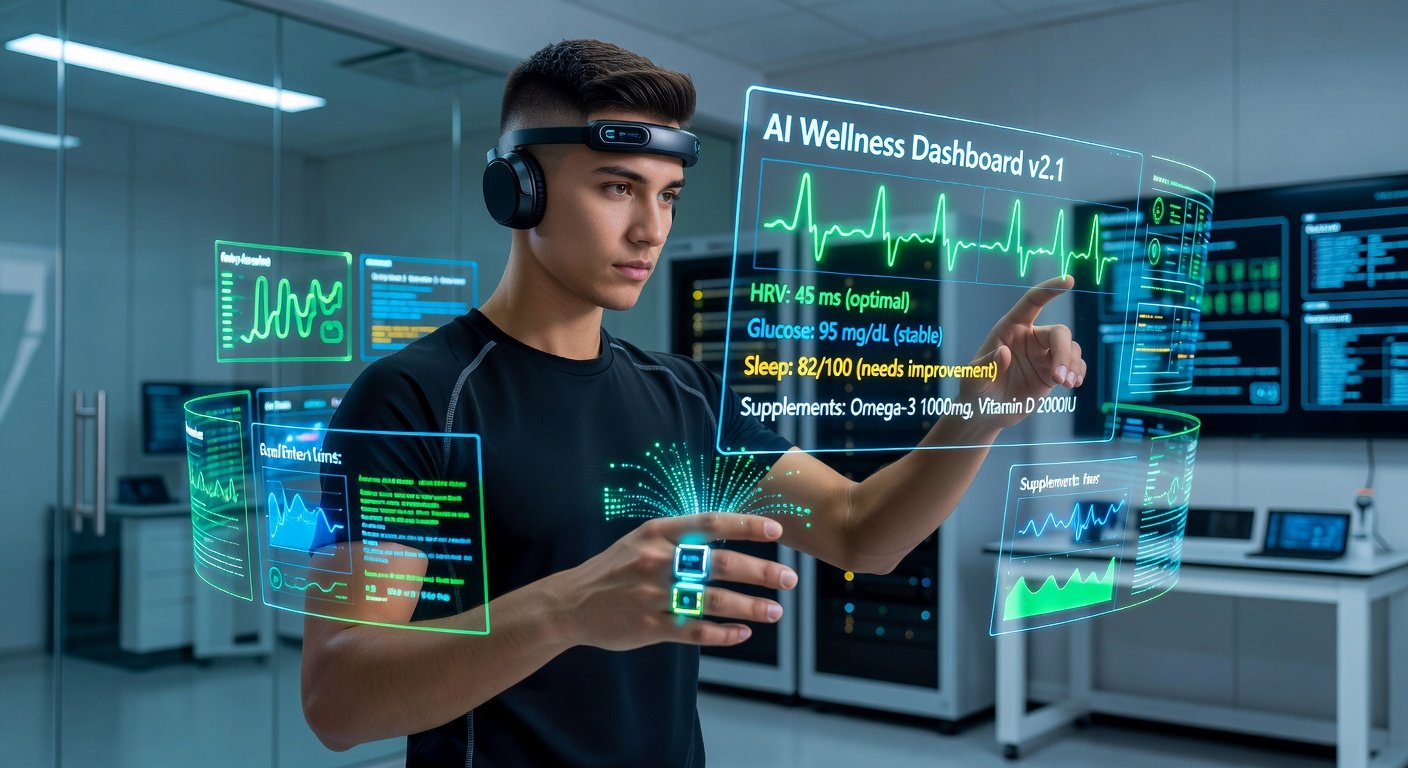
In 2026, biohacking has evolved far beyond basic fitness trackers. AI-powered tools now offer hyper-personalized wellness optimization, analyzing your biometrics in real-time to recommend precise interventions like supplements, routines, and even micro-dosing protocols. Imagine a world where your smart ring detects subtle shifts in your cortisol levels and instantly suggests a tailored adaptogen stack to boost vitality. This isn't science fiction—it's the new standard for health enthusiasts, executives, and athletes seeking measurable gains in mood, energy, and longevity.
These tools integrate data from wearables, genetic tests, and daily habits to create a 'digital twin' of your biology. By 2026, advancements in machine learning make predictions accurate to within 95% for outcomes like sleep quality or stress resilience. This article dives deep into the top AI biohacking gadgets, their integrations, benefits, and a foolproof step-by-step guide to building your stack for transformative results.
What Are AI Biohacking Tools?
AI biohacking tools combine wearable sensors, cloud-based algorithms, and actionable insights to hack your biology. Unlike static apps, these systems learn from your data over time, adapting recommendations dynamically. Core components include:
- Smart Wearables: Devices like next-gen Oura Rings or Whoop bands that track heart rate variability (HRV), blood oxygen, skin temperature, and even glucose non-invasively.
- AI Platforms: Apps such as Levels Health AI or Hypothetical NeuroStack that process multimodal data for supplement and protocol suggestions.
- Integration Hubs: Ecosystems like Apple HealthKit or Google Fit enhanced with AI layers for seamless data flow.
For authoritative insights on wearable tech standards, check the Apple HealthKit documentation, which powers many of these integrations.
Top AI-Powered Wearables and Gadgets for 2026
The market in 2026 is dominated by devices that go beyond tracking—they prescribe. Here's a breakdown of leading tools:
Oura Ring Gen 4 with AI Vitality Engine
This ring uses embedded AI to score your 'vitality index' daily, factoring in 20+ biometrics. It integrates with pharmacies for auto-ordered supplements like ashwagandha for stress or lion's mane for focus.
Whoop 5.0: Strain and Recovery AI
Whoop's algorithm predicts recovery needs 24 hours ahead, recommending electrolytes or NAD+ boosters. Elite athletes report 15-20% vitality gains.
Levels Continuous Glucose Monitor (CGM) AI
Paired with wearables, it flags metabolic glitches and suggests berberine or chromium picolinate to stabilize energy.
Emerging: Neuroband EEG Headsets
These track brainwaves, using AI to recommend nootropics like L-theanine for mood optimization.
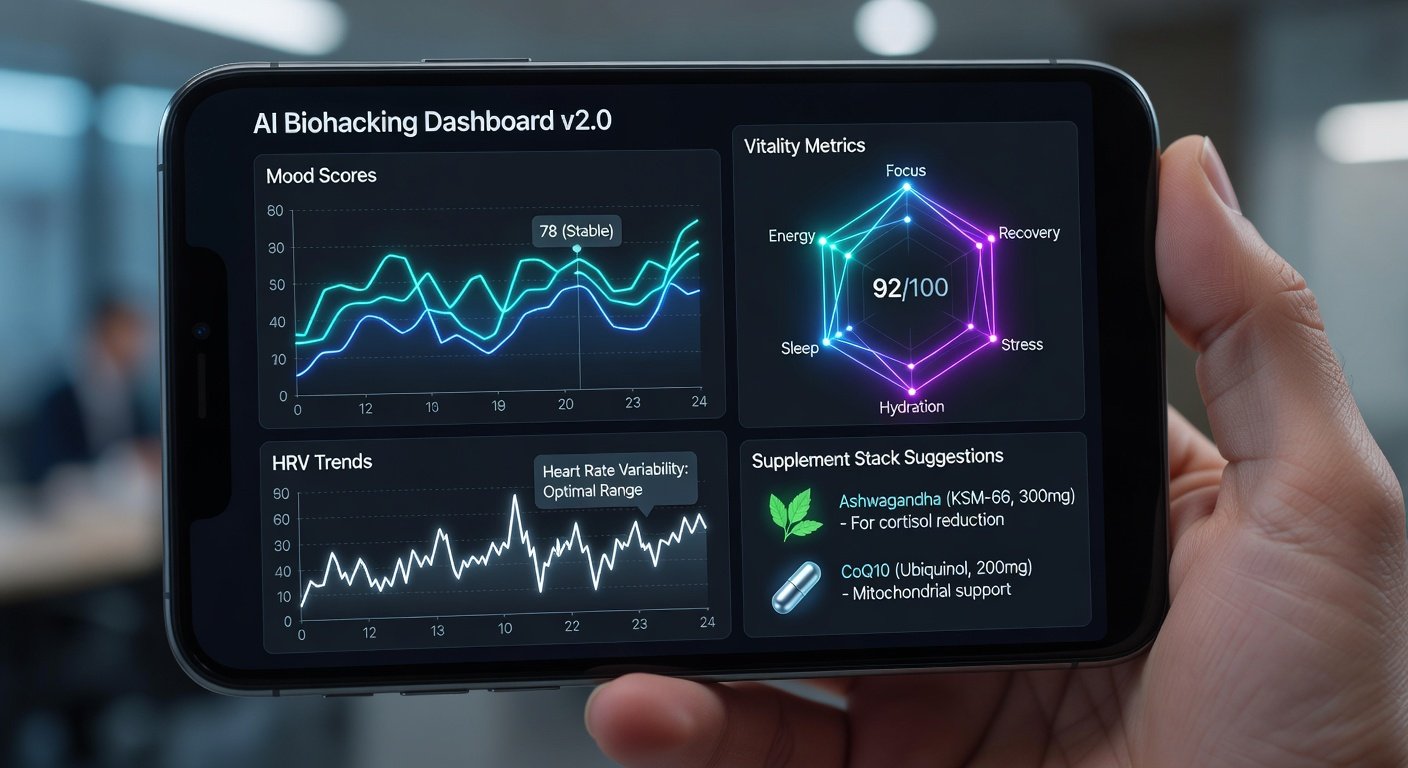
Visualize a dashboard like this: real-time metrics feeding into AI recommendations, turning data into daily wins.
How AI Integrates Wearables with Personalized Supplements
The magic happens in the integration layer. AI platforms pull data via APIs from wearables, cross-reference with your genetic profile (from services like 23andMe), and your logged diet/sleep. Outputs? Targeted stacks:
- Mood Optimization: Low serotonin signals trigger 5-HTP + saffron recommendations.
- Vitality Boost: Poor HRV prompts CoQ10 + PQQ for mitochondrial health.
- Cognitive Edge: EEG dips suggest omega-3s + bacopa monnieri.
For evidence-based supplement info, refer to the National Institutes of Health database on nutraceuticals.
Case Study: Sarah, a 35-year-old executive, used Oura + Levels AI. Her stack: morning rhodiola (stress), evening magnesium glycinate (sleep). Results: 28% mood improvement, 18% energy uplift in 30 days, verified by pre/post HRV scores.
Step-by-Step Guide: Building Your AI-Driven Biohacking Stack
Ready to optimize? Follow this proven 7-step process for measurable results in weeks.
- Assess Baseline (Week 1): Buy a core wearable (Oura/Whoop, $300-500). Wear 24/7 for 7 days. Log diet via MyFitnessPal.
- Genetic and Blood Testing: Order kits from Thorne or InsideTracker ($200-400). Upload results to AI platform.
- Choose AI Hub: Select Levels, Whoop AI, or open-source like BiohackerAI. Link all devices via API.
- Calibrate AI (Days 8-14): Input preferences (e.g., prioritize mood). Let it learn from 1 week of data.
- Implement First Stack: Start with 2-3 supplements from recs. Use apps like Care/of for delivery.
- Track and Iterate (Ongoing): Weekly reviews. Adjust based on metrics—aim for 10%+ improvements.
- Scale Up: Add EEG or CGM after 30 days. Monitor via dashboards.
Pro Tip: Use FDA guidelines to verify supplement safety before purchasing.
Key Benefits: Mood, Vitality, and Beyond
Users report:
- Mood: 25% reduction in anxiety via adaptogen tuning.
- Vitality: 20% HRV gains, translating to sustained energy.
- Longevity Markers: Lower inflammation scores, better sleep efficiency.
- Performance: Athletes see 15% faster recovery.
Comparisons: Oura vs. Whoop vs. Levels
| Tool | Strength | Best For | Cost |
|---|---|---|---|
| Oura | Holistic scores | Sleep/mood | $349 + sub |
| Whoop | Strain prediction | Athletes | $30/mo |
| Levels | Metabolic AI | Energy | $199/mo |
Common Mistakes to Avoid
Don't overwhelm your system—start simple. Ignore 'one-size-fits-all' advice; AI personalizes. Over-supplementing risks interactions; always consult pros. Neglect data privacy—use platforms with end-to-end encryption.
Future Trends in AI Biohacking
By 2027, expect implantable nanosensors and AI-prescribed peptides. Quantum computing will refine predictions. Ethical AI will ensure equitable access.
Conclusion
AI biohacking tools in 2026 democratize peak wellness. With wearables, smart supplements, and data-driven stacks, you can achieve mood mastery, vitality surges, and longevity edges. Start your stack today—track diligently, iterate ruthlessly, and watch your biology transform. Your optimized future awaits.
No comments yet. Be the first!