 Slow Bio Hack
Understanding Probiotics and Fermented Foods
Your gut microbiome is a bustling ecosystem of trillions of bacteria influencing digestion, immunity, and even mood. Probiotics—live beneficial bacteria—can support this balance. But should you choose supplements or natural sources like fermented foods? This guide breaks down the comparison based on recent studies, helping beginners and advanced users decide.
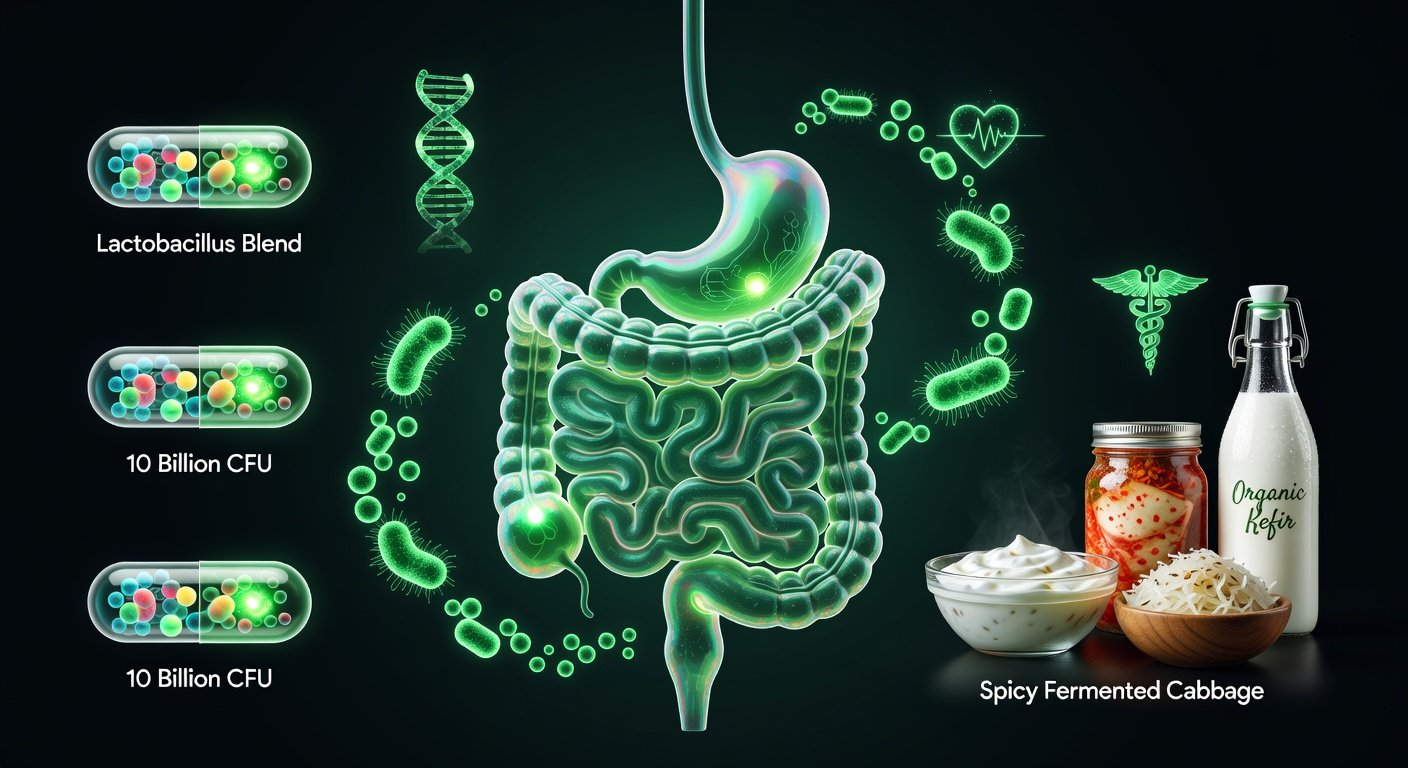
Probiotic supplements are concentrated doses of specific bacterial strains in capsules, powders, or liquids. Fermented foods, such as yogurt, kimchi, sauerkraut, kefir, and kombucha, contain live cultures developed through natural fermentation.
Pros and Cons of Probiotic Supplements
Pros:
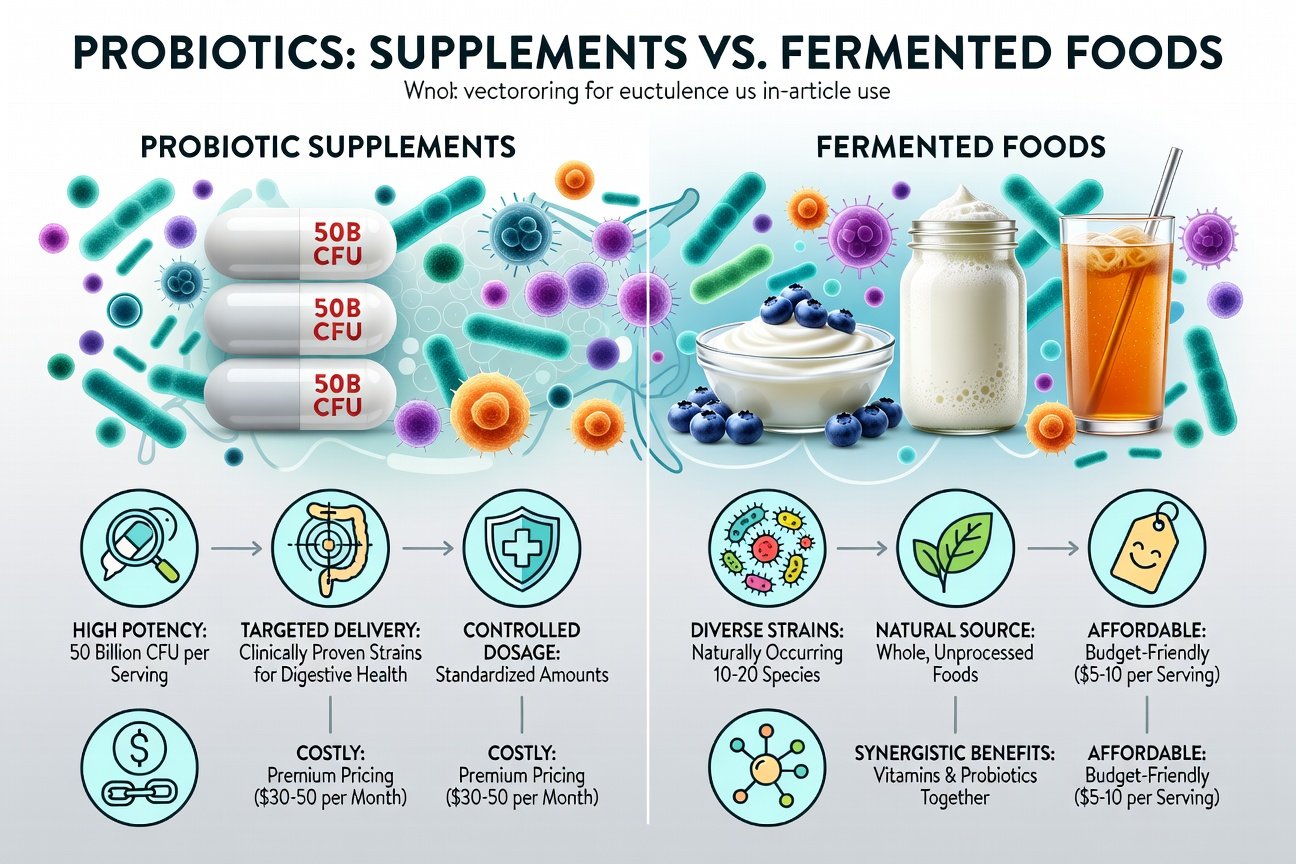
- Targeted Strains: Supplements offer precise doses of strains like Lactobacillus or Bifidobacterium, backed by clinical trials for issues like IBS or antibiotic recovery.
- High Potency: Often contain billions of CFUs (colony-forming units), ideal for therapeutic needs.
- Convenience: Easy to take daily, no prep required.
Cons:
- Costly: Quality brands with refrigerated storage can run $30–$60 monthly.
- Variable Survival: Stomach acid may kill many bacteria before reaching the gut, though enteric coatings help.
- Overkill Risk: Excess can cause bloating or imbalance in healthy guts.
Recent meta-analyses on PubMed show supplements reduce IBS symptoms by 20–50% in 8–12 weeks, but efficacy varies by strain.
Pros and Cons of Fermented Foods
Pros:
- Natural Diversity: Provide a mix of probiotics plus prebiotics, enzymes, and nutrients from food matrices.
- Synergistic Benefits: Enhance overall diet; studies link daily intake to better diversity and reduced inflammation.
- Affordable and Tasty: Homemade or store-bought options fit any budget.
Cons:
- Inconsistent Doses: CFU counts fluctuate; pasteurization kills bacteria in some products.
- Histamine Issues: Aged ferments like sauerkraut may trigger headaches in sensitive individuals.
- Time-Intensive: Preparing batches requires effort.
A 2023 study in Cell highlighted fermented foods increase microbiome diversity more than supplements alone, promoting long-term resilience.
Efficacy Based on Latest Studies
Both options improve gut health, but context matters. A 2022 randomized trial in Gut found supplements excel for acute issues like post-antibiotic dysbiosis, restoring balance faster. Fermented foods shine for prevention: a Harvard cohort study linked high intake to 40% lower IBD risk.
For digestion, supplements reduce bloating (per Mayo Clinic reviews), while ferments aid motility via fiber synergy. Combo approaches? A 2024 meta-analysis suggests stacking both maximizes diversity.
Decision Guide: Beginners vs Advanced Users
For Beginners
Start simple. If new to gut hacks, prioritize fermented foods for gentle introduction. Aim for 1–2 servings daily. Struggling with severe symptoms (e.g., chronic diarrhea)? Opt for a beginner supplement like Culturelle (10 billion CFUs, Lactobacillus GG).
- Microbiome Needs: Low diversity? Ferments. Targeted repair? Supplements.
- Budget: <$20/month? Foods. Lifestyle: Busy? Pills.
For Advanced Users
Leverage personalization. Use at-home tests (e.g., Viome) to identify deficiencies. Rotate strains: Bifido for mood, Akkermansia boosters via kefir. Cycle supplements (4 weeks on/off) with daily ferments to avoid adaptation.
- Needs: Low butyrate producers? Butyrate-fortified supps + kimchi. SIBO history? Low-FODMAP ferments like coconut yogurt.
- Pro Tip: Track via apps like Cara Care.
Sample Meal Plans
Beginner 7-Day Ferment-Focused Plan
- Breakfast: Greek yogurt with berries (probiotic boost).
- Lunch: Sauerkraut-topped salad.
- Dinner: Miso soup or tempeh stir-fry.
- Snack: Kefir smoothie.
Total: 20–50g ferments/day. Calorie-flexible.
Advanced Hybrid Plan (with Supplement)
Days 1–4: Supplement (20B CFUs) + ferments. Days 5–7: Ferments only.
- AM: Kombucha + overnight oats with kefir.
- Midday: Kimchi fried rice.
- PM: Kvass or supplement dose.
Adjust for vegan: Water kefir, tempeh.
Tracking Tips for Measurable Results
Don't guess—track!
- Daily Journal: Log Bristol Stool Scale (aim 3–4), bloating (1–10), energy.
- Apps: MySymptoms or Gut Diary for patterns.
- Biometrics: Weekly weigh-ins, HRV via Oura (gut links to vagus).
- Advanced: Retest microbiome quarterly. Expect 4–6 weeks for shifts.
Red flags: Worsening symptoms? Consult doc, pause supps.
Final Verdict
Fermented foods win for sustainable, diverse gut support; supplements for precision strikes. Most thrive on both. Experiment, track, and tune to your microbiome. Healthier gut awaits!

No comments yet. Be the first!