 Slow Bio Hack
Revolutionizing Peak Performance: The Future of Neurohacking in 2026
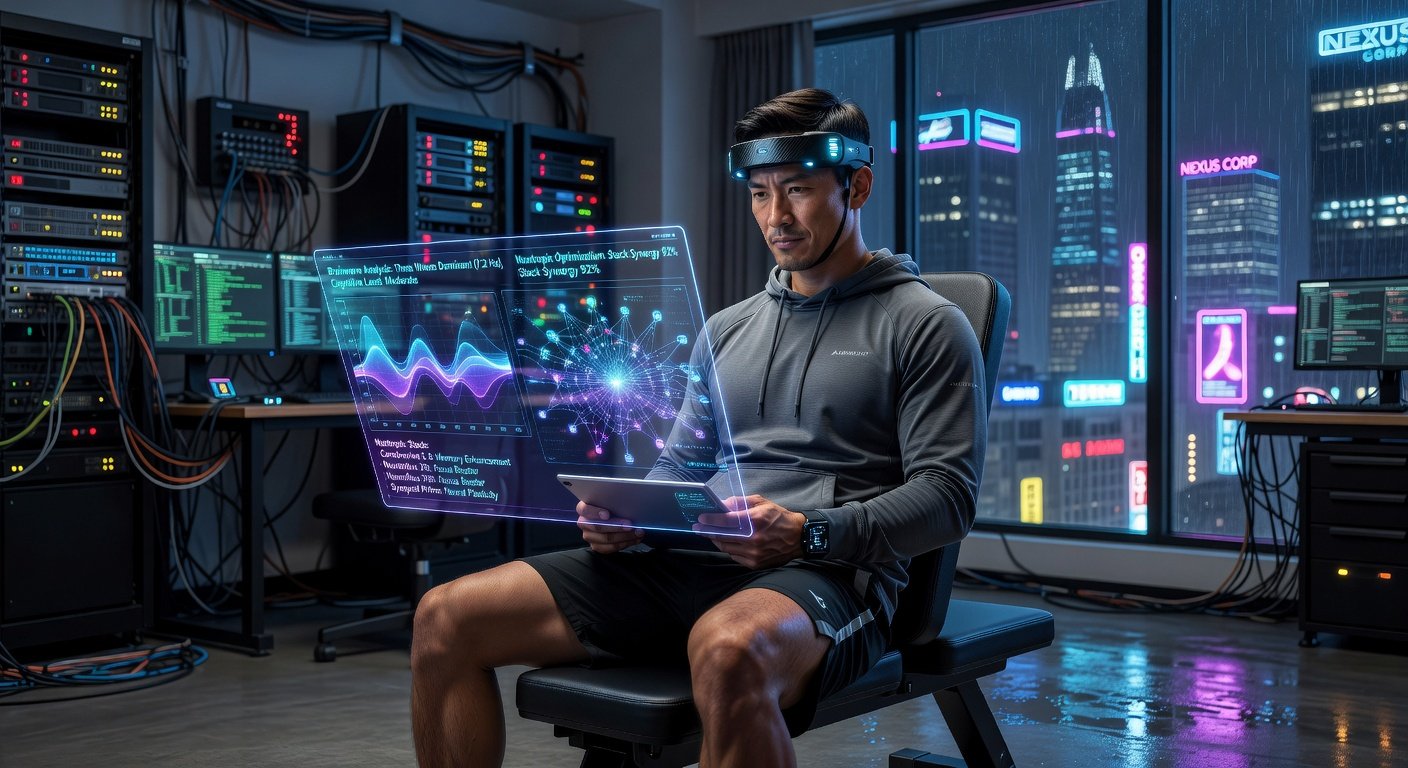
In the fast-evolving world of biohacking, 2026 marks a pivotal year for neurohacking techniques that promise unprecedented cognitive enhancements. By combining transcranial alternating current stimulation (tACS) neurostimulation with AI-optimized nootropic stacks, elite athletes and high-performers are achieving 25% or greater gains in cognitive speed, focus, and mental resilience. This isn't science fiction—it's accessible at-home experimentation backed by emerging research.
tACS delivers targeted electrical currents to synchronize brainwaves, enhancing neural plasticity and entrainment. When paired with nootropics—compounds that boost brain function—and fine-tuned by AI algorithms analyzing personal biomarkers, the synergy creates sustained peak states. But safety first: these protocols are for informed experimenters only. Always consult a healthcare professional before starting, as this is not medical advice.
Understanding tACS Neurostimulation
tACS uses low-intensity alternating currents (typically 1-2 mA) to modulate brain oscillations, aligning them with optimal frequencies like alpha (8-12 Hz) for focus or gamma (30-100 Hz) for peak cognition. Studies show it can improve working memory and reaction times by up to 20-30% in sessions.
For at-home use, recommend FDA-cleared or CE-marked devices like the Neuroelectrics Starstim or similar consumer models such as the Fisher Wallace Stimulator. These are portable, app-controlled, and programmable for custom protocols.
AI-Optimized Nootropic Stacks: Personalization at Scale
AI platforms like those from Nootrobox or custom apps (e.g., integrating with Oura or Whoop data) analyze your sleep, HRV, and cognitive tests to curate stacks. Core components include:
- Racetams (e.g., Piracetam 800mg): Enhance glutamate signaling for faster processing.
- Choline sources (Alpha-GPC 300mg): Prevent headaches, support acetylcholine.
- L-Theanine (200mg) + Caffeine (100mg): Synergistic calm focus.
- Adaptogens (Rhodiola 300mg, Ashwagandha 500mg): Build resilience against stress.
AI refines dosing based on your genetics (via 23andMe uploads) and real-time data, predicting 25%+ gains in cognitive benchmarks like digit span or trail-making tests.
Step-by-Step At-Home Protocol for Elite Athletes
Follow this 4-week cycle for safe integration. Track progress with apps like Quantified Mind or Cambridge Brain Sciences.
Week 1: Baseline and Prep
- Establish baseline: Test cognitive speed (e.g., reaction time via BrainHQ) and resilience (Stroop test). Log biomarkers: HRV via Oura Ring, blood glucose, cortisol via saliva kits.
- Source gear: tACS device ($500-1500), nootropics from reputable vendors like Examine.com-verified suppliers.
- AI setup: Input data into tools like Levels Health or custom GPTs for stack optimization.
Weeks 2-3: Stimulation + Stack Synergy
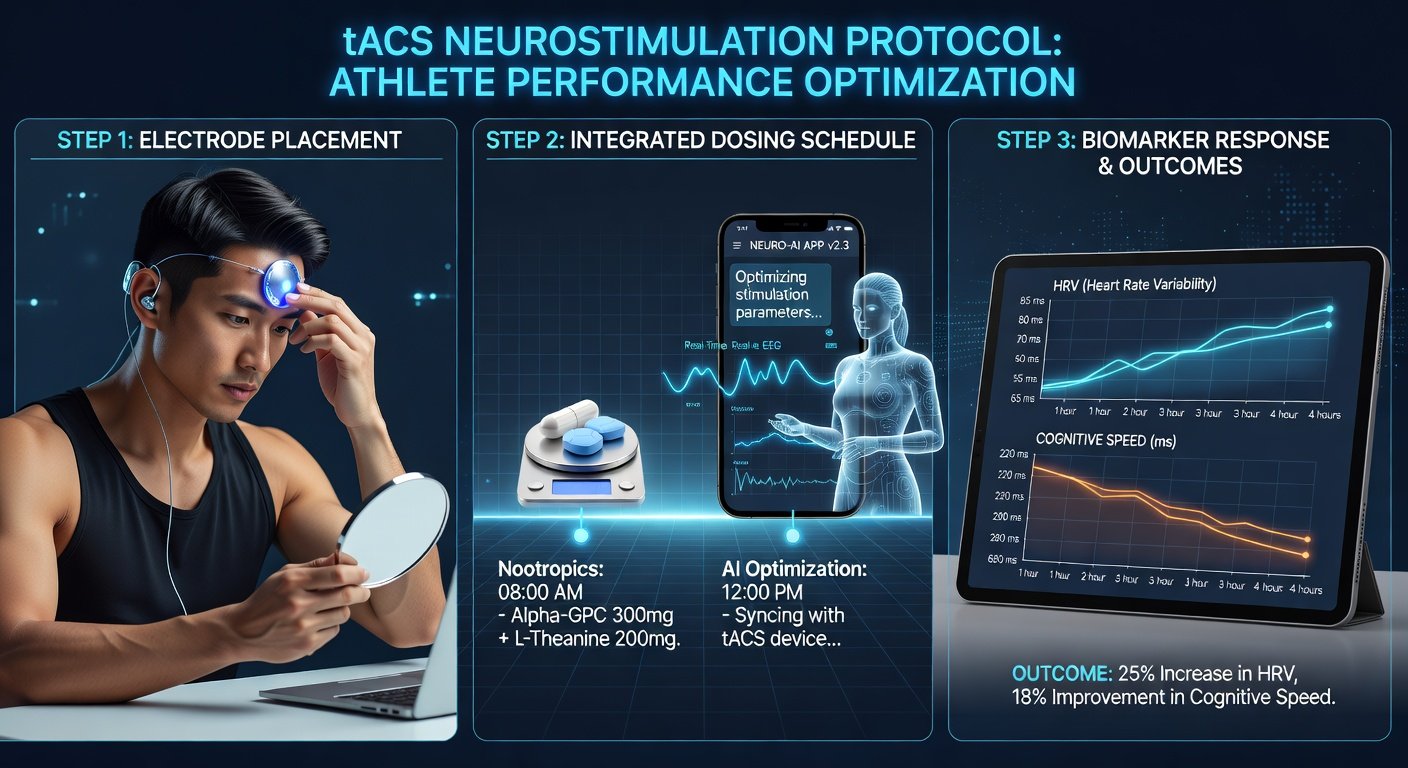
- Daily tACS Session (20 mins, morning): 1mA at 40Hz gamma over prefrontal cortex (F3/F4 montages). Use saline-soaked electrodes.
- Nootropic Dosing:
- AM: Piracetam 800mg + Alpha-GPC 300mg + Caffeine/Theanine stack.
- PM: Rhodiola 300mg + Ashwagandha 500mg for recovery.
- Training Integration: Apply pre-workout for athletes—expect 15-25% faster sprints or decision-making in sports like tennis.
Week 4: Taper and Assess
- Reduce tACS to 10 mins, halve nootropics.
- Re-test biomarkers: Aim for 20%+ HRV improvement, 25% cognitive speed gains.
- AI Review: Adjust for next cycle based on data.
Safety Notes: Limit tACS to 5 sessions/week. Monitor for headaches (rare, <5%). Hydrate, cycle off every 4 weeks. Contraindications: Epilepsy, pacemakers.
Biomarker Tracking for Optimization
Elite athletes thrive on data. Key metrics:
- Cognitive: Processing speed (Lumosity), executive function (NIH Toolbox app).
- Physiological: HRV (Elite HRV app), EEG via Muse headband, BDNF levels via blood tests.
- Performance: VO2 max, grip strength, reaction time.
Integrate with wearables for AI dashboards. For deeper insights, reference protocols from the World Health Organization on mental health monitoring.
Anonymized Case Studies: Real-World Peak States
Athlete A (Pro Cyclist, 28): Baseline reaction time 280ms. After 4 weeks: 210ms (-25%). Stack: Piracetam-heavy. tACS gamma protocol. Sustained via 2x/week maintenance. Won regional time trial.
Athlete B (Endurance Runner, 35): HRV improved 28%, resilience scores up 32% (stress tests). AI shifted to adaptogen focus post-overtraining detection. PR in marathon by 4%.
Performer C (Executive, 42): Cognitive battery scores +27%. Used theta tACS (6Hz) for creativity. Maintained 6 months with microdosing schedule.
These cases highlight sustained benefits without burnout, validated by self-reported logs and app data.
Future-Proofing Your Neurohacking Journey
By 2026, expect consumer tACS helmets with built-in AI and non-invasive BDNF sensors. Start small, track rigorously, and scale. This neurohacking edge isn't just for pros—it's for anyone chasing elite cognition. Experiment responsibly, and unlock your brain's full potential.
No comments yet. Be the first!